

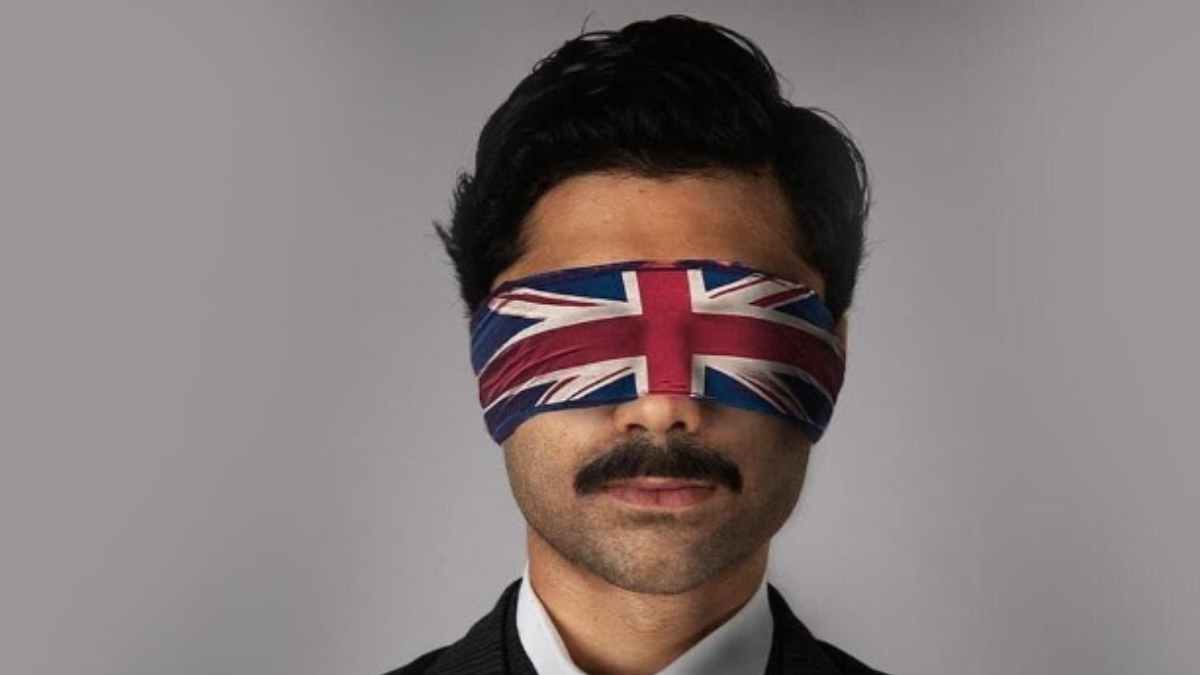


Admittedly, there have been numerous attempts to recreate the Jallianwala Bagh massacre in cinematic terms, some, like Shoojit Sircar’s Sardar Udham, quite recent and relevant.
Ram Madhvani’s six-part The Waking of a Nation on SonyLIV deep-dives into a tragedy that is about much more than body count and statistics. That “so many” died nameless, faceless, and pointlessly is not the point. More than any film I have seen on Dyer’s diabolism, Madhvani’s The Waking of a Nation eliminates the drama to focus on the tragedy for what it is: a slur on civilisation, like the Holocaust. For what is the difference between asphyxiating thousands in a gas chamber and cornering hundreds in an open space and shooting them point-blank?
Numbers, right? Madhvani goes beyond statistics. He has a keen eye and ear for capturing the ethos of oppression. However, the budget oftentimes betrays him. The crowd scenes—so essential to the plot—are not crowded enough.
The series works best in its intimate interludes. I especially liked the tender warmth shared between Hari Singh and his wife Poonam, two freedom fighters, impressively played by Bhawsheel Singh Sahni and Nikita Dutta (an actress we should see more of). Their journey from the genesis of the Jallianwala Bagh tragedy to the horrific aftermath serves as a tender love story during those savage times.
Also Read: Actress Ramya Speaks Out On Rashmika Mandanna’s Hyderabad Controversy, Says ‘People Should…’
What I didn’t like was the lead role of the Brit-turned-bhakt lawyer Kantilal Sahni, played by Taaruk Raina. I don’t know why this young actor was given such a decisive part. Was it because of a physical resemblance to the real character? Raina’s performance is denuded of passion, which, when you think about it, is a crime against the cause of fighting for the Jallianwala victims. Rattling off statistics in a courtroom in a dhoti doesn’t quite do it. The frailties of the lead performance are a fatal flaw in a chronicle that is skillfully scripted and faithful to history, though not slavishly so.
If the Brits are demonised, the natives are not spared either. This is the first time I’ve seen a film/series in which “our” side misbehaves with “their” side. A kind British schoolteacher is brutally beaten by a bunch of Indians in a gully, while stunned Indians watch from windows above.
The impact of that visual is staggering. We tend to forget that wars, global or civil, are not based on one army’s cruelty. Madhvani has a clearer understanding of colonial strife than most filmmakers who have embarked on excoriating the plunderers (for example, the kitschy RRR). The British actors, too, are well cast. But somehow, that sense of an epic tragedy, so essential to the efficacy of this saga, eludes the presentation. The immovable background music—it remains steadfast even when there is a sudden change in mood—fails to move. Luckily, the series has much emotional impact.
Some reviews have noted that the series is not “entertaining,” and thank God for that! Entertainment is obtained at the circus, not in a series about a carnage that civilisation and cinema won’t forget. This is about mankind not repeating its mistakes.
Also Read: Aamir Khan Birthday Special: Top 5 Iconic Films With Life Lessons – When & Where To Stream!