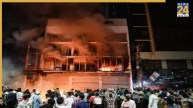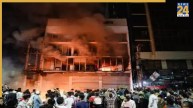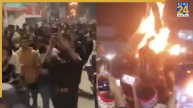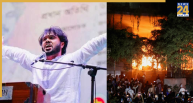

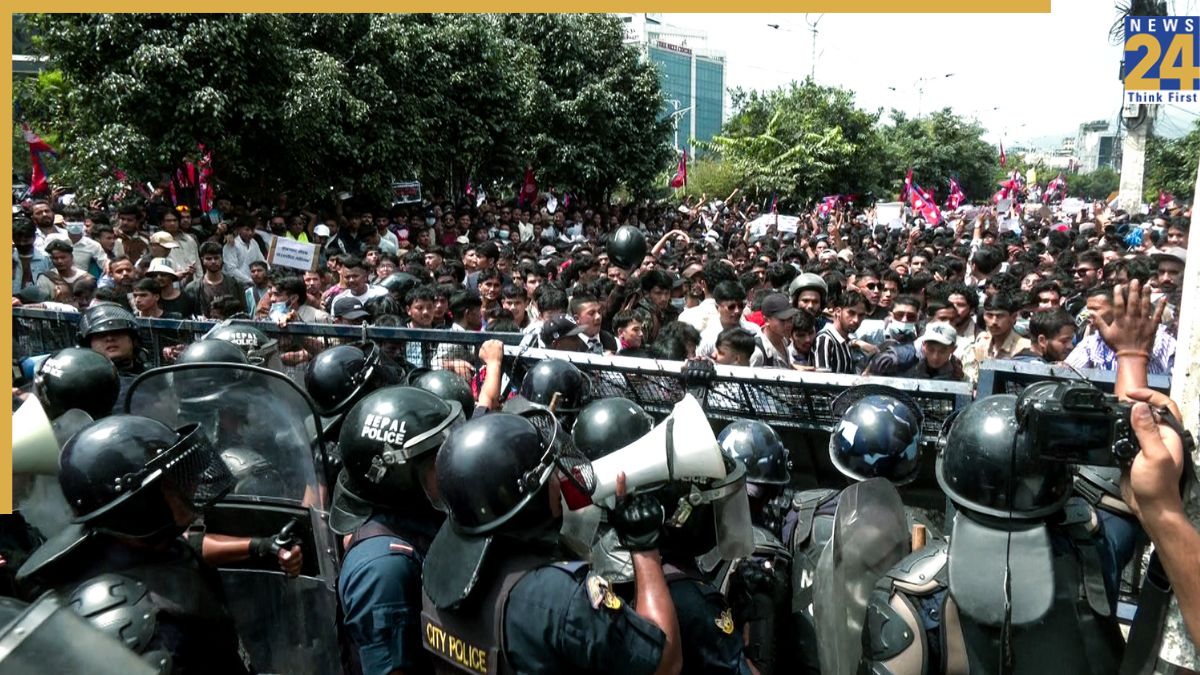


Nepal Protest: The death toll in the ongoing Gen Z-led protests against government corruption and the recent social media ban in Kathmandu has risen to 19. According to The Himalayan Times, the fatalities include six at the Trauma Center, three at Civil Hospital, three at Everest Hospital, one at Kathmandu Medical College (KMC), and one at Tribhuvan University Teaching Hospital.
The unrest which triggered on Monday due to government’s recent ban on social media has caused massive disruption, leaving several injured. The protestors vandalised the parliament gate, fired dozens of rounds and burnt an effigy of Prime Minister KP Sharma Oli.
Why Did Nepal Ban Social Media?
The ban which came into effect on September 4 in Nepal, targeted social media platforms that had not registered with the government. While announcing its decision, the Nepalese government emphasised that social media users with fake IDs have been spreading hate speech and fake news, and committing fraud and other crimes via some platforms.
About 26 such platforms were decided to be blocked in the meeting was attended by Communication and Information Technology Minister Prithvi Subba Gurung, ministry officials, representatives from the Nepal Telecommunication Authority, telecom operators, and internet service providers on September 4. In compliance with a government directive, social media sites were taken down after midnight.
The government stated that it had taken decision after issuing repeated warnings to the platforms to open offices in Nepal. Earlier, a Cabinet decision had set a deadline (Starting August 28), and a Supreme Court ruling on August 17 mandated that the companies register and pay the required taxes.
However, the Bill cited in the ban, ‘The Operation, Use, and Regulation of Social Media in Nepal’, has not yet been passed by Parliament. Also, some social media platforms, which were already paying taxes in Nepal despite not being officially registered were also blocked.
Notably, platforms such as Viber, TikTok, Wetalk and Nimbuzz are registered in Nepal, while Telegram and Global Diary are in the process. Facebook, Instagram and WhatsApp are yet to initiate registration.
Why Has The Ban Sparked Protests?
According to a report in the The Kathmandu Post, there are around 13.5 million Facebook users and Instagram 3.6 million users in Nepal. Many of the users are dependent on social media for their business, who now claim to have been affected by the ban. Moreover, the protestors have also alleged corruption in the government, misappropriation of powers and accused them of violating Human Rights, suppressing freedom of speech and expression.
The ban is also likely to disrupt communication for millions of Nepalese living in foreign countries, who connected to their families via social media apps.
“This is the protest by the new generation in Nepal. A new slavery system has been introduced in the nation. Nepali youth’s age is being sold, and high post officials are involved in misappropriation of powers. Human rights are being violated by the major three political parties: CPN-UML, the radical nationalist party; Nepali Congress, which has been supporting from the background; and Maoist Center, which has also remained silent over the issue. They also had banned TikTok at the time,” a protestor told ANI.
“Stop the ban on social media, stop corruption not social media,” the crowds chanted.
“We were triggered by the social media ban but that is not the only reason we are gathered here,” student Yujan Rajbhandari, told AFP.
Also Read: Nepal Protest Kills 14 – Why Have Gen Z Taken To Kathmandu Streets? What Are Their Demands?