

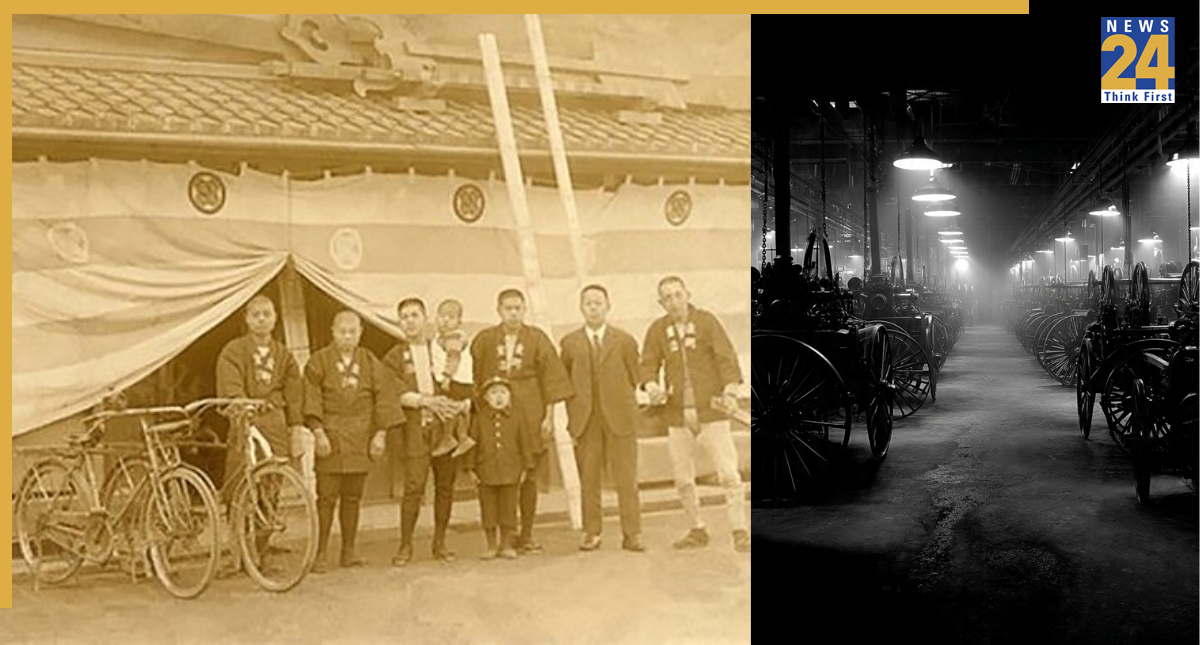


In a world where businesses rise and fall every day, it may be hard to imagine a company that has survived not decades, but more than 14 centuries. Yet Japan is home to such a rarity Kongō Gumi, widely recognized as the world’s oldest continuously operating company. Its story is not just about business; it is also about tradition, craftsmanship, and a family legacy that has passed through more than 40 generations.
A Company That Began in the Year 578 AD
Kongō Gumi traces its roots back to the year 578 AD, when it was founded by Shigemitsu Kongō, a skilled carpenter who came to Japan from the Korean kingdom of Baekje. He was invited to Osaka to construct Shitennō-ji, Japan’s first Buddhist temple. The project required specialized temple-building knowledge and Shigemitsu’s skill became the foundation of a family business that would last for centuries.
For most of its history, Kongō Gumi worked on building, maintaining, and restoring Buddhist temples across Japan. With time, the company expanded into other traditional construction projects, including palaces and heritage structures, always staying true to the craftsmanship that defined its origins.
A Rare Family Legacy Through 40 Generations
One of the most remarkable aspects of Kongō Gumi is its continuous family leadership. For over 1,400 years, the company was handed down from one Kongō generation to the next. The last president from the founding family was Masakazu Kongō, the 40th successor. Under his leadership, the company continued temple construction, employing around 100 workers by the early 2000s.
In 2005, Kongō Gumi had an annual revenue of ¥7.5 billion, primarily driven by temple-building. But financial pressures were also rising, including debts of more than ¥2.3 billion. Despite its proud legacy, the company struggled to stay afloat.
Acquired but Not Forgotten
In 2006, after facing bankruptcy, Kongō Gumi was acquired by Takamatsu Construction Group, one of Japan’s major construction firms. Since then, it has continued its operations as a wholly-owned subsidiary and functions as a special division within the larger group.
Even though the Kongō family no longer owns the company, its connection has not completely disappeared. Masakazu Kongō’s daughter, representing the 41st generation, still plays a role in the company’s functioning, preserving the family’s tradition in some capacity.
A Living Link to Ancient History
Today, Kongō Gumi stands not only as a business but as a living piece of history. Its survival through wars, economic crises, natural disasters, and political change reflects the resilience of Japanese craftsmanship and the power of tradition.
In an era where many companies struggle to last even a decade, Kongō Gumi’s 1,447-year journey is a rare reminder that longevity is possible when skills, culture, and purpose come together across generations.