
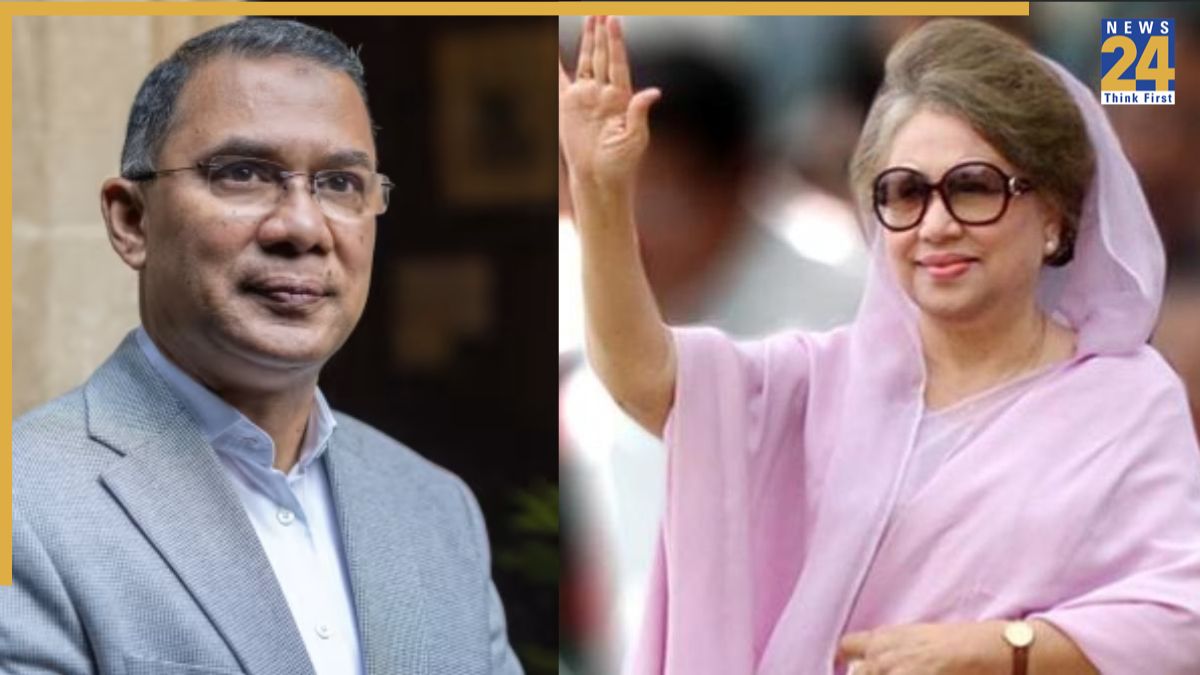


58-year-old Rahman, who is the de facto chief of the Bangladesh Nationalist Party (BNP), is about to return to Bangladesh. His return comes after 2 decades of self-exile in London. Political experts consider this move to be one that could change Bangladesh’s political landscape. He also confirmed his intention to contest the national elections slated for February 2026- the first since the ouster of Sheikh Hasina’s government following a violent uprising last year.
Who is Tarique Rahman?
Born in Bogura, Tarique Rahman grew up in one of Bangladesh’s most powerful political families. His childhood was shaped by the power struggles and political dynamics that Bangladesh experienced. His father, Ziaur Rahman, a war hero, became president after the 1971 Liberation War. He was assassinated in 1981. After a decade, Tarique’s mother, Khaleda Zia, became the nation’s first woman prime minister.
Tarique Rahman’s Schooling, college and marriage
Tarique did his schooling at Shaheen High School and Dhaka Residential Model College. He went to Dhaka University to study political science and international relations. A few years after his marriage to Dr Zubaida Rahman, he entered politics. Nepotism or by merit, he rose swiftly through the BNP ranks during his mother’s tenure in the party.
Tarique Rahman’s political career
He became a popular leader in the party. He travelled across the country, interacting and mobilising the grassroots workers. He became a crowd puller in the early 2000s. However, his political career was embroiled in controversies and corruption.
In 2008, the then army backed caretaker government in Bangladesh sent him to London for medical treatment, while legal procedures against him were underway. Several criminal and graft cases were registered against him. Rahman, who was sentenced in numerous cases in absentia, was cleared of all charges after Hasina was ousted.
Bangladesh unrest and Ousting of Sheikh Hasina
According to UN investigators, Up to 1,400 people died in the 2024 unrest, which included a deadly crackdown on student-led demonstrations that ousted the then-PM Sheikh Hasina. She fled to India and is accused of serious crimes against people, which are said to have happened during 2024 protests.
The interim government, led by Nobel laureate Prof Muhammad Yunus, banned the Awami League from political activity until the trial of its leaders is over. Both Hasina and her party reject all the charges against them.