
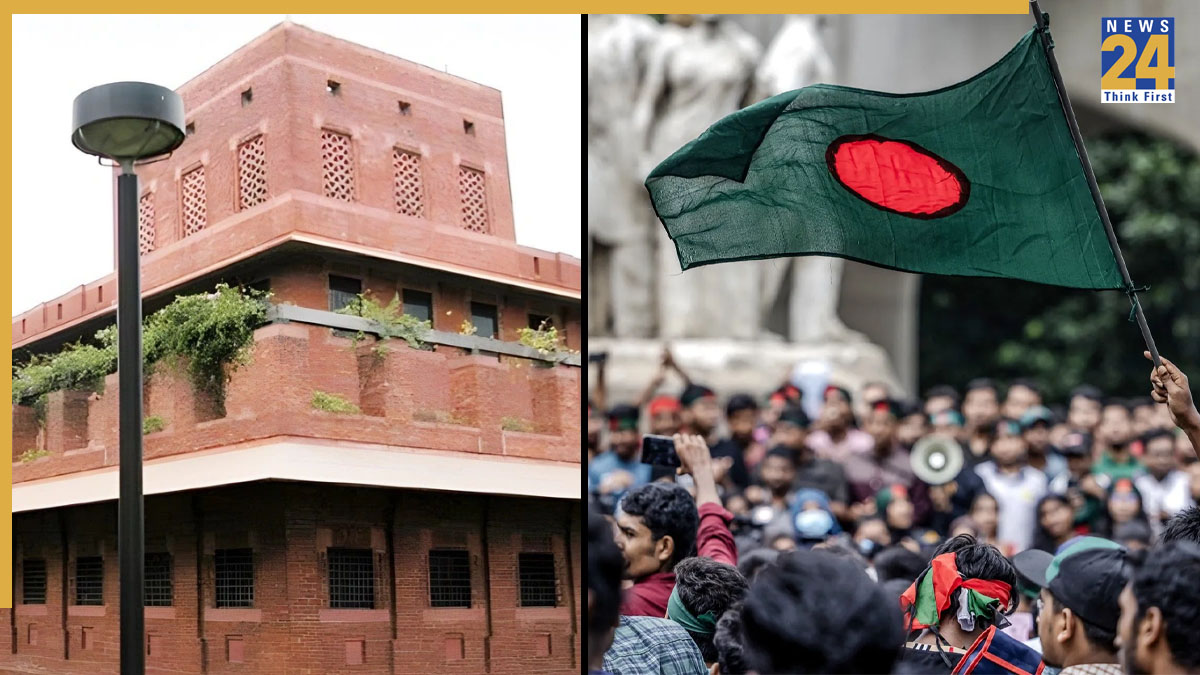


The US Embassy in Dhaka has also issued an advisory for December 25. While the US Embassy has provided a reason for its advisory, the German Embassy has not explained why it will be closed on these dates. Earlier, several countries, including the US, Britain, and other EU nations, expressed condolences over the death of Osman Hadi. This has raised questions about what is expected to happen in Bangladesh on December 25, which has prompted heightened alerts from Germany and the US.
“The Embassy will be closed on December 24 and 25 and will resume operations from December 28,” posted German Embassy in Dhaka posted on the social media platform X.
The advisory issued by the US Embassy said, “According to media reports, the Bangladesh National Party (BNP) has organised a huge public rally on the Purbachal Expressway and other roads from Hazrat Shahjalal International Airport to Gulshan in Dhaka from 11:45 am on December 25 to mark the return of Acting President Tarique Rahman.”
Tarique Rehman to return after 17 years
According to media reports, BNP acting president Tarique Rahman has applied for a travel pass to return to Bangladesh on December 25. He submitted the request at the Bangladesh High Commission in London. On December 18, BNP posted on Facebook, “Tarique will arrive at Hazrat Shahjalal International Airport at 11:45 am on December 25.”
Tarique Rahman is the eldest son of BNP founder Ziaur Rahman and Chairperson Khaleda Zia. He was arrested by the military-backed caretaker government in 2007. In 2008, he went to Britain for medical treatment and has been living there since.
His wife, Zubaida Rahman, returned to London on December 20 after visiting Bangladesh. Khaleda Zia has been active in Bangladeshi politics for over 40 years. After her husband’s assassination, she became the leader of the BNP.
Western embassies condemn Hadi’s death
On December 12, Inquilab Manch leader Sharif Osman Hadi was shot dead by unknown assailants in Bangladesh. He was taken to a hospital in Singapore, where he later died. Hadi had led the movement that ousted former Prime Minister Sheikh Hasina in 2024.
Following his death, violence erupted, including attacks on the Indian High Commission amid rumors that Hadi’s killers had fled to India. On his funeral day, several European embassies expressed condolences, and the German Embassy lowered its flag, while India remained silent.
Former Indian Official Questions Western Response
Ex-Foreign Secretary Kanwal Sibal criticized Western embassies for giving Hadi’s death political prominence. He noted Hadi’s Islamic connections, hostility towards India, and his group’s campaign to ban the Awami League, questioning whether the Western response reflects double standards.
Russian Ambassador Alexander Khozin urged Bangladesh and India to reduce tensions quickly. While not interfering in bilateral matters, he emphasized the importance of preventing the situation from escalating further.
Rising tensions between India and Bangladesh
Relations between India and Bangladesh have been tense since last year’s political movement in Bangladesh. Violence following the death of student leader Osman Hadi has further fueled anti-India sentiment.
Last week, a Hindu youth was beaten to death in Bangladesh. On December 20, around 20–25 youths protested outside the Bangladesh High Commission in New Delhi, raising slogans about the murder of Dipu Chandra Das and demanding the safety of minorities in Bangladesh. The Indian Ministry of External Affairs described the coverage in some Bangladeshi media as “misleading propaganda”, emphasizing that it was a small, peaceful protest.
Bangladesh condemned the protest, calling it an “unwarranted” and “inappropriate incident”, and rejected the claim that it was merely propaganda.