
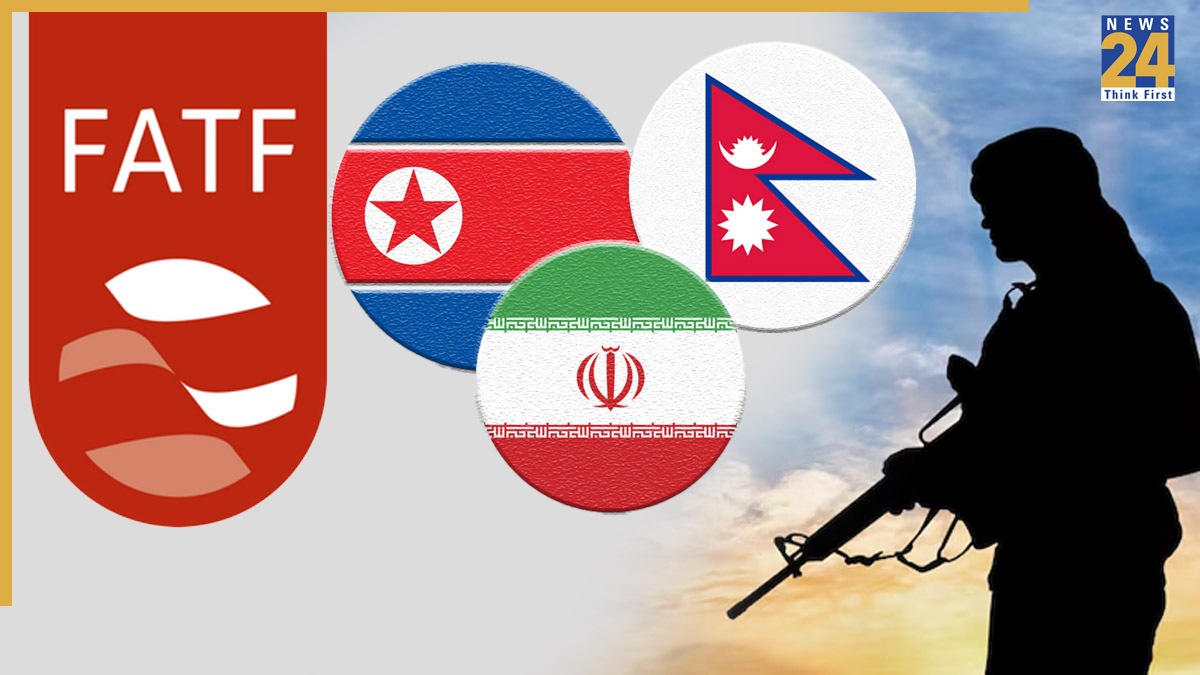


The Financial Action Task Force (FATF) leads global action to tackle money laundering, terrorist financing, and proliferation financing. The 40-member body has established international standards to ensure that national authorities can effectively go after illicit funds linked to drug trafficking, the illicit arms trade, cyber fraud, and other serious crimes.
The FATF researches how money is laundered and how terrorism is financed. The body also promotes global standards to mitigate these risks and assesses whether countries are taking effective action against terrorism or not.
The FATF’s decision-making body, the FATF Plenary, meets three times a year and holds countries accountable if they do not comply with its standards. If a country repeatedly fails to implement FATF recommendations, it can be designated as a jurisdiction under increased monitoring or a high-risk jurisdiction. The FATF was established in 1989 and is based in Paris, France.
Warnining to Pakistan
The global terror funding watchdog, the Financial Action Task Force (FATF), has warned Pakistan that its removal from the grey list in October 2022 does not make it immune to concerns over money laundering and terrorist financing.
FATF President Elisa de Anda Madrazo emphasized that countries, including Pakistan, must continue to implement proactive measures to prevent and deter financial crimes.
“Any country that has been on the grey list but is now delisted is not bulletproof against the actions of criminals, whether money launderers or terrorists. We invite all jurisdictions, including those that have been delisted, to continue their good work to prevent and deter crimes,” said FATF President Elisa de Anda Madrazo during a press conference in France.
Pakistan was taken off the FATF grey list in October 2022 and has since been under follow-up to ensure the continued implementation of anti-terror financing measures. Since Pakistan is not a member of the FATF, the Asia-Pacific Group has been conducting this follow-up process.
The list includes various countries and jurisdictions that have been placed under increased monitoring due to significant strategic deficiencies in countering terror financing and money laundering, the FATF President said.
The comments come amid reports that Jaish-e-Mohammad (JeM) has been using digital wallets to fund terror camps while masking financial flows.
Earlier, a report titled “Comprehensive Update on Terrorist Financing Risks” provided an in-depth insight into terrorist financing methods and emerging risks. It highlighted the increased involvement of state-sponsored terrorism and raised concerns from the South Asian region, particularly related to state-owned national complexes in Pakistan. The report identified Pakistan as a high-risk jurisdiction in the region for proliferation financing.
FATF Plenary Meeting
The FATF concluded its fourth plenary meeting in Paris, France, under the Mexican presidency of Elisa de Anda Madrazo, highlighting the need for focused efforts to deprive criminals around the world of their ill-gotten gains.
The plenary adopted reports of the first two FATF assessments under the new round of mutual evaluations. Belgium and Malaysia are the first FATF members to be assessed under this new, more time-bound and risk-based framework, which places greater emphasis on money laundering, terrorist financing, and proliferation financing.
Beyond Pakistan, the plenary also removed Burkina Faso, Mozambique, Nigeria, and South Africa from the list of jurisdictions under increased monitoring following the successful completion of their action plans.