
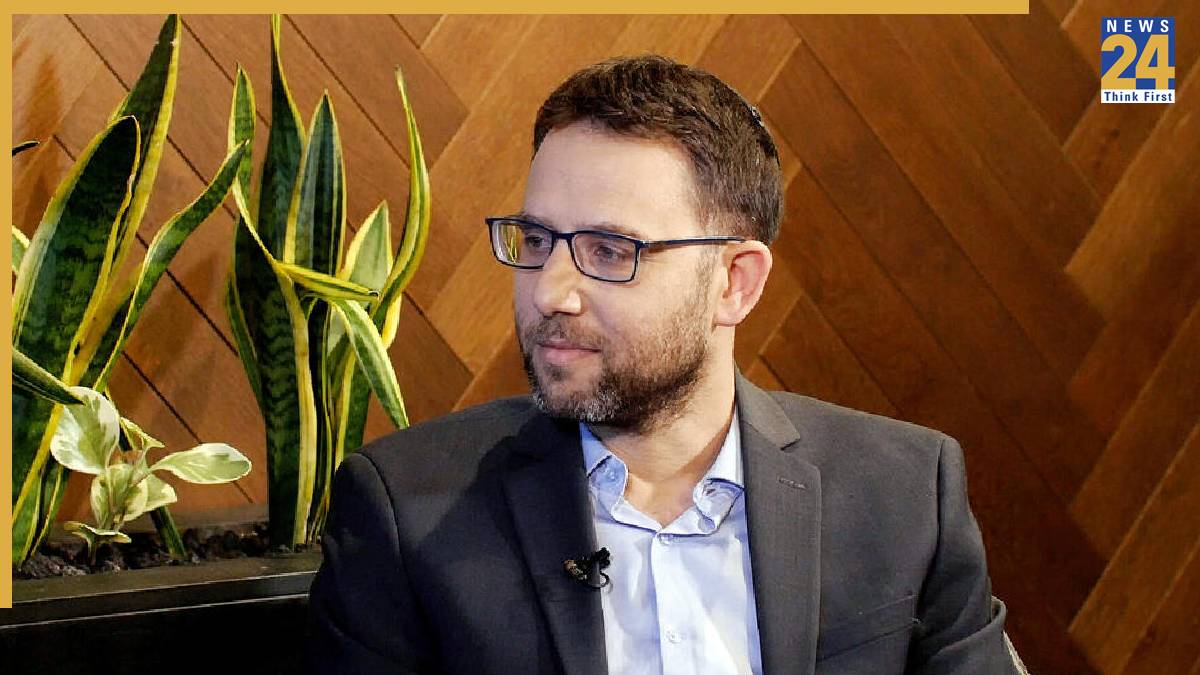


Israel’s Ministry of Finance Chief Economist, Shmuel Abramzon, stated on Monday that the 50 percent U.S. tariff issue is likely to be a temporary matter. He expressed optimism that India and the U.S. would soon reach a mutual agreement.
In an interview with ANI, Abramzon said, “India is a strong negotiator. I see this as a temporary situation. Given that India and the U.S. are long-standing partners with a promising future, I’m confident they will work out a solution to reduce these tariffs.”
The remarks come amid global economic uncertainties following the US imposition of a 50 percent tariff on Indian imports, supplemented by an additional 25 percent due to India’s purchase of Russian crude oil.
US President Donald Trump warned that the United States has not yet rolled out “Phase-2” and “Phase-3” tariffs against countries continuing trade ties with Russia, calling secondary sanctions on India a direct action against Russia, as “that cost hundreds of billions of dollars to Russia.”
He made the comments when asked why no action had been taken against Russia since assuming the Oval Office in January. Trump noted that India is the largest buyer of Russian oil after China, suggesting that New Delhi could face further penalties if energy imports from Moscow continue. While the US has temporarily suspended additional tariffs on China until November, India has faced steep levies. A 25 percent tariff was imposed earlier this month, and an additional 25 percent secondary sanction took effect on August 27, bringing the total to 50 percent on Indian goods.
The US president said these steps targeted Russia’s oil exports through major buyers. “Would you say that putting secondary sanctions on India, the largest purchaser outside China, they are almost equal. Would you say there was no action? That cost hundreds of billions of dollars to Russia, you call that no action? I haven’t done Phase-2 yet or Phase-3,” Trump told reporters during a joint press conference with the Polish President at the White House.
Recalling his earlier warning that India would face “big problems” if it continued Russian oil purchases, Trump added, “Two weeks ago, I said if India buys, India has got big problems, and that’s what happens.”
Earlier, in a separate interview, Trump claimed that New Delhi had offered him a “no tariff” deal following Washington’s decision to raise duties on Indian goods. Speaking on The Scott Jennings Radio Show, he said, “India was the most highly tariffed nation in the world, and you know what, they’ve offered me no tariffs in India anymore. If I didn’t have tariffs, they would never make that offer.”
Former President Donald Trump once again emphasized his strong support for tariffs, stating they are crucial for correcting imbalances in global trade. “China hits us with tariffs, India hits us with tariffs, Brazil hits us with tariffs. I understand tariffs better than anyone else in the world,” he said.
Calling the U.S.-India trade relationship a “one-sided disaster,” Trump argued that India has long benefited at the expense of the U.S. He claimed that while India exports a significant volume of goods to the American market, U.S. companies have faced major hurdles entering India due to high import duties. “They’re now offering to eliminate their tariffs, but it’s getting late. For decades, the relationship was entirely one-sided,” he added.