
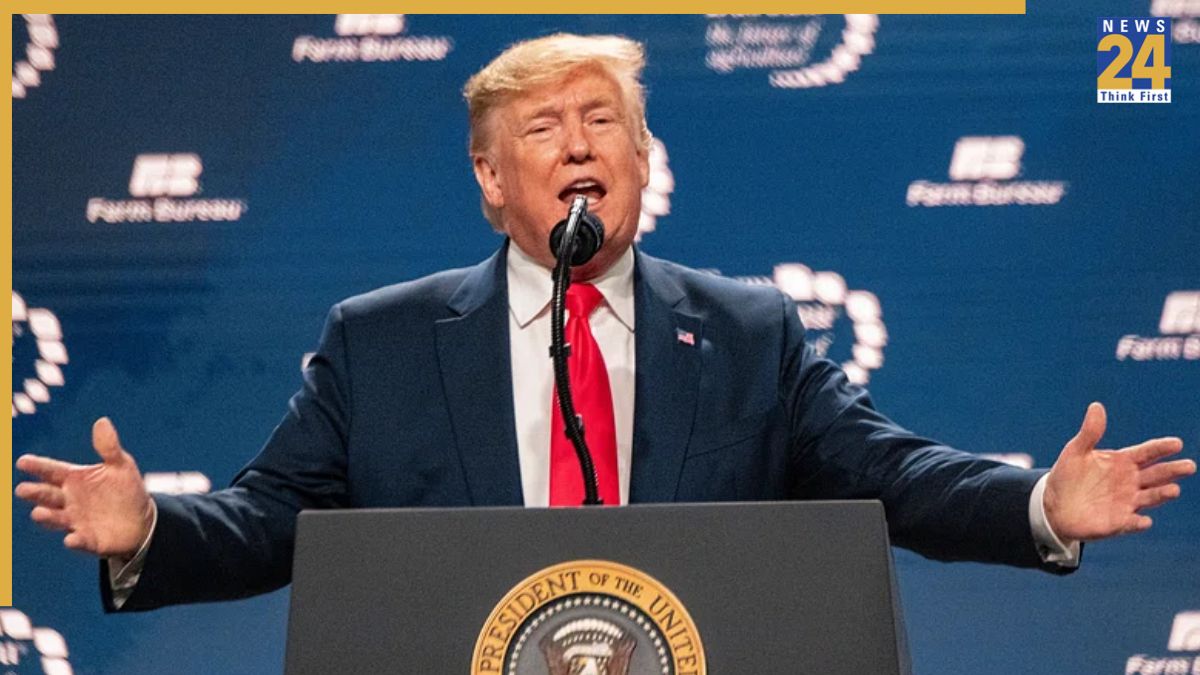


Amid growing tensions between India and the US, the country is witnessing a strong wave of economic nationalism. The main reason for this tension is the massive 50% tariff imposed on India by US President Donald Trump, which has created a wave of anger across the country and led to calls for a widespread boycott of US companies and products. This article examines the impact of these tariffs, the rising anti-US sentiment in India, and the growing trend towards indigenous alternatives.
This tariff imposed on India’s purchase of Russian oil is among the highest import duties in the world. As a result, US companies operating in India such as Pepsi, Coca-Cola, Subway, KFC and McDonald’s are facing heavy pressure and the fear of boycott.
Yoga guru Ramdev has led this movement and called on Indians to boycott all US products. He says, “Not a single Indian should be seen at the counter of Pepsi, Coca-Cola, Subway, KFC or McDonald’s. The boycott should be so big that there is an uproar in America.” This sentiment is not unique to India, there is a wave of consumer boycotts against the US in countries such as France, the United Kingdom and Canada. However, the impact could be far more severe in India, which has a population of 1.5 billion.
Prime Minister Narendra Modi urged the public to embrace “swadeshi” products in this situation. He said, “Whoever wants to make India the third largest economy, must take a pledge that whatever we buy should be made by the hard work of Indians… We have to adopt the mantra of ‘vocal for local’.”
#WATCH | Noida, UP | On 25% additional US tariffs on India from August 27, Yoga guru Ramdev says, "Indian citizens should strongly oppose the 50% tariffs that America has imposed on India as political bullying, hooliganism and dictatorship. American companies and brands should be… pic.twitter.com/sJedjdNt0k
— ANI (@ANI) August 27, 2025
At the same time, Modi targeted Trump, saying that in today’s world “the politics of economic self-interest” is growing rapidly, where every country is engaged in protecting its own interests.
On August 6, Trump added an additional 25% duty on top of the already imposed 25% tariff on India. He wrote on Truth Social that India is not only buying Russian oil in large quantities, but is also selling it for profit in the open market. Due to this, he announced to increase the tariff on India.
The Indian government responded with restraint, calling it “unfair, unjust and unreasonable” and said it would “take all necessary steps to protect national interests.” The tariffs came into effect from August 27.
Taking the protest further, Aam Aadmi Party MP Ashok Kumar Mittal wrote an open letter to Trump, in which he cited the historic Swadeshi movement of 7 August 1905. He said, “If 146 crore Indians today were to reiterate that sentiment and impose strategic sanctions on US businesses, the impact would be far more severe on the US than on India.”
𝐖𝐡𝐚𝐭 𝐢𝐟 146 crore Indians boycott American companies operating in India?
— Ashok Kumar Mittal (@DrAshokKMittal) August 7, 2025
My open letter to @realDonaldTrump on US’s 50% tariffs for India, in which I 𝐮𝐫𝐠𝐞 him to “choose dialogue over discord, coordination over coercion.”
Jai Hind! pic.twitter.com/rQJXv8yhiY
However, US companies still maintain a presence in India. Westlife Foodworld Ltd, which operates McDonald’s in West and South India, reported revenue of Rs 2,390 crore in FY24, up 5% from the previous year. PepsiCo India reported revenue of Rs 8,200 crore, putting India among its global top 15 markets. PepsiCo has also invested Rs 3,500- 4,000 crore in India over the past three years.
But these gains could be at risk due to changing public opinion, political support and influential calls — as India stands at a crucial economic and ideological turning point.
Also Read: SCO Summit 2025: Modi-Xi Jinping Meet Comes At Crucial Crossroads In US-India Ties