

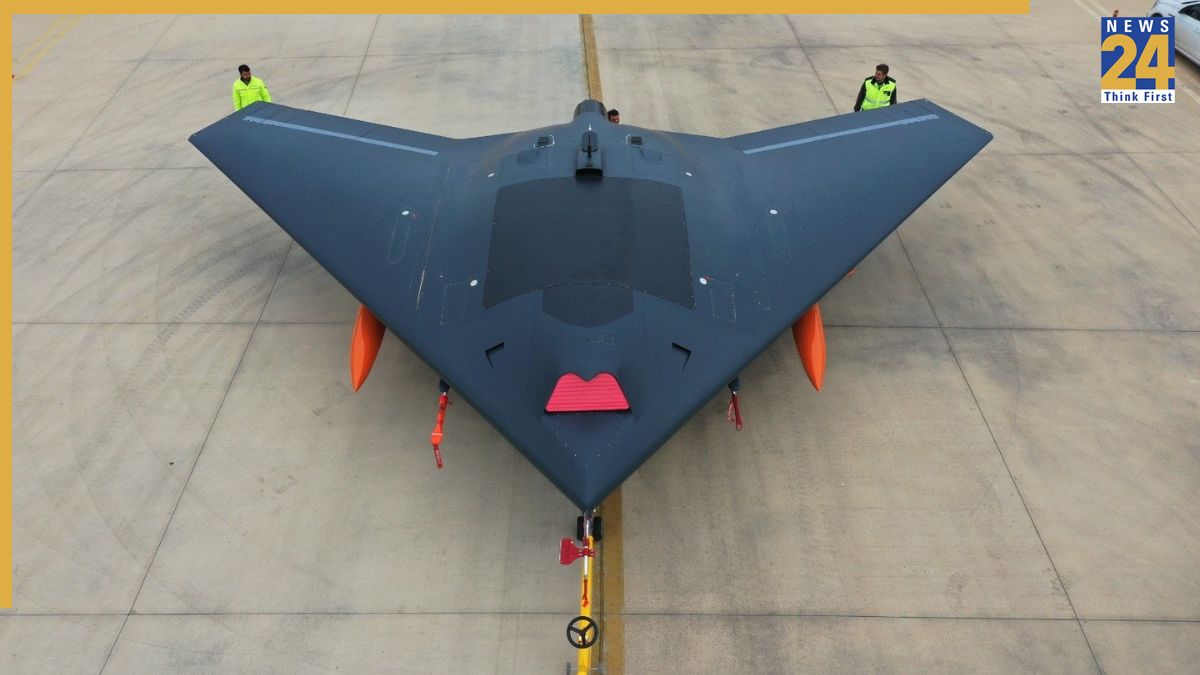


Pakistan’s media is buzzing with reports that Turkey has offered the Pakistan Air Force its latest ANKA-3 stealth combat drone. According to Times of Islamabad, Turkey has ‘officially’ proposed the aircraft, developed by Turkish Aerospace Industries (TAI) and is pitching it as a platform that could give Pakistan a powerful deep-strike capability.
Interestingly, the excitement comes even though Turkey had earlier made similar claims about its Bayraktar TB-2 drones, which, as reports note, failed to perform against India. That setback reportedly hurt TB-2 sales and critics are now joking that Turkey has entered the market again with a ‘new balloon’, the ANKA-3, to revive its image.
Another report by AeroNews Journal adds more drama. It claims Turkey has offered Pakistan the option to locally manufacture at least 100 ANKA-3 drones, along with establishing a domestic production facility.
What makes the ANKA-3 so special?
The ANKA-3 represents Turkey’s push into next-generation drone warfare. Designed by TAI, it features a tailless flying-wing shape that reduces radar visibility. A turbofan engine allows speeds up to Mach 0.7 and the drone can carry a hefty 1200-kg payload, ranging from precision-guided weapons to air-to-air missiles and electronic warfare equipment.
Reports also claim it has been built specifically to take out enemy air-defence systems, which is why Turkey is marketing it as a drone that could even challenge India’s S-400 air-defence system.
The drone can stay in the sky for 10 straight hours at 40,000 feet and Turkish officials have reportedly confirmed that it is being actively promoted to Pakistan after finishing its flight tests last year.
Should India be worried?
According to Navbharat Times, retired Indian Air Force officers who now work in drone technology aren’t too alarmed. Speaking anonymously, they explained that while the ANKA-3 has stealth features, ‘stealth doesn’t mean invisible.’ One expert even recalled how India managed to detect an American F-35 stealth jet that remained grounded for weeks at a Kerala air base.
They pointed out that India has a layered radar network, covering both ground-based and airborne systems. The country is also investing heavily in AEW&C aircraft and next-generation NETRA AWACS, which are designed to spot low-visibility platforms.
India’s electronic warfare systems have also become stronger. With advanced jamming and spoofing tools that can disrupt a drone’s communication and navigation, the experts believe India is well-equipped to neutralise such drones if Pakistan eventually buys them.