


Trump tantrums on tariffs, no doubt, have sparked off a global economic reactionary moves that may well boomerang on him and the US economy if the new power equations being scripted by the big global players, including India, result in a new economic world order.
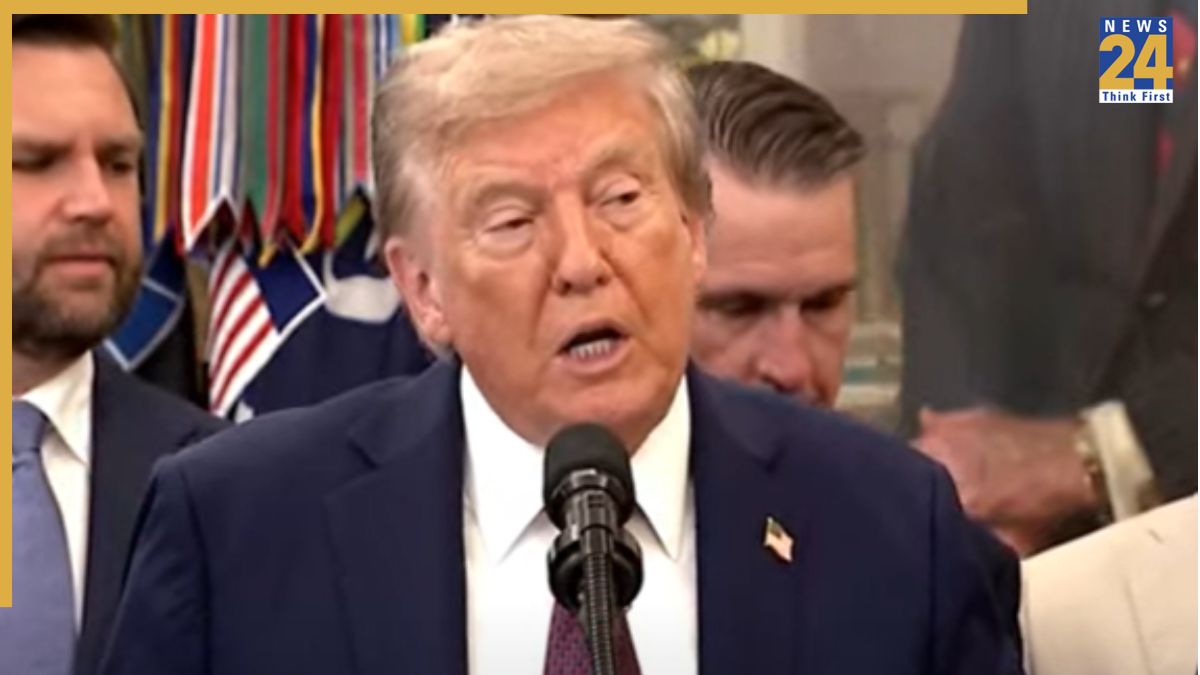
The optics and the impact of the Modi-Putin-Xi pictures on Washington seems to have been just what many in India expected, with another volley of tongue lashing from a close Trump aide and White House Trade counsellor Peter Nevvaro and Donald Trump himself ruling out any reduction in the punitive tariffs he imposed on India.
The SCO meeting may have seen the planting of the seeds for the realignment of the world economic order, and America for sure is not amused. The reaction of Washington is proof enough. But, the Trump tariffs are going to hurt Indian exporters in the short run. As finding and servicing new markets takes time and there is competition there too.
But realistically speaking, can India ignore and walk away from the world’s biggest economy that has become restrictive for Indian exports, after 50 per cent tariffs, the highest US President has imposed on any country?
From his perspective and for domestic consumption, Trump tough trade talk may win him brownie points in line with this ‘swadeshi America First and Make America Great Again (MAGA) slogans, but there is a section of Americans who are apprehensive over the fallout of his tariff move on their own economy.
For sure, analysts here in India see Trump talk and tariffs as purely retaliatory, as he perceives that great American brands like Ford, GM, and Harley Davidson were treated very unfairly in India with heavy levies of taxes. And he does not make a secret of it, and he even mentioned the Motorcycle company by name in his latest press conference, where he again reiterated that punitive tariffs on India would continue.
Harley Davidson had faced steep import duties as high as 50 percent to 100 percent, while Indian motorcycles entering US face lower tariffs. US automakers like Ford, and GM too struggled with India’s tariffs and tax levies.
But here, Global business and trade analysts like Ganapathi Ramachandran and former Business Line Associate Editor, Mulugu Somasekhar, argue out a case for taking a pragmatic approach with the United States in the overall long term interests of the country.
“While Indian motorcycles have reached a maturity level to compete internationally without any marquee collaboration, TVS being a shining example, I think we should just allow Indian American cars to come in, because, as someone familiar with these cars, these are fuel guzzlers. And the market will do the rest. I think we could have been proactive about a few of these things, Ramachandran felt.
There is also pressure that Trump is putting on American companies like Apple and Amazon to recalibrate their businesses in India, which Apple clearly has ignored, so as to put pressure on India to relent on sectors that it protects. Clearly, the tariffs are also a bargaining chip for America that wants India to open up its agriculture, which India has been resisting strongly, as “India’s own farming community would suffer.”
The tariffs are not only punitive for us, but from his point of view, perhaps a strategic bargaining tool too, and US and India were negotiating a bilateral package covering most of these sectors. But clearly, agriculture cannot be on the table of trade talk. So far, India’s response has been calm, collected and without being confrontationist.
India should engage the US and not get into a confrontation in the long-term trade interests, concurred Somasekhar..”Simultaneously, India should expand its basket of exporting nations to EU and Asian countries, including China.
One good thing is that at present India’s exports to the US are not high. But the current tariff driven impasse presents India with a chance to strengthen R&D, attain full cycle capability in manufacturing and investments in skilling.
But clearly, it is the SCO meeting that puts the whole tariff trouble into a new perspective. It is very possible a new trading block —a bit of Asia and a bit of Europe — could emerge, and fairly quickly, but not as fast as one would like it to be, to offset the immediate environment created by the US tariffs. If India can be in the front and in the centre of the new trading block, Eurasia. Eurasia could well be the new economic order from the present disorder.
But, this will be very slow as Diplomacy takes time, a long time.