
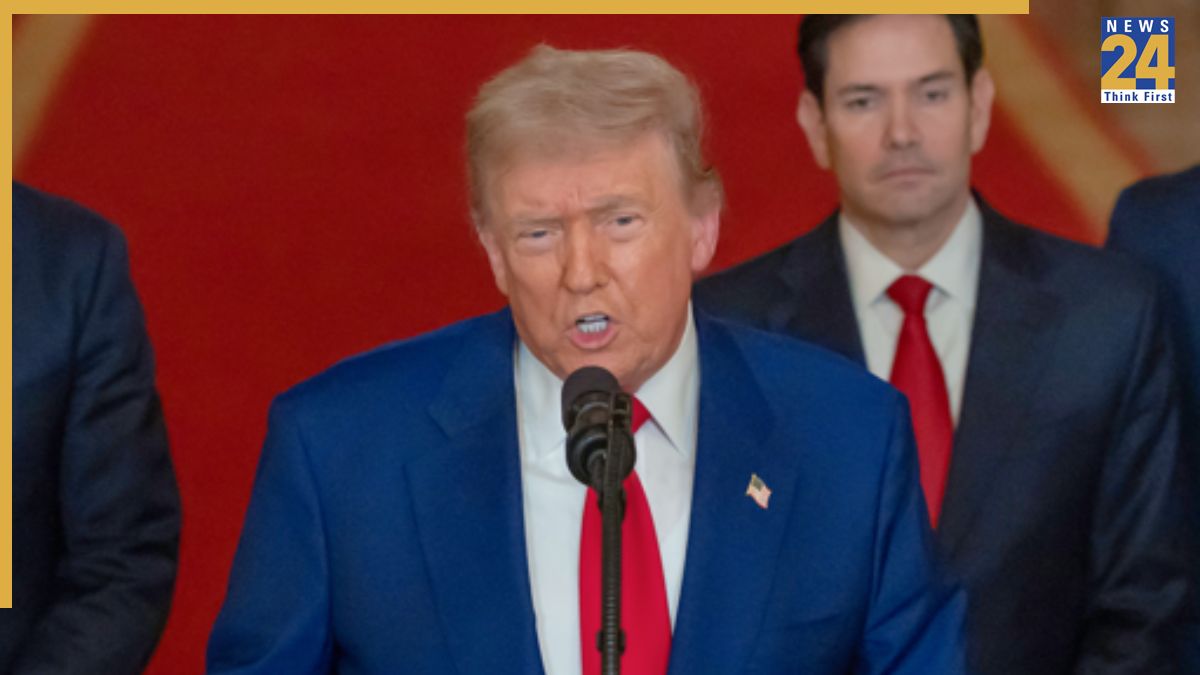


US President Donald Trump was eager to mediate between Pakistan and India, but after the latter declined, terming it a bilateral issue, the US President imposed a 50% tariff on India. A report by American multinational investment bank and financial services company Jefferies revealed this as the reason.
According to the report, the unprecedented tariffs were a “result” of Trump’s “anger,” as he wanted to mediate between India and Pakistan after tensions rose between the two nations over the Pahalgam terror attack that claimed 26 lives.
“Tariffs are primarily the consequence of the American president’s personal pique that he was not allowed to play a role in seeking to end the long-running acrimony between India and Pakistan,” NDTV cited the report as saying.
Jefferies pointed out that this “red line” was upheld despite the heavy economic costs, effectively denying the 47th American president one of his opportunities to strengthen his international standing and potentially seek recognition such as the Nobel Peace Prize.
Another sticking point is agriculture. The report highlighted that no Indian government, including the current one, is willing to open up the agriculture sector to imports because of the severe consequences it would have on millions of people.
Nearly 250 million farmers and related labourers depend on agriculture for their livelihoods, with the sector accounting for nearly 40 per cent of India’s workforce, the report noted.
According to Jefferies, the draconian tariffs now imposed on India are also tied to a wider chain of events. Trump has not been able to end the Ukraine conflict as he had promised, and India’s continued purchases of Russian oil have become an added issue in Washington.