
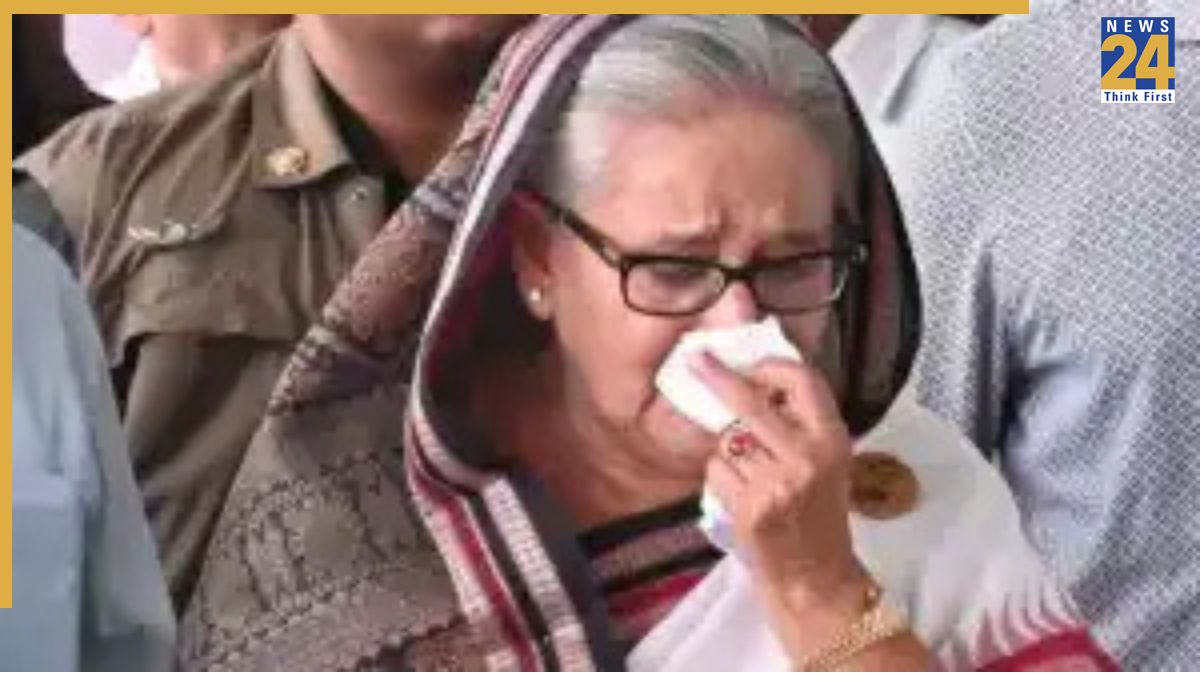


The death sentence handed to former Bangladesh Prime Minister Sheikh Hasina by the International Crimes Tribunal (ICT) has created one of the most dramatic political moments in South Asia in recent years. A leader who ruled for 15 years, guided her country through major economic growth, and stood firm against extremism is now facing the harshest punishment a court can give. But the biggest question everyone is asking today is simple: Will India send her back?
The straight answer is no. And the reasons go much deeper than politics—they touch law, morality, regional stability, and human relationships built over decades.
A Court That Divides the Nation
The ICT is a special Bangladeshi court created to hear cases related to serious crimes like murder, torture and crimes against humanity. The tribunal was active after the 1971 Liberation War and was revived recently to investigate the 2024 student protest crackdown, during which hundreds of people died.
Hasina, former Home Minister Asaduzzaman Khan, and former Police Chief Abdullah Al-Mamun were charged with crimes against humanity linked to those violent months. The prosecution claims senior leaders planned or encouraged actions that led to deaths, torture and disappearances.
Hasina’s supporters strongly deny these accusations. They say she was trying to control a violent and fast-spreading crisis, not create one. Many experts also believe the tribunal is heavily politicised and is being used as a tool by the new leadership to remove the old one permanently.
That is why the Awami League calls it a “kangaroo court” — a court where the result is already decided even before the hearing begins.
Tried in Her Absence
One of the most troubling aspects of this case is that Hasina was not present during the trial. She has been living quietly in India since August 2024, after losing power during nationwide protests.
Her lawyers say they were not allowed to argue freely, and international observers point out that trials conducted in absentia often fail the basic test of fairness. For India, this becomes a central point — sending someone back to face a punishment decided without a proper hearing goes against both law and conscience.
Why India Will Say No
India does have an extradition treaty with Bangladesh. But that treaty has one clear line written in bold:
No extradition for political offences.
And Hasina’s case is seen by many as deeply political. Here are the reasons India will refuse:
1. It is clearly a political case
India can legally say:
“We cannot extradite someone for a politically motivated case.”
This alone is enough to deny the request.
2. Fair trial doubts
India will point out that the trial happened without her presence and without proper legal defence. Under international norms, extradition is not allowed when the accused did not receive a fair chance.
3. The death penalty issue
India rarely extradites individuals to countries where they may face execution. This is a long-standing humanitarian position. Hasina’s death sentence becomes an immediate barrier.
4. Her safety cannot be guaranteed
Bangladesh is currently unstable, with rising violence and political tensions. India can simply state that her life is at risk, whether inside the prison or outside it. This is a solid legal reason to refuse extradition.
5. Hasina is one of India’s closest allies
For 15 years, Hasina worked with India on security, counter-terrorism, border control, trade, and regional stability. Indian officials still remember how she acted against anti-India extremist groups hiding in Bangladesh.
Countries do not easily abandon such long-term partners. India will protect her quietly, humanely and firmly.
6. India can delay diplomatically
Even if Bangladesh insists, India can simply say:
- “We are examining the documents,”
- “Legal opinion is pending,”
- “The matter is under review.”
It allows India to avoid direct confrontation while still giving Hasina complete protection.
The Human Side of the Crisis
Politics aside, this situation is deeply emotional. Sheikh Hasina is not just another political figure—she is a survivor who lived through the assassination of her father Sheikh Mujibur Rahman and most of her family. She fought for democracy in the 1980s, spent her life opposing military rule, and led Bangladesh through rapid development.
To see her now facing a death sentence is painful even for those who criticise her. Her supporters are heartbroken. Her son Sajeeb Wazed has openly said he expected this verdict, but he remains confident because “she is in India and safe.”
That one sentence captures the entire story.
What Happens Next
The verdict will cause more political unrest in Bangladesh. The country is already tense, and this judgment may push it into deeper conflict. But Hasina herself is unlikely to return.
India will continue to provide humanitarian shelter while handling Bangladesh diplomatically.
The Bottom Line
Sheikh Hasina’s death sentence is a huge moment in South Asian politics, but it is very unlikely to result in her execution. India has legal, ethical, humanitarian and strategic reasons to keep her safe.
In simple words:
India will not hand over a long-time friend to a court whose fairness is in doubt.
And that quiet, firm protection may shape the political future of Bangladesh more than the verdict itself.