

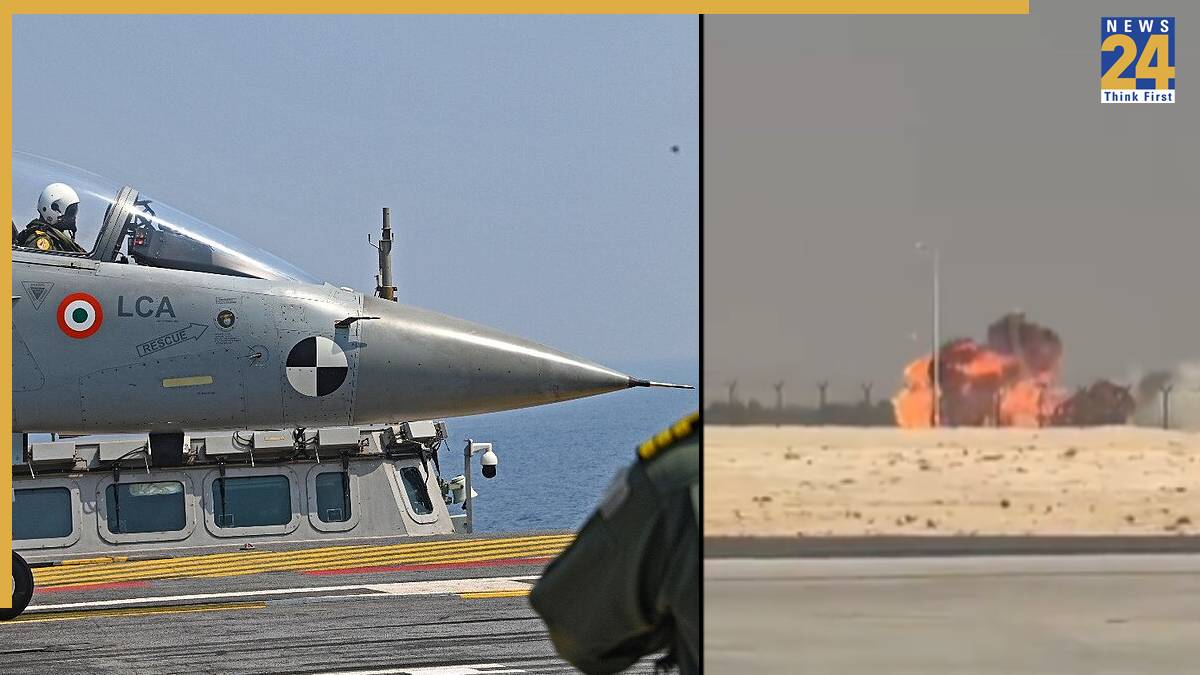


A deadly accident has gripped the air show spectators in shock in Dubai as an indigenous jet, Tejas, crashed after showcasing a dangerous maneuver in the air. The viral videos of the crash have flooded the internet. In the video, the aircraft can be seen losing altitude very fast and descending from extensive heights at a rapid speed. The jet crashes after descending from the heights and then bursts into a ball of flames immediately. This generally happens when the aircraft is full of fuel.
Plumes of thick black smoke rose from the site as the aircraft crashed, causing panic among spectators and children who were gathered for the show. It is still not known whether the pilot was able to eject or not as the aircraft went down. The rampant speed of the descent did not allow the pilot with enogh time to eject and sadly the pilot could not survive teh crash
An IAF Tejas aircraft met with an accident during an aerial display at Dubai Air Show, today. The pilot sustained fatal injuries in the accident.
— Indian Air Force (@IAF_MCC) November 21, 2025
IAF deeply regrets the loss of life and stands firmly with the bereaved family in this time of grief.
A court of inquiry is being…
Tejas: The Indigenous Marvel from HAL
The Tejas is a 4.5-generation fighter aircraft designed to handle offensive air support with ease. The fighter jet has been built in such a way that it can easily conduct combat operations and perform ground and maritime missions. The fighter jet is available in a slew of configurations, which include a single-seat fighter variant for both the Air Force and Navy, as well as a twin-seat trainer version.
Fact Check on a Previous Alarming News
As per a Gulf News report published on the 20th, the Indian Ministry of Defence on Thursday dismissed social media claims alleging that there was an “oil leakage” in the indigenously built LCA Tejas fighter jet during the Dubai Air Show 2025. The ministry called the circulating videos fake and intentionally misleading.
A PIB Fact Check…
Several propaganda accounts are circulating videos claiming that at the #DubaiAirshow 2025, the Indian LCA #Tejas Mk1 suffered an oil leakage.#PIBFactCheck
— PIB Fact Check (@PIBFactCheck) November 20, 2025
✅These claims are #Fake.
✅The videos show routine, intentional draining of condensed water from the aircraft's… pic.twitter.com/k4oQThqtA3
In a firm statement on X, the Ministry said that certain accounts were deliberately pushing a false narrative to undermine the aircraft’s reliability with “baseless propaganda.” The controversy erupted after videos showing liquid dripping from the aircraft were shared widely over the internet; users claimed that the drippage signalled a malfunction.
The Ministry clarified that the footage shows a standard procedure involving the intentional drainage of condensed water from the jet’s Environmental Control System (ECS) and on-board Oxygen Generating System. This drainage is a routine process for an aircraft. Attempts to link it to an oil leak were entirely incorrect.
Did the Tejas Go Through a Tail Spin?
While details behind the crash are still awaited, it is possible that the crashed Tejas might have gone through a tail-spin incident that led to the rampant descent. A tail spin is a rapid, high-rotation descent of an airplane. This is a type of stalled spin which can be accidental or intentional, such as during aerial displays. Recovery from an accidental tail spin is a critical piloting skill involving specific control inputs to break away from the spiraling of the jet. It is not yet clear whether the aircraft went through a tail spin or not.
In the past, several fighter jets have been highly susceptible to tail spins, such as the F-14 Tomcat, which was vulnerable to unrecoverable spins. This was a significant issue in the early F-14A.
Was Pilot Under G-LOC
Under the increasing positive G forces, the blood circulation takes hit and tends to move from the head to the feet.
In certain cases it may lead to Tunnel Vision that affects peripheral vision and training only central vision, get out loss of color and blackout. However negative g may lead to increased blood pressure in the head which may cause a red out, both can cause a disorientation and may lead to the pilot losing consciousness for about 10 to 15 seconds, if G LOC occurs at low altitude this momentary lapse may prove to be fatal.
Also Read: No more ‘Bhai Virendra’ moments! Maharashtra rolls out new protocol list for staff; check here