
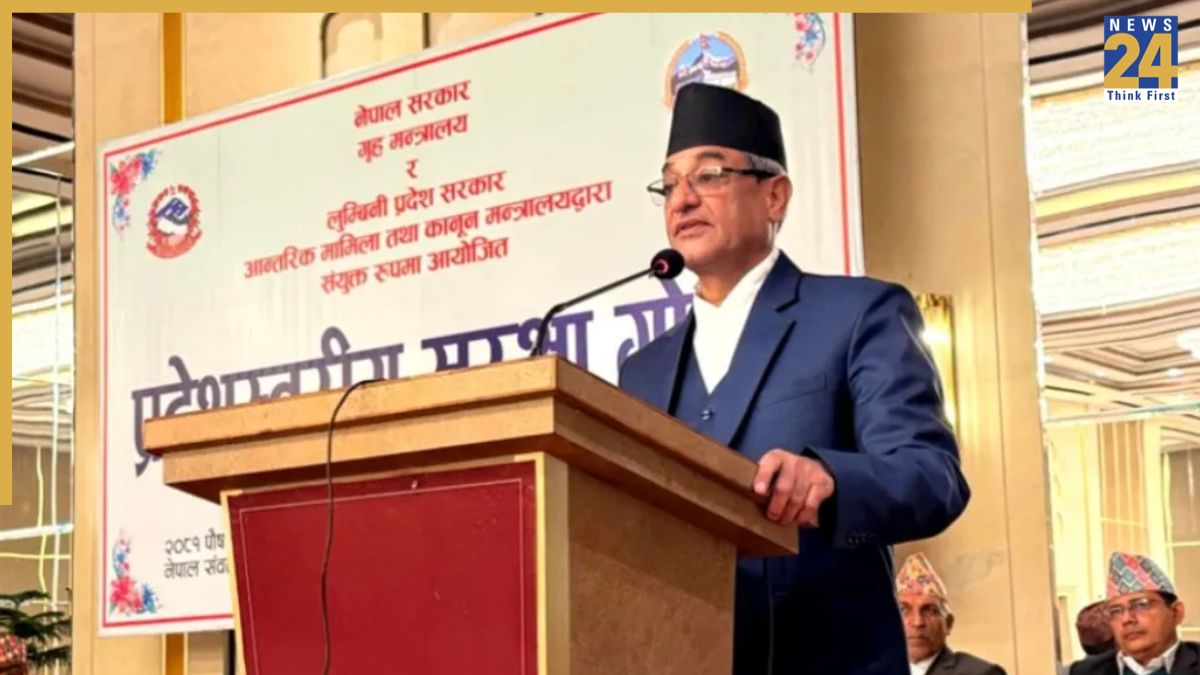


Nepal’s Home Minister Ramesh Lekhak has officially resigned, taking moral responsibility for the deaths of 19 people during Gen Z-led protests. He submitted his resignation to Prime Minister KP Sharma Oli during an emergency cabinet meeting held on Monday evening at the Prime Minister’s official residence in Baluwatar. The protest which erupted on September 8, left 19 dead and over 250 injured, as confirmed by the Nepal’s Health Ministry.
#UPDATE | Nepal Home Minister Ramesh Lekhak tenders his resignation to the Prime Minister during the cabinet meeting held at the official residence of the Prime Minister in Baluwatar. https://t.co/zHzmf8JFyp
---Advertisement---— ANI (@ANI) September 8, 2025
An urgent cabinet meeting was called at the Prime Minister’s residence, in Baluwatar, following violent protests that claimed over a dozen lives in a single day.
The unrest which triggered on Monday due to government’s recent ban on social media has caused massive disruption, leaving several injured. The protestors vandalised the parliament gate, fired dozens of rounds and burnt an effigy of Prime Minister KP Sharma Oli.
The ban which came into effect on September 4 in Nepal, targeted social media platforms that had not registered with the government. While announcing its decision, the Nepalese government emphasised that social media users with fake IDs have been spreading hate speech and fake news, and committing fraud and other crimes via some platforms.
As the protests turned violent, authorities imposed curfew across key parts of the capital from 12:30 pm to 10 pm. The Kathmandu district administration office (DAO) has extended curfew to cover the residences of the president, prime minister, and vice-president and Singha Durbar. It also includes the President’s residence, Shital Niwas area, Maharajgunj, the vice-president’s residence in Lainchaur, all sides of Singha Durbar, the prime minister’s residence in Baluwatar, and neighbouring areas.
Nepal Protest: What Led To The Agitation?
The march which was initially peaceful turned violent when protesters broke through barricades and entered restricted zones near Parliament. Police responded with water cannons, teargas, and rubber bullets after demonstrators threw tree branches and water bottles and shouted anti-government slogans. Some protesters reportedly managed to enter the Parliament
Also Read: Why Nepal’s Social Media Ban Sparked Protests? Inside The Gen Z Uprising