

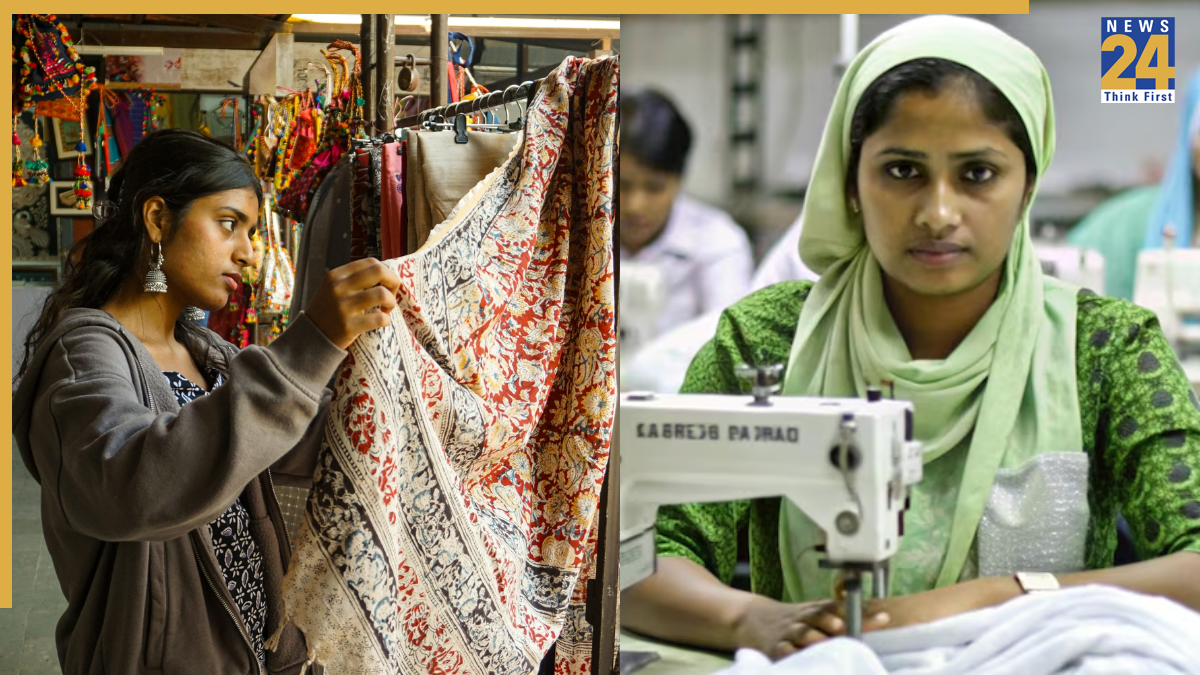


India’s textile and apparel exports, including handicrafts, have seen significant growth. In November 2025, exports reached USD 2,855.8 million, marking a 9.4 percent increase compared to USD 2,601.5 million in November 2024. This surge is a major setback for Bangladesh, which has long been India’s biggest competitor in the global ready-made garment (RMG) market. Political instability in Bangladesh is affecting its exports, while global brands are increasingly shifting their business to India, showing growing confidence in the country.
US remains at top despite high tariffs
The United States remains the largest export market for India’s textile and apparel industry, even after imposing a 50 percent tariff on Indian goods. The total size of the sector is projected to reach USD 179 billion in 2024-25, including a domestic market of USD 142 billion and exports of USD 37 billion.
India’s explosive growth in all categories
India recorded strong growth in November 2025 across key categories. Ready-made garments (RMG) grew by 11.3 percent, man-made yarns, fabrics, and made-ups grew by 15.7percent, cotton yarns, fabrics, made-ups, and handloom products grew by 4.1 percent, and handicrafts (excluding hand-knotted carpets) surged by 29.7 percent.
During the period from January to November 2025, exports of RMG grew by 3.6 percent compared to the same period last year, while jute products recorded a growth of 6.1 percent, according to the Textiles Ministry. India’s rising textile exports come at a time when global brands are increasingly shifting their focus from Bangladesh to India, drawn by political stability and a growing manufacturing base, giving India a competitive edge in the global ready-made garment market.
“It is worth noting that during the period January-November 2025, exports of readymade garments (RMG) witnessed a growth of 3.6 per cent as compared to the same period last year. Jute products grew by 6.1 per cent during the same period,” said the Textile Ministry.
Is Bangladesh losing grip on its market?
Over the past few months, political turmoil, labor protests, and a power crisis in Bangladesh have severely disrupted the country’s textile supply chain. Global brands that once relied heavily on Bangladesh are now turning to India as a safer alternative. India’s 9.4% growth in textile exports in November shows that international buyers are gradually shifting confidence from Bangladesh to India. Around 80% of Bangladesh’s export revenue comes from the textile sector. If India continues to increase its market share at this pace, Bangladesh may struggle to sustain its most crucial industry.
India benefits from abundant raw cotton, recent labor reforms, and a stable business environment, while Bangladesh remains dependent on imports for raw materials. If Bangladesh does not stabilize its internal situation soon, India could emerge as the “garment king” of South Asia, overtaking Bangladesh not only in November’s export figures but also in the long term.