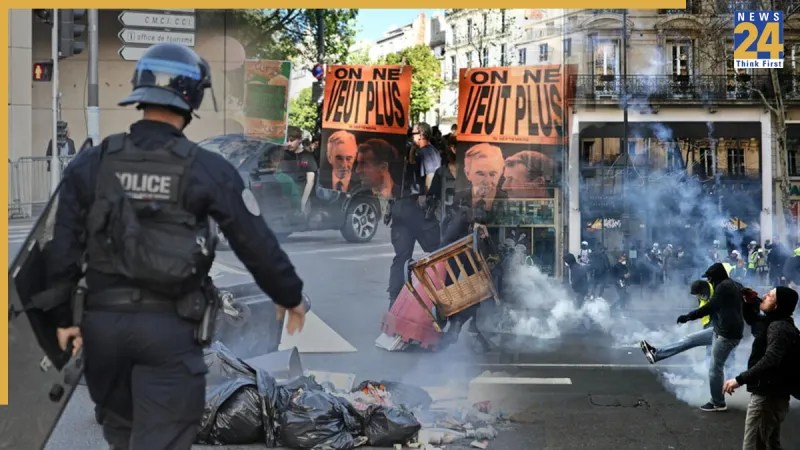
According to reports, though the protest’s goal to “Block Everything” wasn’t achieved, it still caused many disruptions and inconvenience for the people in different areas. This happened despite 80,000 police being deployed, who removed barricades and quickly arrested protesters.
French Interior Minister Bruno Retailleau said that a bus was set on fire in the western city of Rennes, resulting in damage to a power line. This caused a block in trains on a line in the southwest. He alleged that protesters were attempting to create “a climate of insurrection.”
Macron Faced Anger Over Pension Reforms
Still, the initial protests appeared to have less impact compared to previous bouts of unrest that have sporadically rocked Macron’s leadership. During his first term as president, Macron faced months of nationwide “yellow vest” protests that caused major disruptions. After he was reelected in 2022, he faced widespread anger over unpopular pension reforms. In 2023, there were riots and protests across the country following the deadly police shooting of a teenager on the outskirts of Paris.
According to AFP reports, On Wednesday morning, groups of protesters repeatedly tried to block Paris’ beltway during rush hour. They built barricades, threw objects at police, slowed down traffic, and carried out other protest activities. This unrest added to the sense of crisis in France, especially after the government collapsed on Monday when Prime Minister François Bayrou lost a parliamentary confidence vote.
Prime Minister Sébastien Lecornu
The “Bloquons Tout,” or “Block Everything,” movement gathered momentum over the summer on social media and in encrypted chats, calling for a day of blockades, strikes, demonstrations and other acts of protests. The movement, which has grown virally with no clear identified leadership, has a broad array of demands — many targeting contested belt-tightening budget plans that Bayrou championed before his demise — as well as broader complaints about inequality.