
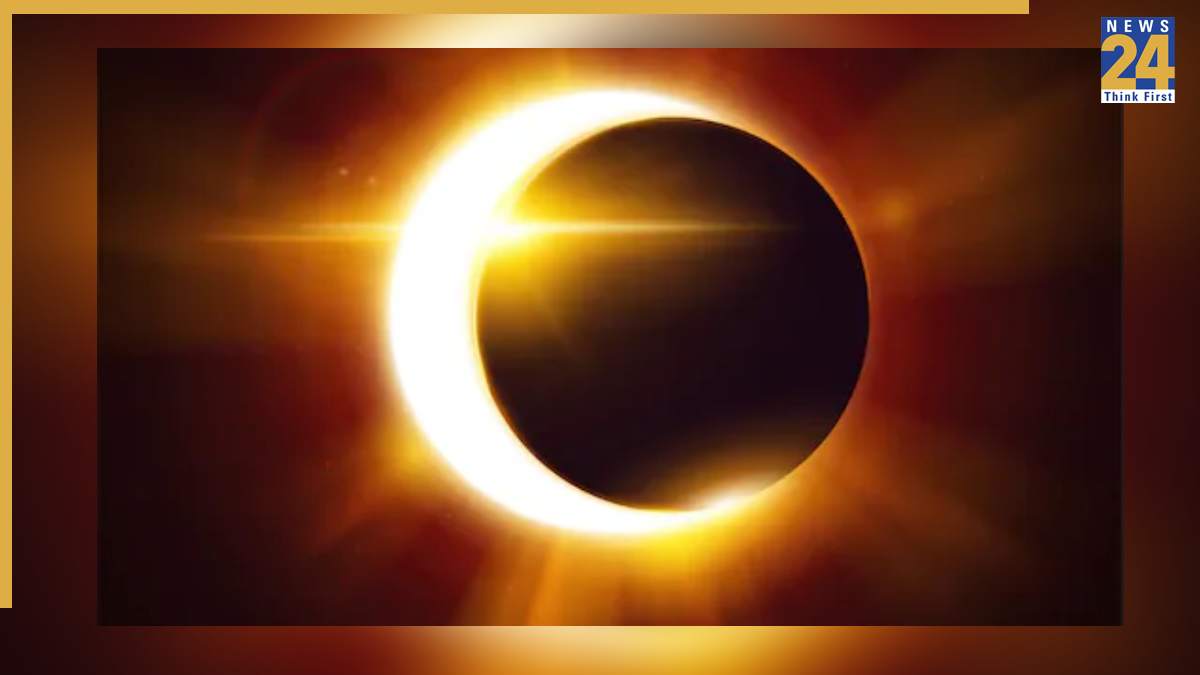


As per astronomers and space explorers, on August 2, 2027, Earth will experience one of the longest solar eclipses of the century. According to estimates, during this period the Earth will witness one of the longest total solar eclipses of the century, with the sky darkening for 6 minutes and 23 seconds. Amid these predictions, questions are being asked about whether a total solar eclipse can darken the entire Earth. To gain a better understanding of the eclipse and its ability to darken a specific area, it is important to know how solar eclipses work.
A solar eclipse is an astronomical event that occurs when the Sun, Moon, and Earth are aligned. This conjunction causes the Sun to be hidden behind the Moon, casting its shadow on Earth. The darkest part of the shadow is called the umbra, which is generally very thin.
Possibility of Darkness All Over
The size of the umbra can vary between a dozen to a few hundred kilometres in width, forming a curved line. This is commonly known as the path of totality. This means that only those within this narrow path experience the complete darkness of a total eclipse. For this reason, no solar eclipse can darken the entire globe simultaneously, including the total solar eclipse of 2027.
The Longest Total Solar Eclipse of the Century
The rest of the Earth will witness only a small shadow—if any—depending on how far away they are from the narrow band of totality. Earth is large and constantly rotating. This long eclipse will occur because, at that time, the Sun will be at its maximum distance from Earth, while the Moon will be at its closest point to Earth. Due to this, the Moon will appear larger and cast its shadow for a longer duration. A total solar eclipse of this magnitude will not occur again until 2114, which is why it is being called the longest solar eclipse of the century.
Visibility in India
According to a BBC report, the total solar eclipse on August 2, 2027, will begin in the eastern Atlantic. It will pass through North Africa, including Morocco, Algeria, Tunisia, Libya, Egypt, and parts of the Middle East and Mediterranean.
The longest duration of totality is expected in Luxor and Aswan in Egypt, where the sky will completely darken. Temperatures may drop, and the halo of the Sun’s corona will become more visible. Most of Europe, parts of Western Asia, and parts of Western Africa will fall in the zone of partial visibility. The rest of the world, including India, will not witness any effect of this eclipse.