
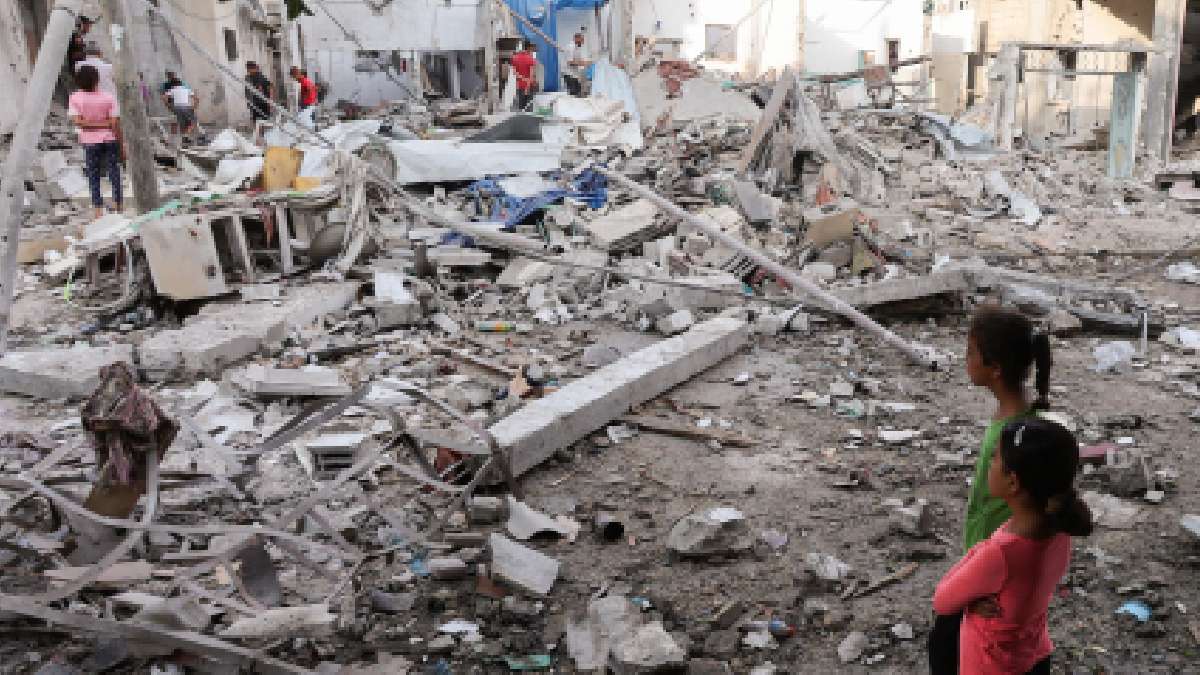


Israeli strikes killed at least 34 Palestinians in multiple locations across Gaza on Monday, according to media reports. The deadly spree unfolded shortly after Israel eased aid restrictions amid a worsening humanitarian crisis in the territory.
On Sunday, Israel announced that the military would pause operations in Gaza City, Deir al-Balah, and Muwasi for 10 hours a day until further notice, allowing for improved aid flow to Palestinians in Gaza, where concerns over mass hunger have been mounting. The idea behind this tactic was to enable the formation of safe routes for aid delivery.
Israel emphasized that it would continue military operations alongside the humanitarian measures. Aid agencies have welcomed the new initiatives, including airdrops into Gaza, but stressed that these efforts are still insufficient to counter the escalating hunger in the Palestinian territory.
Over the course of the war, Israel has restricted aid to varying degrees. Before the recent easing, it had cut off the entry of all goods—including fuel, food, and medicine—in an effort to pressure Hamas into releasing hostages.
Restrictions Were Partially Lifted
Israel partially lifted the restrictions in May but simultaneously moved forward with a new U.S.-backed aid delivery system, which has been plagued by chaos and violence. Traditional aid providers have also faced similar breakdowns in law and order around their delivery routes.
Amid the widespread devastation, most of Gaza’s population now depends on humanitarian aid. Accessing food has become so dire that some Palestinians have risked their lives to get it. Awda Hospital in central Gaza reported receiving the bodies of seven Palestinians who were reportedly killed on Monday by Israeli fire near a U.S.-backed aid distribution site operated by a humanitarian foundation.
Israel’s retaliatory strikes have resulted in the deaths of more than 59,800 Palestinians, according to figures from Gaza’s Health Ministry. While the ministry does not differentiate between militants and civilians, it reports that over half of those killed are women and children. Though the ministry operates under the Hamas-led administration, it is regarded by the United Nations and other international organizations as the most reliable source for casualty figures in the region.