



India on Wednesday dismissed Nepal’s claims over Lipulekh Pass, saying it “remains open to constructive interaction” with Nepal on resolving agreed outstanding boundary issues through dialogue and diplomacy.
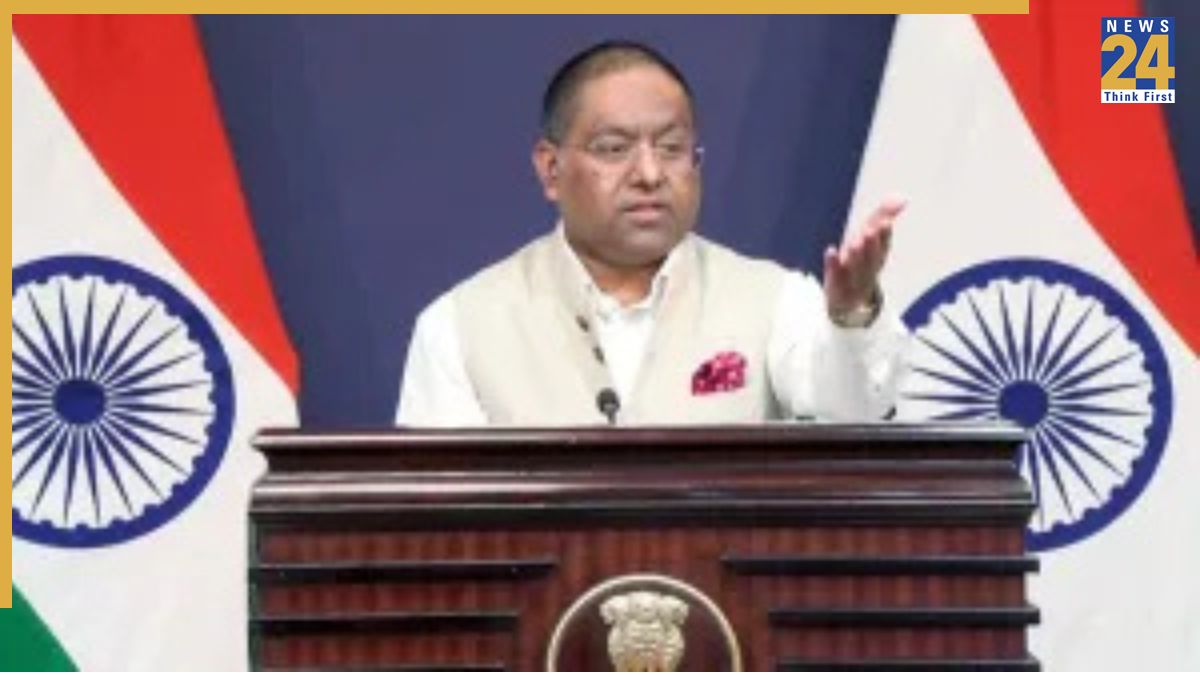
MEA Spokesperson Shri Randhir Jaiswal said: “We have noted the comments of Ministry of Foreign Affairs of Nepal related to resumption of border trade between India and China through the Lipulekh Pass. Our position in this regard has been consistent and clear. Border trade between India and China through Lipulekh pass had commenced in 1954 and has been going on for decades. This trade had been disrupted in recent years due to Covid and other developments, and both sides have now agreed to resume it. As regards territorial claims, our position remains that such claims are neither justified nor based on historical facts and evidence. Any unilateral artificial enlargement of territorial claims is untenable. India remains open to constructive interaction with Nepal on resolving agreed outstanding boundary issues through dialogue and diplomacy.”
Earlier in the day, Nepal objected to the agreement between India and China to open a trade route via Lipulekh, asserting its claim over the land.
Responding to media queries, the Ministry of Foreign Affairs on Wednesday issued three points, asserting claims over the land and objecting to the unilateral move by China and India.
“The Nepalese government is clear that the official map of Nepal has been included in the constitution of Nepal and that the map shows Limpiyadhura, Lipulekh and Kalapani east of the Mahakali River as integral parts of Nepal,” the first point of the press statement reads.
Nepal maintains that Lipulekh, including Kalapani and Limpiyadhura, belongs to Nepal according to the Sugauli Treaty of 1816.
Furthermore, the Ministry reiterated previous diplomatic attempts and communications with both countries, asserting Lipulekh to be Nepali territory.
“It is also known that the Nepalese government has been urging the Indian government not to undertake any activities such as road construction/expansion, border trade in the area. It is also known that the friendly country, China, has been informed that the area is Nepali territory.”