

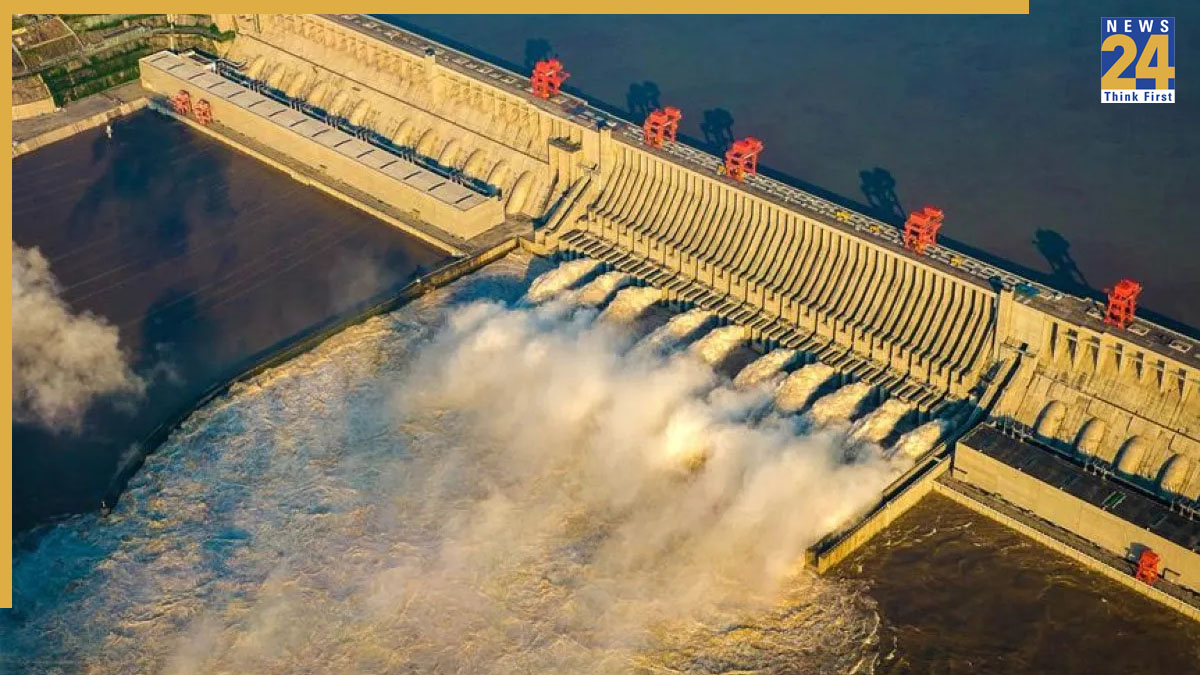


China is building a $168 billion hydropower system, one of the largest infrastructure projects on the Yarlung Tsangpo River. Also known as the ‘mother of all dams,’ the technically complex project is said to have far-reaching consequences for India and other neighbouring nations.
Millions depend on the Brahmaputra for…
The lack of transparency around the Chinese mega dam project has sparked widespread concerns related to the potential ‘weaponisation of water’. The Yarlung Tsangpo in Tibet enters India as the Brahmaputra downstream before turning its course towards Bangladesh. Millions depend on the Brahmaputra River for farming, fishing, and daily water needs.
Chinese mega dam project could interfere with…
In a detailed report, CNN reported that experts have warned that the ambitious project could interfere with the river’s natural rhythms in ways that remain unexplored. The powerful system will reportedly exploit a 2,000-metre drop in altitude for the generation of hydropower. It appears that Beijing is promoting the project as a climate-friendly source of clean energy, but experts caution that it could give President Xi Jinping tighter control along the India border amid recent tensions along the LAC.
How China’s ‘risky, dangerous’ project could impact India?
The project involves a network of dams, underground power stations, and reservoirs linked by tunnels, CNN reported. Brian Eyler, director of the Energy, Water and Sustainability Program at Washington’s Stimson Center, described the hydropower project as the “riskiest and potentially the most dangerous.”
For India, however, the project may prove risky. Any manipulation of the Brahmaputra water could impact “sediment movement, seasonal flooding patterns, and fish migration. Although Brahmaputra draws most of its water from monsoon rains and tributaries within the country, specialists warn that even upstream alterations could upset the river’s natural flow.
China’s Ministry of Foreign Affairs has, however, dismissed such concerns, stating that the new plan has been reviewed after “decades of in-depth research.” Additionally, the authorities have “implemented several measures to ensure it will not affect downstream areas adversely.”
Beyond environmental concerns
Rishi Gupta, assistant director at New Delhi’s Asia Society Policy Institute, told CNN, “If you connect the dots of Chinese infrastructure development in the Himalayas, especially in areas where China borders India along Tibet, they are strategically placed.” He emphasized that the project may give China tight control over critical regions like Tibet and its borders.
According to reports, the Yarlung Tsangpo region houses several endangered species, such as Bengal tigers, black bears, and clouded leopards, and is in itself ecologically sensitive. Besides environmental concerns, the human cost also stands as another major issue. Plans to build the hydropower system will lead to “relocating local communities” in Tibet.
“People could face forced displacement from their ancestral homes…destruction to the source of local income, destruction of local ecological balance and wildlife habitat, influx of migrant workers from China replacing the local population in the region,” said Tempa Gyaltsen Zamlha, deputy director of the Tibet Policy Institute in Dharamsala. Notably, India is on alert “carefully monitoring” China’s plans.