
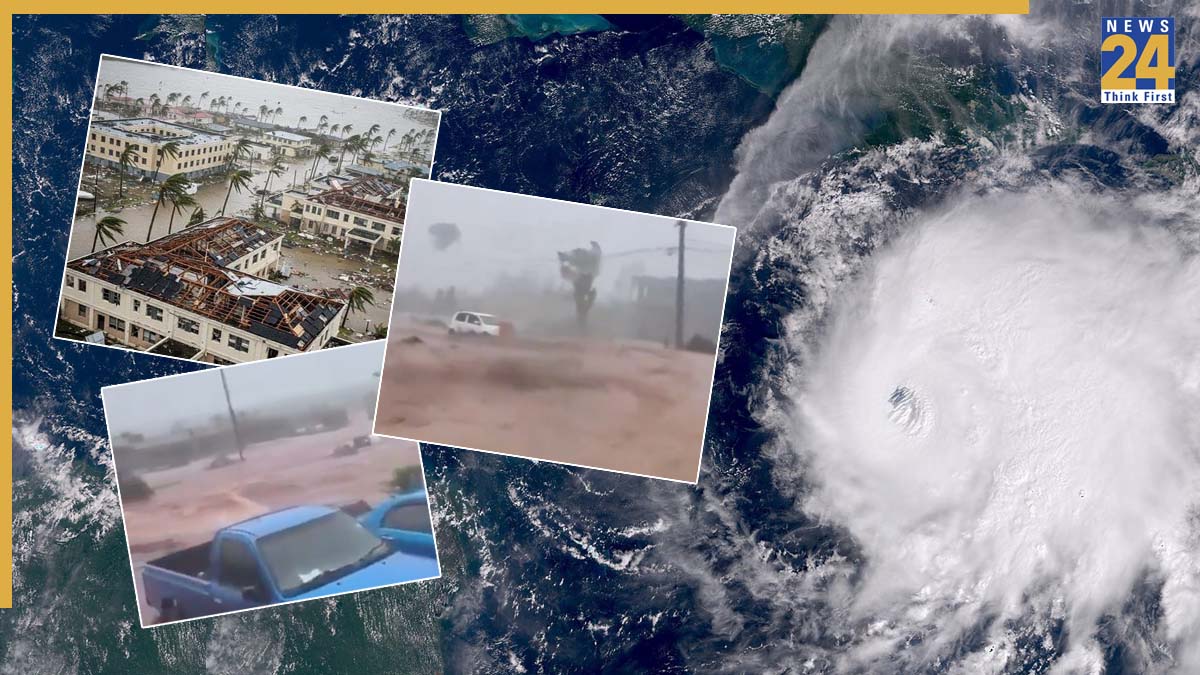


At least 25 people were killed, nearly 30 in total, after a river burst its banks and drenched southern Haiti due to heavy rain caused by Hurricane Melissa on Wednesday, CNN reported. The strongest-ever hurricane barreled through the northern Caribbean after hitting Cuba. It directly hit the shores on Tuesday with sustained winds of 185 mph.
According to Jamaican authorities, four bodies were recovered in the storm-hit St. Elizabeth Parish in the aftermath of Hurricane Melissa. Rescue efforts are currently underway in the affected regions, which were battered by torrential rains over the past week.
Jamaica Public Service, the country’s main power utility, announced that it is conducting a damage assessment of the electric grid as a “critical first step” in restoration efforts. “This gives us all the information we need to restore power in the safest and quickest way,” the company said in a post on X. Approximately 77% of Jamaica currently remains without electricity, a government spokesperson said.
Officials added that the nation’s electric grid was already under pressure before the storm made landfall.
Hurricane Melissa struck Jamaica on Tuesday as a powerful Category 5 storm — the highest level on the Saffir-Simpson scale — causing catastrophic destruction and severely compromising the country’s infrastructure. The full extent of damage is still being assessed. The storm later made landfall in Cuba early Monday morning as a Category 3 hurricane, inflicting what officials described as “significant” damage.
As of Wednesday afternoon, Melissa has weakened to a Category 2 hurricane with sustained winds of around 100 mph, according to the US National Hurricane Centre. The storm is currently centered between Cuba and the Bahamas and is expected to move near or over Long Island and Crooked Island in the Bahamas later in the day, CNN reported
ALSO READ: Florida Governor Ron DeSantis Directs State Universities to Stop Using H-1B Visas
(With ANI Inputs)