
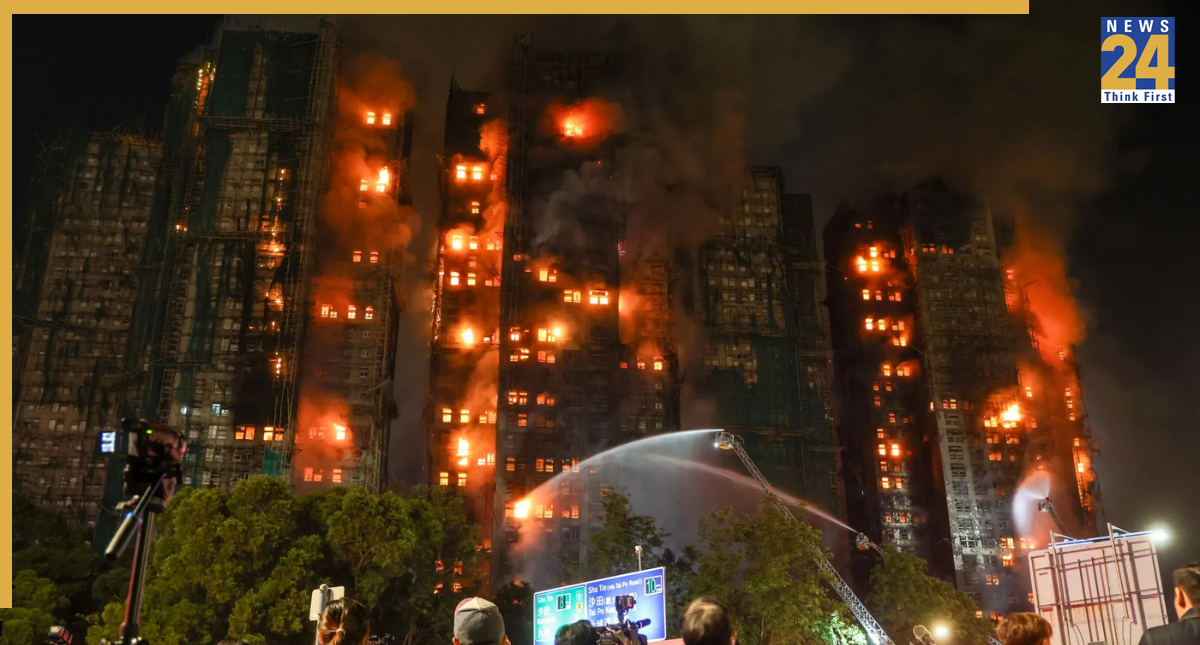


A massive fire broke out at a residential complex in Hong Kong’s Tai Po district, killing at least 55 people and leaving 279 others missing. The fire erupted around mid-afternoon on Wednesday and spread quickly, engulfing seven of the estate’s eight towers. Rescue teams are still searching for survivors amid thick smoke, collapsing scaffolding, and growing concern from residents.
What Happened In Tai Po?
The fire occurred at Wang Fuk Court, a large cluster of high-rise buildings undergoing renovation. The estate houses nearly 2,000 apartments with thousands of residents. At the time of the fire, the towers were covered with scaffolding and protective mesh for ongoing construction work.
Officials confirmed that 55 people, including a firefighter, have died, while hundreds more are either injured or missing. Emergency services are working around the clock to rescue trapped residents.
How the Fire Spread
The fire reportedly started on the building’s scaffolding around 2:50 PM and quickly moved upward. Within minutes, flames consumed the bamboo scaffoldings, protective netting, and other coverings, reaching multiple floors before spreading inside the buildings. Windy weather, the close spacing of towers, and the high population density made the fire spread faster, turning it into one of Hong Kong’s deadliest fires in decades.
5 Possible Reasons Behind the Fire
Preliminary investigations suggest several factors contributed to the disaster:
- Flammable bamboo scaffolding – Bamboo used in renovation is highly combustible and allowed the fire to climb quickly.
- Non-fireproof netting – Protective coverings used on the towers did not meet fire safety standards, allowing flames to spread externally.
- Use of plastic and foam materials – Windows and elevator lobbies were reportedly sealed with polyurethane foam and other flammable materials, which ignited and spread the fire internally.
- Negligence by contractors – Three executives from the renovation company have been arrested on manslaughter charges; poor safety practices are believed to have worsened the situation.
- High-density living and ongoing renovation – Thousands of residents in closely packed towers faced blocked escape routes and delayed evacuation, adding to casualties.
Rescue Operations
More than 1,200 firefighters, over 300 rescue vehicles, and dozens of ambulances were deployed. Rescue efforts faced difficulties from extreme heat, falling debris, and risk of scaffolding collapse. Thousands of residents have been evacuated, and emergency shelters have been set up. Investigations into the contractors’ actions and potential code violations are ongoing.
Impact on Building Safety
This fire has raised serious concerns about Hong Kong’s renovation practices, particularly the use of bamboo scaffolding and flammable materials. Authorities are expected to implement stricter safety regulations, conduct more rigorous inspections, and improve emergency planning to prevent future tragedies.