
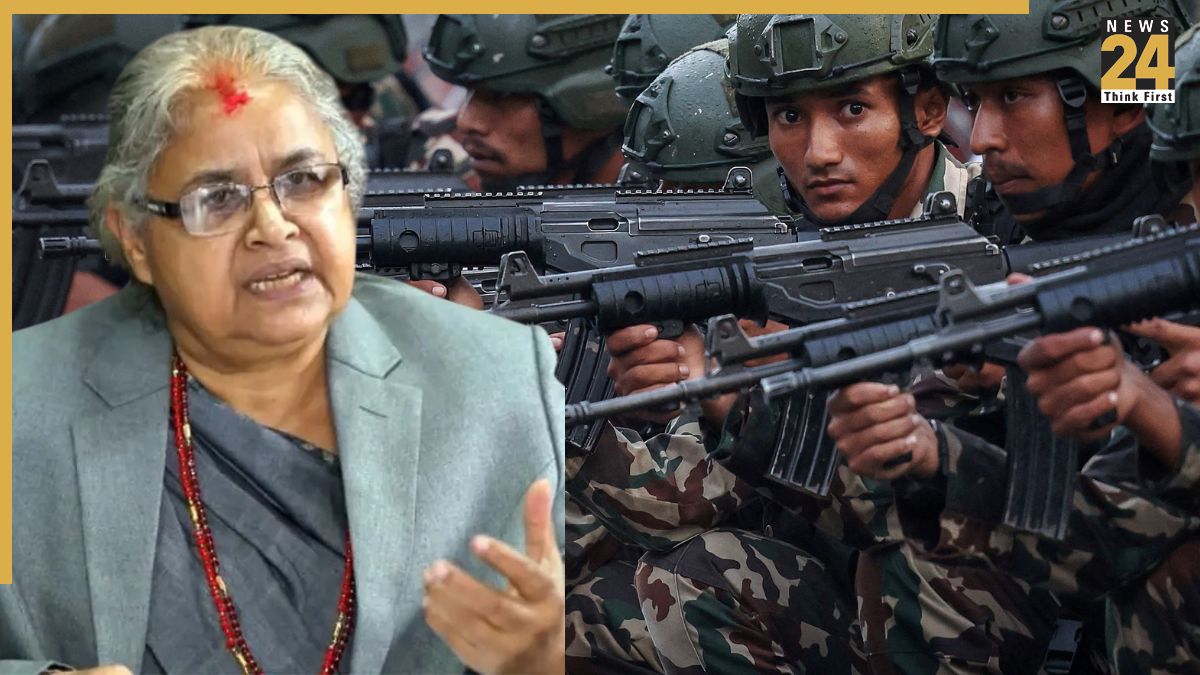


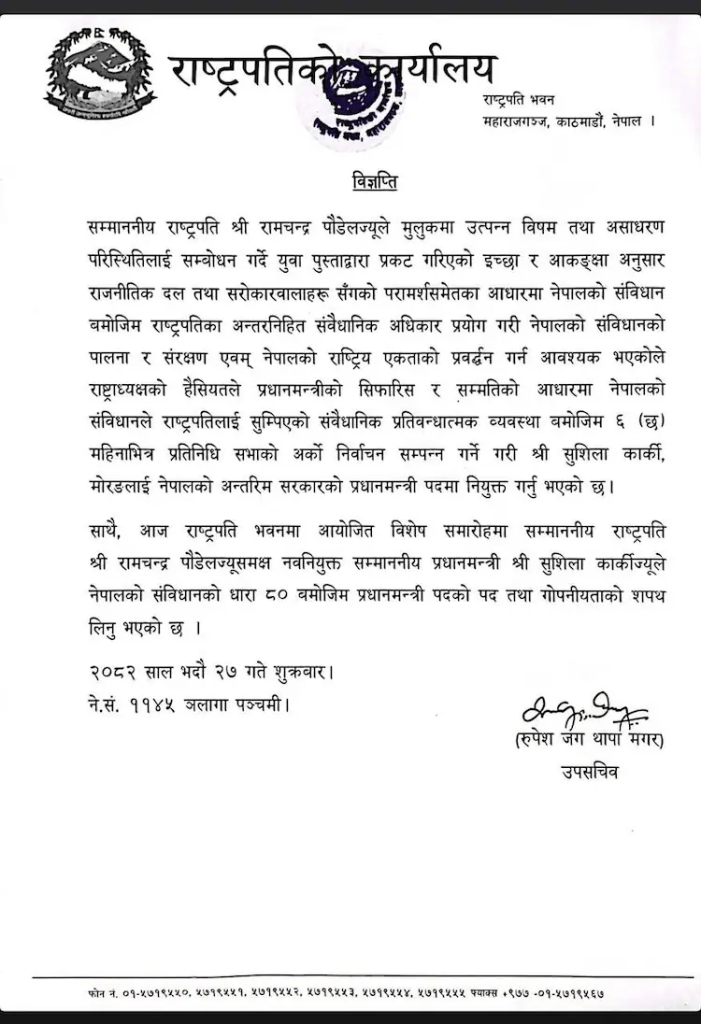
Former Chief Justice Sushila Karki has been sworn in as Nepal’s interim Prime Minister. Amid the political crisis in Nepal following violent protests led by Gen-Z, President Ram Chandra Paudel has dissolved the current parliament and appointed former Chief Justice Sushila Karki as the head of the interim government.
In the first phase, three cabinet ministers will be appointed to assist her. In a meeting of Gen-Z groups in the presence of Army Chief General Ashok Raj Sigdel along with the President, it was agreed to appoint Sushila Karki as the head of the interim government. After this, President Paudel also called Karki for a meeting and requested her to take up this responsibility, which the former Chief Justice of Nepal accepted.
Reports from Nepal suggest that after the swearing-in ceremony, an emergency may be declared in the country starting at midnight. Officials say this step is being considered to maintain peace amid the current tense situation.
Emergency from Midnight
Nepal is planning to impose emergency measures across the country starting tonight, and security has been increased nationwide. The decision is expected after the first cabinet meeting of the new interim government led by Sushila Karki. Karki’s first cabinet meeting will review the current situation and may recommend emergency measures.
Once the cabinet makes its recommendation, the President is expected to officially approve the emergency, which will is expected to start at 12 am across Nepal. In preparation for this, the army has been deployed at key locations to maintain law and order during the transition.
Sushila Karki’s swearing-in was one of the key demands put forward by Gen-Z representatives. The decision followed day-long consultations at the President’s Office, Sheetal Niwas, and meets a key demand of the Gen-Z demonstrators pressing for Parliament’s dissolution and a non-partisan administration, according to Presidential Press Advisor Kiran Pokhrel.
This is the first time a prime minister has been appointed under Article 61 of Nepal’s constitution. The article gives the president the authority to act as the head of state and to carry out duties in accordance with the constitution and federal law.
Earlier in the day, Karki made it clear that she would head the interim government only if she was allowed a fair investigation into corruption in high places and excessive use of force by police that led to the death of at least 20 protesters.
“I will not be interested in the job if my hands and legs are tied and I am totally immobilised,” Karki was quoted as having said at a high-level meeting hosted by President Poudel and attended by the leaders of the three biggest political parties, Oli of the CPN (UML), Sher Bahadur Deuba of the Nepali Congress and Pushpa Kamal Dahal ‘Prachanda’ of the Maoist Centre.