

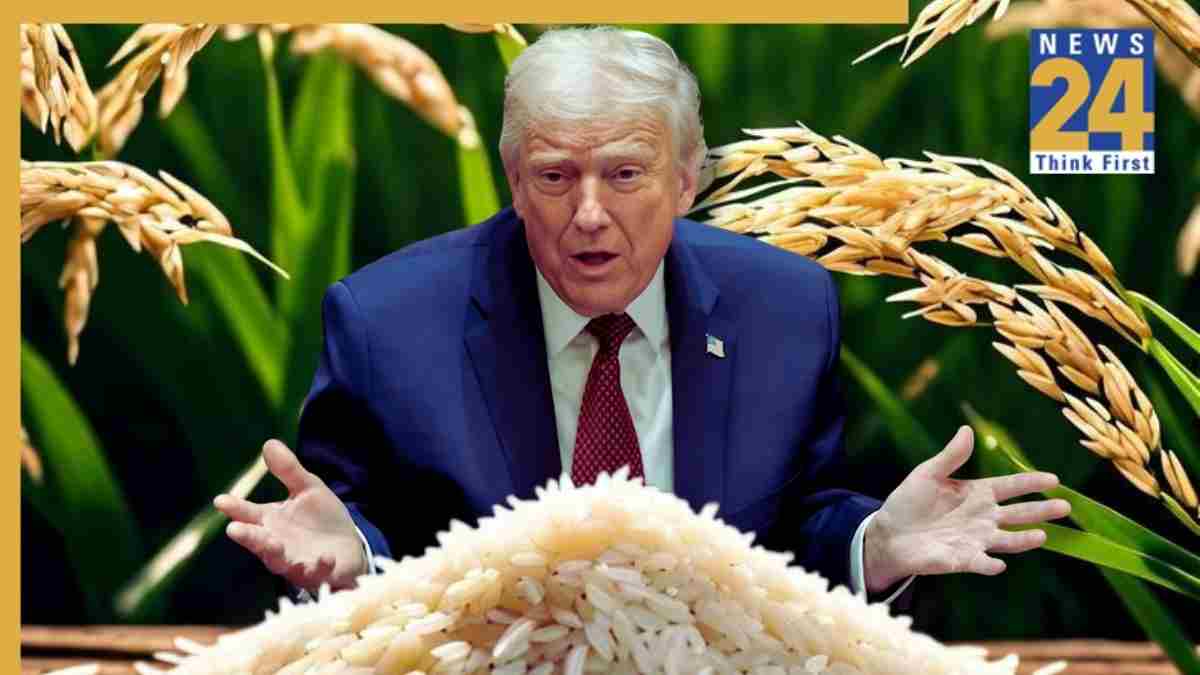
Donald Trump is at it again. This time, he’s threatening to put tariffs on Indian rice. Yes, you read that right – rice, the grain that sits on your plate every single day. So how did we get here? On December 8th, Trump held a meeting with American farmers. A rice mill owner from Louisiana walked in with a complaint. She said some countries were “dumping” rice in America.
---Advertisement---Now, dumping doesn’t mean throwing rice on the streets. In trade language, it means selling products below market price to grab more customers. Think of it like a shop offering huge discounts to pull buyers away from other shops. This woman rattled off a few country names – India, Thailand, China, and even Puerto Rico. And what did Trump do? He immediately threatened to slap tariffs on them. Just like that. No studies, no detailed analysis. His Treasury Secretary simply wrote down the names on a piece of paper. Policy-making in the Trump White House happens faster than ordering chai at a roadside stall.
---Advertisement---But let’s dig deeper and see who this really hurts. India is the world’s biggest rice producer, growing about 150 million tons every year. Most of it feeds our own people, but we export around 23 million tons to 172 countries. That makes us the world’s largest rice exporter too.
Now, the United States imports about 1.3 million tons of rice annually, mostly aromatic varieties (like Basmati) from Asia. And here’s the interesting part – 26% of America’s rice imports come from India. On the other hand, the US accounts for just 3% of India’s total rice exports, worth around 400 million dollars, as reported by Firstpost.
---Advertisement---Let’s pause and think about these numbers. What’s easier to replace – 26% of your rice supply or 3% of your sales? India can easily sell that rice to other countries or even consume it domestically. But American buyers? They’ll struggle to find alternatives, and their rice prices will shoot up.
So why is Trump doing this? Simple – he’s trying to please American farmers. But here’s the irony. Trump’s own policies have devastated these farmers. His tariffs pushed countries like China to stop buying American farm products. They switched to Argentina and Brazil instead. These same tariffs made farming equipment and fertilizers more expensive for American farmers. Then came his immigration crackdown, which left farmers scrambling for affordable labor.
The result? American farmers are projected to lose up to 43 billion dollars this season. That’s a disaster, especially since farmers are Trump’s loyal supporters.
Trump’s solution? Hand out 12 billion dollars in aid to farmers. But where’s this money coming from? From the tariff revenue itself! Think about it – he creates the problem with tariffs, farmers lose money, and then he uses tariff money to compensate them. It’s like breaking someone’s window and then charging their neighbor to fix it.
But the problems don’t end with farmers. Ordinary Americans are suffering too. Around 40% of Americans say their economic condition is poor, up from 37% last month. Inflation in October hit 3%, the highest since January. Groceries, fuel, daily essentials – everything costs more.
Trump’s response? An “affordability tour” where he’ll claim prices are coming down. Except they’re not. Reality tells a different story.
For India, this creates a messy situation. A US trade team is expected to visit New Delhi on December 10th to negotiate a deal. But Trump keeps throwing new issues into the mix – first H-1B visas, then Russian oil purchases, now rice tariffs. Every time a new problem pops up, negotiations get more complicated. We keep hearing a deal is close, but nothing materializes.
The bigger picture is clear. Trump made a massive gamble with tariffs, and it’s backfiring spectacularly. American farmers are hurting, consumers are paying more, and countries like India are caught in the crossfire.
As for that rice on your plate tonight? It might become a political football in international trade wars. But remember, when leaders make hasty decisions in meeting rooms, it’s ordinary people on both sides who end up paying the price. That’s the real cost of impulsive policy-making, and it’s a lesson worth remembering long after today’s headlines fade away.
ALSO READ: Beyond Boycott: India must compete, not just complain about China
---Advertisement---
World
Trump targets India’s rice: Who pays the price?
The United States imports about 1.3 million tons of rice annually, mostly aromatic varieties (like Basmati) from Asia. And here's the interesting part – 26% of America's rice imports come from India.



First published on: Dec 10, 2025 01:04 PM IST
Get Breaking News First and Latest Updates from India and around the world on News24. Follow News24 on Facebook, Twitter.
Related Story









Live News
---Advertisement---
live
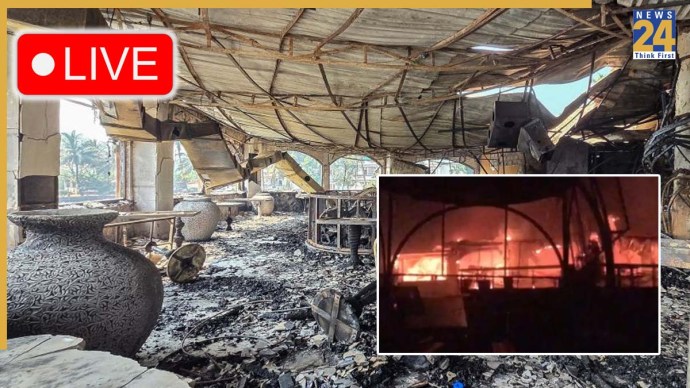
goa night club fire live updates arpora birch Romeo lane Saurabh and gaurav lauthra escaped by flight to Thailand goa cm latest news
Dec 10, 2025

SHORTS

India
View All Shorts
---Advertisement---
Trending
Noida’s most expensive number plate ever! Winning bid for ‘UP16FH0001’ is…, the owner is…, car is…
Dec 10, 2025 08:07 AM IST
This Delhi man was first to own a car, get telephone and electricity connection; his name was…, used to live in…
Dec 09, 2025 12:47 PM IST
Pookie, Incel, Nonce, 5201314: What do these viral words googled in 2025 actually mean?
Dec 09, 2025 11:38 AM IST
What is easy E3 Block System Europe uses to build without cement — Is it available in India? Watch
Dec 09, 2025 11:18 AM IST
Chinese boy, 8, bites mother’s gold necklace into small pieces, gifts it to classmates
Dec 08, 2025 04:00 PM IST
World’s busiest railway station has 36 platforms, 200 entry gates, not in India, China, Pakistan, US, Russia, its name is…, it is located in…
Dec 08, 2025 12:53 PM IST
Which was the first city in the world? How does it look today? No, it’s not in India, its name is…
Dec 08, 2025 08:34 AM IST
Year Ender 2025: 5 fitness trends that went viral for staying healthy
Dec 06, 2025 03:08 PM IST