
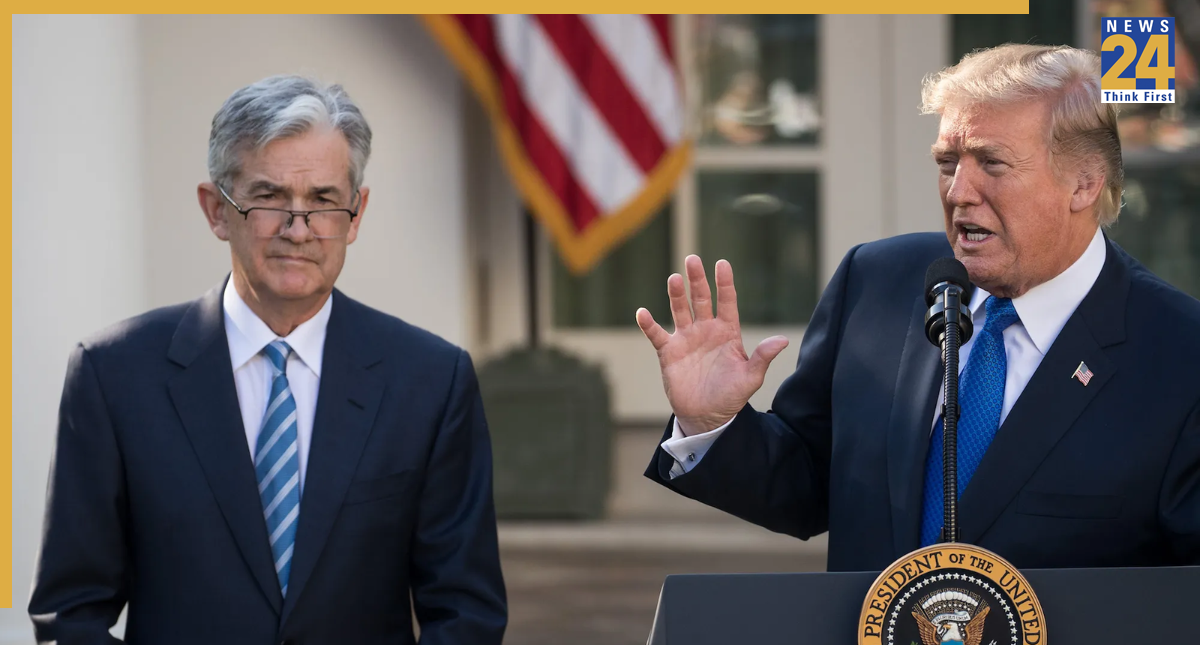


Former US President Donald Trump sharply criticised the Federal Reserve on Wednesday, saying the central bank’s latest rate cut was far too modest. His comments came soon after Fed Chair Jerome Powell announced a 25-basis-point reduction in interest rates, bringing them to a range of 3.50% to 3.75%, the lowest level in three years.
Trump Says Cut Should Have Been 50 bps
Speaking to reporters shortly after Powell’s address, Trump said the Fed should have gone much further. He called the 25 bps move “rather small” and argued the reduction “could have been doubled, at least doubled.” According to Trump, the US should aim to have “the lowest rates in the world,” pointing to countries where borrowing costs are significantly lower.
His criticism is not new Trump has repeatedly pushed the Fed to cut rates more aggressively, saying it would boost economic momentum and support American manufacturers.
Powell Signals Caution, Not Urgency
During his briefing, Powell said the Fed would take a measured approach before deciding on further action. He stressed that policymakers were “well positioned to wait and see how the economy evolves from here.”
Powell also ruled out any chance of raising rates at the next meeting, but he stopped short of committing to another cut. He emphasised the need to watch inflation trends and labour-market indicators before making major decisions.
A Deepening Divide Inside the Fed
Wednesday’s rate cut also highlighted sharp divisions within the central bank. The Federal Open Market Committee voted 9–3 in favour of the reduction.
Two officials Austan Goolsbee of the Chicago Fed and Jeffrey Schmid of the Kansas City Fed wanted to leave rates unchanged. In contrast, Fed Governor Stephen Miran, who has served as an economic adviser to Trump, pushed for a steeper 50 bps cut.
This split underscores the growing debate inside the Fed on how aggressively it should respond to economic signals.
Who Will Be the Next Fed Chair?
The discussion around rate cuts comes at a time when Powell’s term as chair ends in May 2026, and Trump is preparing to name a successor if he returns to office.
National Economic Council Director Kevin Hassett is now widely seen as the frontrunner. Others being discussed include former Fed Governor Kevin Warsh and current board member Christopher Waller.
Trump has said he wants a chair who will act quickly to lower rates if needed. Hassett appears to fit that expectation, and on Wednesday he indicated that Trump may settle on his choice “in the next week or two.”