

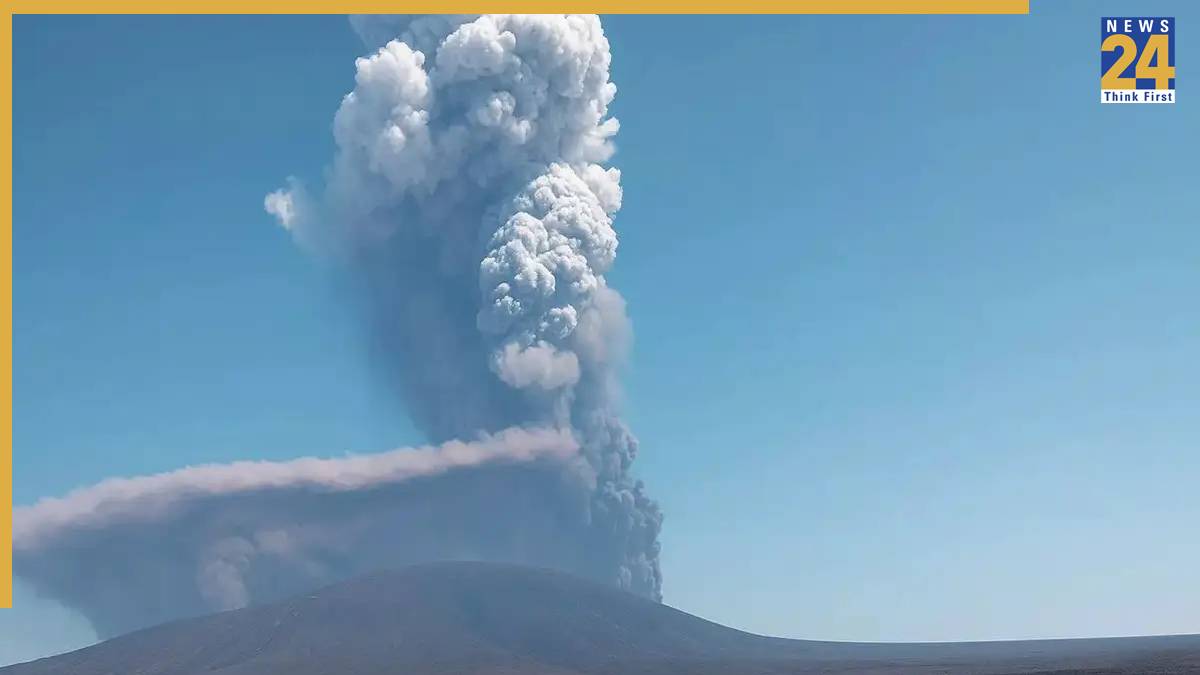


The eruption of the Hayli Gubbi volcano on Sunday marked its first known eruption in recorded history. The eruption sent a plume of smoke 10–15 km into the air. According to reports, the ash from the volcanic eruption drifted across the Red Sea toward Oman and Yemen. According to FlightRadar24, volcanic ash is expected to reach Delhi and Jaipur by Tuesday.
The volcano, which rose about 500 meters in altitude, sits within the Rift Valley—a zone of intense geological activity where two tectonic plates meet. In videos shared on social media, which AFO could not immediately verify, a thick column of white smoke was seen rising.
The Smithsonian Institution’s Global Volcanism Program stated that Hayli Gubbi has had no known eruptions during the Holocene, which began about 12,000 years ago at the end of the Ice Age.
Indigo Flight Diverted
With the eruption causing widespread concern, a slew of flights have been diverted. IndiGo flight 6E 1433 from Kannur to Abu Dhabi was diverted to Ahmedabad due to the massive volcanic eruption in Ethiopia. The Airbus landed safely in Ahmedabad, and IndiGo stated that it will operate a return service to Kannur for passengers.
Airlines on Alert
Airlines have been alerted as ash plumes from Ethiopia’s Hayli Gubbi volcano—which erupted on Sunday for the first time in nearly 10,000 years-are now projected to move toward Northern India, raising concerns for flights passing through the region.
Why is this eruption Significant
Hayli Gubbi lies about 15 km southeast of the Erta Ale Volcano, one of the most active volcanoes on Earth, and home to a persistent lava lake. It also sits within Ethiopia’s Danakil Depression, one of the hottest and the most remote areas on the planet. Unlike its well-known neighbour, Hayli Gubbi has no previously recorded eruptions in modern history.
The eruption is being considered a highly unusual one due to the lack of historical activity, sparse geological studies in the area, and the region’s extreme and inhospitable conditions, which make research difficult.
Satellites Reveal This
Satellite observations reveal towering ash plumes and significant release of sulfur dioxide, a common marker of volcanic activity. Its sudden spread was noticed in an area that is largely uninhabited; hence, satellite data remains the primary source of information for scientists monitoring the eruption.