

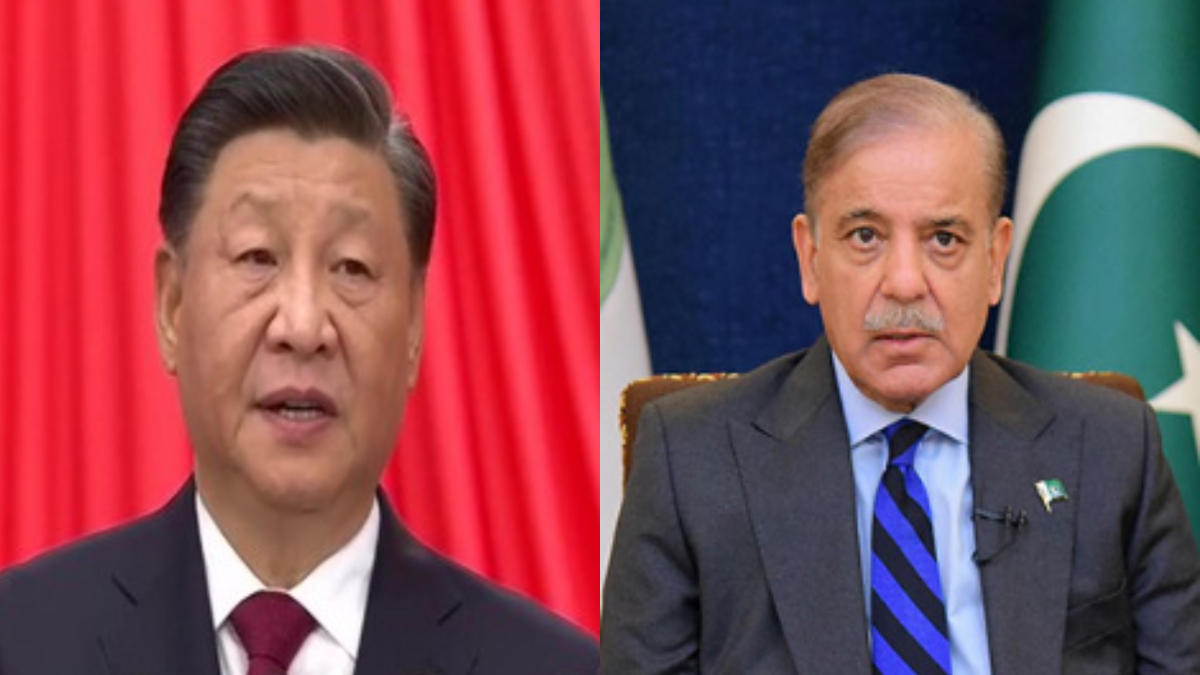


China has shifted its stance in foreign policy as the nation begins to distance itself from countries once considered its closest allies. After Pakistan, Saudi Arabia has become the second nation from which China has begun to maintain distance.
These are the same nations that, at one time, conspired against India along with China. However, the dragon now seems to have realized that these nations are of little long-term value. Until a few months ago, Pakistan and China described each other as “all-weather friends.”
China had invested billions of dollars in the China-Pakistan Economic Corridor (CPEC), a flagship project under President Xi Jinping’s Belt and Road Initiative. But the circumstances have now changed. Since 2022, China has withdrawn from several major CPEC projects. Key ventures that were once progressing rapidly — such as the ML-1 railway line (stretching from Karachi to Peshawar), the expansion of the Karakoram Highway, and the second phase of Gwadar Port — are now either on hold or gathering dust.
The major reason behind Beijing’s frustration is Pakistan’s political instability and deteriorating security situation. Chinese engineers fear for their lives after repeated attacks in Gwadar, Balochistan, and the Khyber Pakhtunkhwa region. More than a dozen Chinese workers have lost their lives. China has now issued a stern message to Islamabad, stating that it will not send its citizens unless the Pakistani government ensures their safety. It has also warned of halting further investments.
China has cut the cost of the ML-1 railway project by half. Earlier, the project was estimated to cost around $10 billion, but it has now been brought down to under $6 billion. Gwadar Port, once a symbol of CPEC’s promise, has now turned into a deserted site after several Chinese companies pulled out and returned home.
At the beginning of this year, Pakistan took steps to improve its relations with the United States. In response, Washington hinted at a deal for F-16 spare parts and possible economic assistance to Islamabad. This move sent a clear message to Beijing that Pakistan is trying to “sail in two boats.”
China’s policy is straightforward — either walk entirely with it or stay out. This stance has prompted Beijing to distance itself from Pakistan. The pace of Chinese investment there has slowed significantly, and no major announcements have been made regarding new projects. Even the joint military exercises along the China-Pakistan border have been suspended since last year.
A paradigm shift is also being witnessed in China’s relations with Saudi Arabia. According to a Reuters report, China’s crude oil imports from Saudi Arabia have fallen for the second consecutive month. In November, Beijing is set to purchase 36 million barrels of oil — less than in the previous month.
Beijing believes that Saudi Arabia is gradually aligning itself with the U.S. camp. The influence of Washington’s approval can now be seen in OPEC+ decisions regarding oil production and pricing.
Over the past two years, China has sought to strengthen its ties with Arab nations. In 2023, it even brokered a historic agreement between Saudi Arabia and Iran. However, it now appears that the bond of trust is weakening. By reducing oil imports from Saudi Arabia, China is signaling a clear shift toward Russia and Iran.