
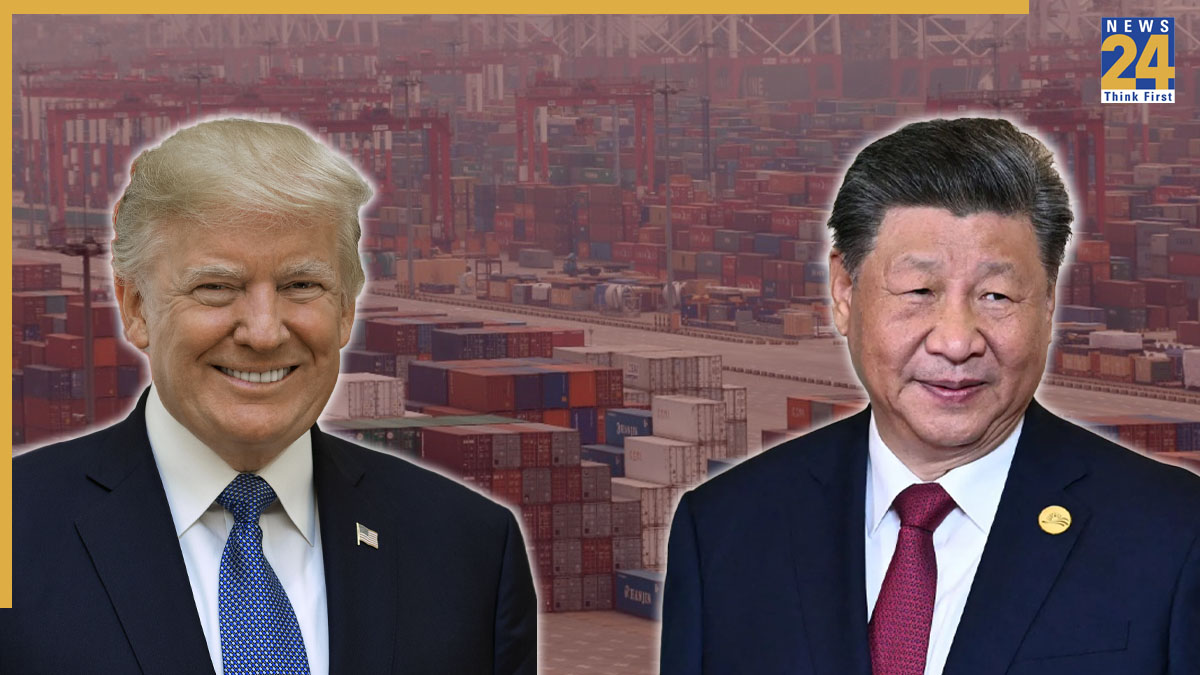


Amid trade tensions with the United States, China on Tuesday announced new special port fees that will be effective on US ships arriving in Chinese ports. The special charges, according to China, have been imposed with the aim to “safeguard the legitimate rights and interests of the Chinese shipping industry and enterprises while ensuring fair competition in international shipping.
China’s Ministry of Transport stated that ships subject to the special port fees also include those owned or operated by entities where US enterprises, organisations and individuals hold a direct or indirect stake of 25 per cent or more. It also includes the US-flagged and US-built vessels.
What are the port fees?
The Chinese Ministry, in a statement, outlined a phased escalation for the special port fees on eligible US vessels berthing at Chinese ports, which will initially be 400 yuan ($56) per net ton from Tuesday and increase annually on April 17 for the subsequent three years.
China imposed a retaliatory levy on October 10 in response to the United States’ decision to introduce additional port fees on Chinese vessels arriving at American ports starting October 14, according to the Chinese Ministry of Transport. As reported by the Global Times, the ministry stated that the US measures have “seriously violated WTO rules and the China-US maritime transport agreement,” leading to significant disruptions in maritime trade between the two countries.
Trade tensions between China and the US escalated after Beijing announced moves to tighten controls on its rare earth exports. In response to China’s measures, US President Donald Trump threatened to impose an additional 100 percent tariff on China, along with other restrictive measures, set to take effect on November 1.
China warns US amid escalating trade tensions
Earlier on Tuesday, China’s Foreign Ministry Spokesperson Lin Jian vowed to take necessary measures to safeguard the country’s legitimate rights and interests. “China firmly rejects the recent U.S. restrictions and sanctions on China, and will do what is necessary to protect its legitimate rights and interests,” Lin Jian said in a post on X. He emphasised that “threatening high tariffs is not the right way to deal with China,” urging Washington to “correct its approach and act on the common understandings the two presidents reached in their phone calls.”
Also Read: Stop tariff threats or face retaliation, China warns US amid escalating trade tensions