

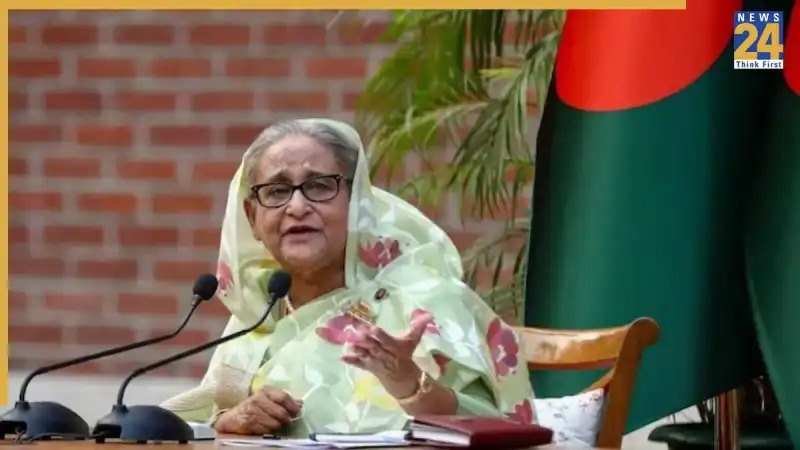


Dhaka: Former Prime Minister Sheikh Hasina of Bangladesh has been sentenced to death by a special tribunal, found guilty of committing crimes against humanity during the student-led protests in 2024.
Sheikh Hasina, who served as Prime Minister for over two decades, was accused of inciting violence against student protesters in July 2024.
The International Crimes Tribunal (ICT) found that Hasina ordered lethal force, including the use of drones and helicopters, against unarmed demonstrators.
The tribunal also stated that Hasina failed to protect the protesters and did not take action to prevent the violence.
The court noted that her failure to join the trial or respond to the summons was a sign of her guilt. Hasina has been living in exile in India since the regime change in August 2024 after the protests led to her ousting.
— Ministry of Foreign Affairs (@BDMOFA) November 17, 2025
Sheikh Hasina’s Political Journey
In 1975, her father, Sheikh Mujibur Rahman, the founder of Bangladesh, along with his family, was killed in a brutal military coup.
Hasina and her sister Rehana were abroad at the time and survived the massacre.
This conflict became a turning point in Hasina’s life, pushing her to eventually lead the Awami League and work for the country’s political future.
In 1981, Hasina was elected president of the Awami League, and she later became Prime Minister of Bangladesh, serving from 1996 to 2001 and again from 2009 until 2024.
Under her leadership, Bangladesh saw economic progress and strengthened ties with neighboring India.
However, Hasina’s government faced protests against the reservation system, leading to a broader movement against her rule in Bangladesh.
The student-led protests grew into calls for her resignation.
Sheikh Hasina’s Response
Sheikh Hasina has consistently rejected the charges against her, calling the trial a “sham” and alleging that it was politically motivated.
She accused the interim government, led by Muhammad Yunus, of using the tribunal to eliminate her political party, the Awami League.
In a statement after the verdict, Hasina said, “There is no other motive than the personal pursuit of revenge against a democratically elected government that upheld the nation’s independence and sovereignty.”
She also criticized the tribunal, claiming that no reputable jurist would endorse its decision.