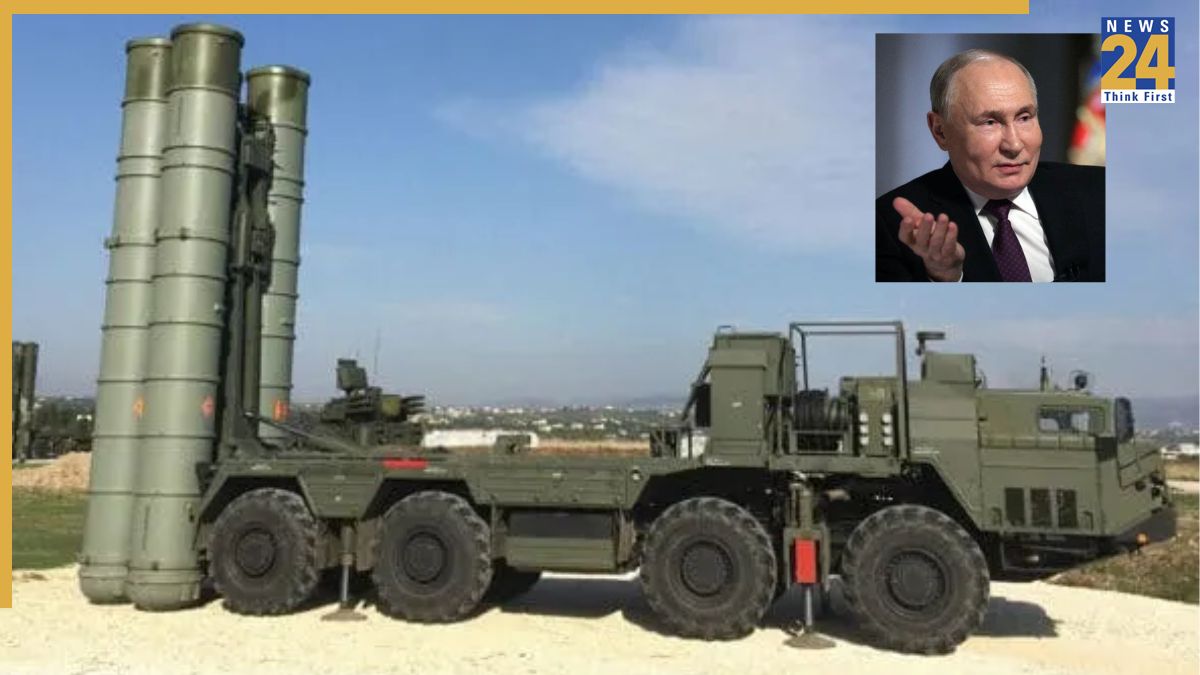


Russia has officially put its first S-500 Prometheus air defence regiment on combat duty, a move that is expected to greatly boost the country’s missile defence strength. Russian media reports said the announcement was made by Defence Minister Andrei Belousov, calling it a major step in strengthening Russia’s strategic security. The S-500 is widely seen as one of the most advanced air defence systems in the world. Russia has even offered to sell it to India, though India has not commented on the proposal so far.
Defence minister announces combat duty
Confirming the development, Defence Minister Andrei Belousov said the first regiment equipped with the ‘unique S-500 air defence missile system’ has begun combat duty. He pointed out that the system can engage targets located close to outer space. However, he did not share operational details and it is still unclear whether the regiment has been involved in any real combat situations. Russia had earlier announced in December 2024 that it was forming a new unit armed with the S-500 system.
What makes the S-500 so powerful?
The S-500 Prometheus is a long-term Russian defence project that began in 2002 and was officially inducted into service in 2021. According to Russian officials, the system is designed to intercept medium-range and intercontinental ballistic missiles, especially during the final phase of their flight.
Apart from missile interception, the S-500 can also target airborne command centres, aircraft carrying air defence missiles and low-orbit satellites. Russia has integrated the system and its 77N6-N and 77N6-N1 interceptor missiles with the A-135 Amur missile defence system, which protects Moscow from ballistic missile threats.
While the exact technical details are not publicly available, Western military experts believe the interceptor missiles can hit ballistic targets at altitudes of around 100 kilometres.
With the S-500 now on combat duty, Russia has taken a major step towards strengthening its air and missile defence shield, especially against advanced aerial and space-based threats.