



Burj Khalifa needs no recognition as one of the tallest skyscrapers in Dubai, United Arab Emirates. The height of the tower stands at 828 meters and has 160 floors. The tower is a living example of the extraordinary capabilities of modern architecture and human engineering. This marvellous building attracts tourists from around the world to Dubai. While a few consider this to just be a skyscraper, it is actually a hub of hotels, luxury restaurants and sprawling observation decks. These features help it gain a place among the great modern wonders of the world.
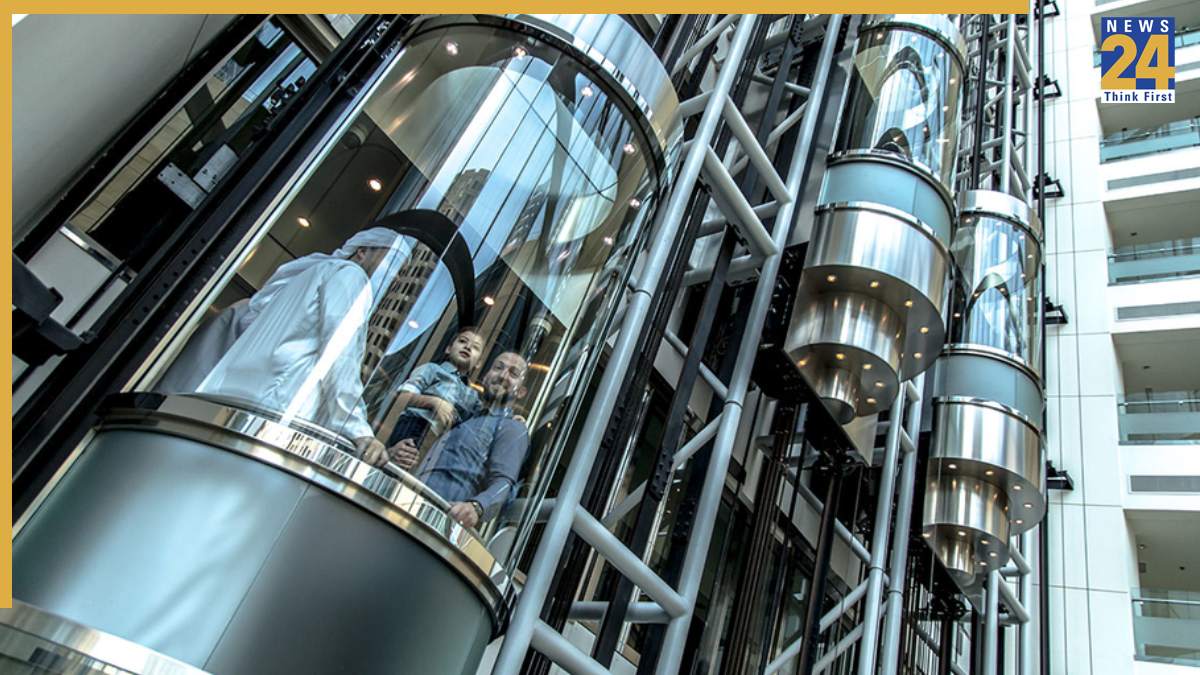
Reaching the colossal height of the skyscraper would have been impossible without elevators and escalators. Hence, that’s why the building has been given a state-of-the-art elevator system. The immense speed of the elevators will leave you amazed. The constant surge of tourists would leave the skyscraper at a halt if the speed of the elevators was slow; hence, these elevators have been specially designed to carry loads of people at extreme speeds.
Burj Khalifa elevator speed
The Burj Khalifa elevator has the ability to take you to the 124th floor in just two minutes. As per a media report, the elevator is able to reach the 124th floor of the building in just 120 seconds. It generally takes less than a minute to reach the top of the 828-metre building. The elevator has a vertical speed of 10 meters per second, but the skyscraper does not have the fastest elevators; in fact, the elevators that operate within the building are the third-fastest.
Burj Khalifa: number of elevators
Burj Khalifa has 57 elevators and 8 escalators. These have the capability of supporting thousands of people every day. These elevators can travel at a speed of 10 meters per second, translating to a speed of 36 kmph. Designed by Adrian Smith and unveiled on January 4, 2010, the building continues to draw interest even after so many years.
The building was designed by Adrian Smith. It is now owned by Emaar Properties, a Dubai-based real estate development company.
Technology that made it possible
The elevator system in Burj Khalifa has been designed by Otis, specially engineered to work at high speeds and withstand the constant influx of tourists. The elevator system uses high-speed torque motors; these motors are able to maintain consistent high speeds. Operating at such heights, the steel cables become a major issue as traditional steel cables are generally very heavy. Hence, Burj Khalifa uses cables made out of specialised Kevlar and carbon fibre. These cables are much lighter, allowing the motors to work at even higher speeds.
Other features
Since the elevators are able to reach such heights at such a fast pace, passengers may experience pressure in their ears during the rapid altitude changes. To mitigate this problem, the elevators have been installed with a pressure control system inside the lift capsule. To further ensure that these elevators are sustainable to operate, they are able to use the rampant descent when coming down to add to the stock of electricity with regen braking. The speed of the elevator is actively kept in check with a microprocessor that ensures the elevator does not exceed its set speed limit while ascending or even while coming down. The lift also has multiple braking systems, including mechanical brakes, emergency brakes and electromagnetic brakes as well.
The Burj Khalifa, nearly twice as tall as the Empire State Building, is an architectural marvel that blends Islamic design with modern technology. Its combined sections would span a quarter of the globe, and its cloud-piercing height transformed Dubai’s skyline. The tower’s Y-shaped floor plan, inspired by the Hymenocallis flower, enhances both stability and aesthetics. With reflective glazing, the building shines by day and becomes a stunning illuminated landmark at night.