

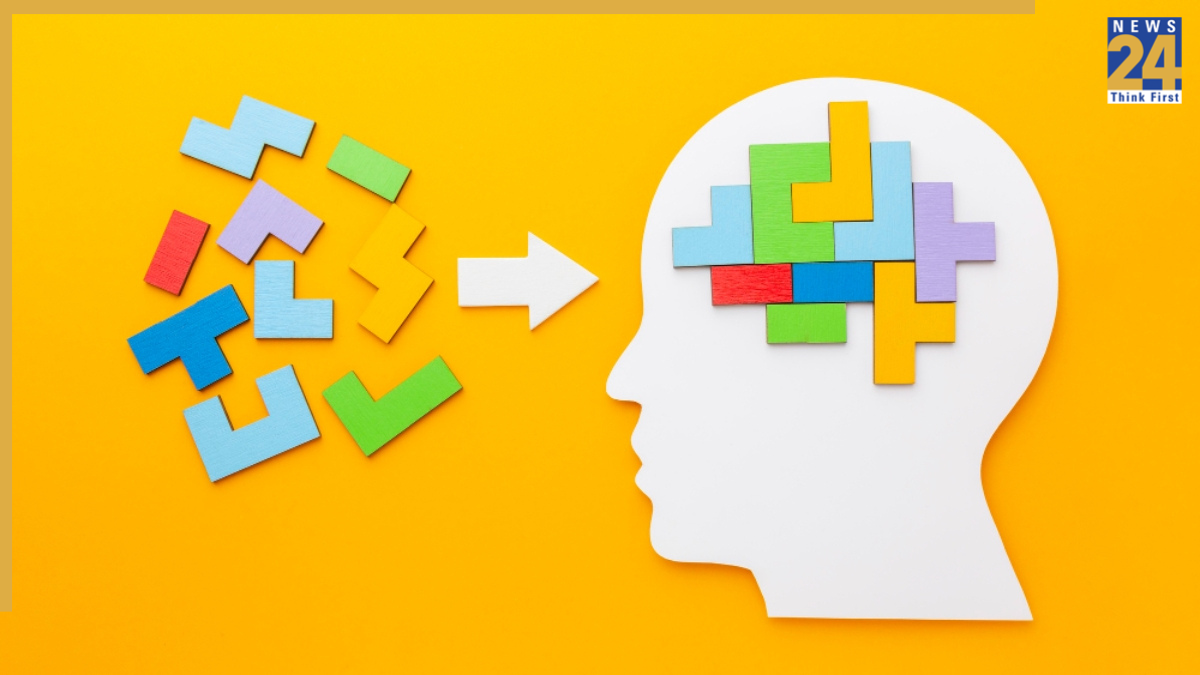


Accessing MyIQ.com is deliberately frictionless. Registration requires only an email and a few demographic inputs, and within minutes, users are presented with three core paths: the IQ test, the personality test, and the relationship test. Together, they form what the platform calls its full-spectrum insight system.
Each test is designed to work independently, but the platform subtly encourages users to take all three in sequence. This structure isn’t accidental. The logic is layered: cognition first, then personality, then relational dynamics. It’s a vertical integration of the self, starting from how one thinks, to how one reacts, and finally to how one connects.
This sequencing mirrors a broader philosophical assumption baked into MyIQ’s architecture: that self-awareness is best cultivated when multiple layers of the psyche are held in relation, not isolation. The system doesn’t claim to uncover “truth,” but rather helps users construct meaning through a set of calibrated insights.
The cognitive core of the MyIQ test
The MyIQ IQ test contains just 25 questions, each with one correct answer drawn from six choices. But the test’s simplicity is deceptive. Internally, it analyzes patterns in visual reasoning, logic, abstraction, and memory manipulation. Timed sections track not just accuracy, but also speed, confidence, and consistency.
The questions themselves are calibrated to challenge a range of cognitive faculties. Some emphasize fluid reasoning, others spatial manipulation, and some focus on short-term memory under pressure. Users often describe the test as “surprisingly difficult” – a sign not of poor design, but of intentional friction that produces richer data.
Instead of offering a reductive IQ score, MyIQ delivers a cognitive profile, broken down into subdomains like sustained focus, pattern rotation, and rule-switching agility. These outputs are benchmarked across anonymized global cohorts, allowing individuals to see where they stand relative to peers in their demographic or professional group.
What makes this approach unique is that the test encourages a reframing of intelligence: not as a static trait, but as a set of modular, trainable functions. In post-test feedback, users are offered suggested exercises, including brain games and logic puzzles, which target the areas where they scored lowest.
Personality testing without stereotypes
Where traditional typologies pigeonhole users into rigid categories, the MyIQ personality test uses 90 questions to construct a nuanced profile built on trait constellations rather than fixed types. Drawing from established personality theory and behavioural psychology, it surfaces internal contradictions rather than flattening them.
Users receive results across psychological dimensions including assertiveness, adaptability, emotional regulation, self-trust, and motivational alignment. But MyIQ.com adds another layer: it dynamically maps conflict styles, decision heuristics, and identity flexibility – indicators of how individuals shift under pressure or uncertainty.
The results are presented in interactive visual formats that change as users revisit or reflect on their answers. This creates a sense that the profile is not a verdict, but a starting point – a mirror that adapts as the user evolves.
Feedback also includes cross-dimensional insights: for example, how a user’s emotional regulation score may interact with their cognitive focus, or how motivational drive connects to relational assertiveness. This layered mapping encourages interpretive self-awareness – a more active mode of understanding than passive diagnostics allow.
Relationship patterns mapped with behavioural logic
The MyIQ relationship test is the most behaviorally complex of the three. With 120 items, it examines not just preferences but relational patterns – how users approach closeness, conflict, independence, and support. It blends attachment theory with social cognition models to surface not only what users desire in relationships, but what they repeatedly enact.
MyIQ’s proprietary pattern recognition algorithm identifies inconsistencies between self-perception and behavioural evidence. For instance, a user might claim to value open communication but report habitual withdrawal in stress scenarios. These mismatches are not flagged as failures, but offered as opportunities for deeper insight.
What emerges is a map of unconscious tendencies – how people cycle through emotional scripts without realizing it. Many users report moments of recognition and discomfort – what some call “pattern shock” – when the test surfaces dynamics they hadn’t fully articulated before.
The platform doesn’t offer advice or match users to relationship “types.” Instead, it presents behavioural patterns as flexible frameworks, allowing users to draw their own conclusions. For some, this open-endedness is its greatest value.
Feedback without flattening
What distinguishes the MyIQ test system is its refusal to reduce a user to a single number or static identity. Each test provides structured feedback, but that feedback remains open-ended. Users are encouraged to interpret results, return to them over time, and even compare changes across months of re-engagement.
The platform’s broader ecosystem includes over 25 brain games, 150+ intelligence puzzles, and 300+ expert lessons covering topics like confidence, critical thinking, emotional regulation, and interpersonal clarity. These are not gamified distractions, but extensions of the testing framework, allowing users to act on what they’ve discovered.
MyIQ positions self-knowledge as iterative, not declarative. This is reflected in its quiet design: no intrusive alerts, no daily motivational quotes – just a responsive data architecture that treats the user as a collaborator, not a consumer. Retention data suggests that many users revisit their results months later to compare their own growth curves.
Why Inside MyIQ matters now
At a time when introspection is often reduced to aestheticized therapy language or algorithm-driven mood tracking, Inside MyIQ represents something more grounded. It does not claim to heal or optimize. It offers structure – a rare commodity in the age of identity overwhelm.
The platform’s architecture reflects a belief that the self is not a fixed object, but a system in motion. Each of the MyIQ tests – cognitive, personality, and relational – asks users not who they are, but how they function. The distinction matters.
The popularity of MyIQ.com is a sign of shifting norms. Just as fitness apps normalized body tracking and finance platforms made budgeting habitual, MyIQ introduces internal data literacy – the idea that how we think, feel, and relate can be mapped, interpreted, and refined over time.
In an era of surface-level content and performative self-awareness, MyIQ proposes a different model: slow, structured, data-informed reflection. It’s not the most viral approach – but for over a million users, it’s proven to be one of the most resonant.