

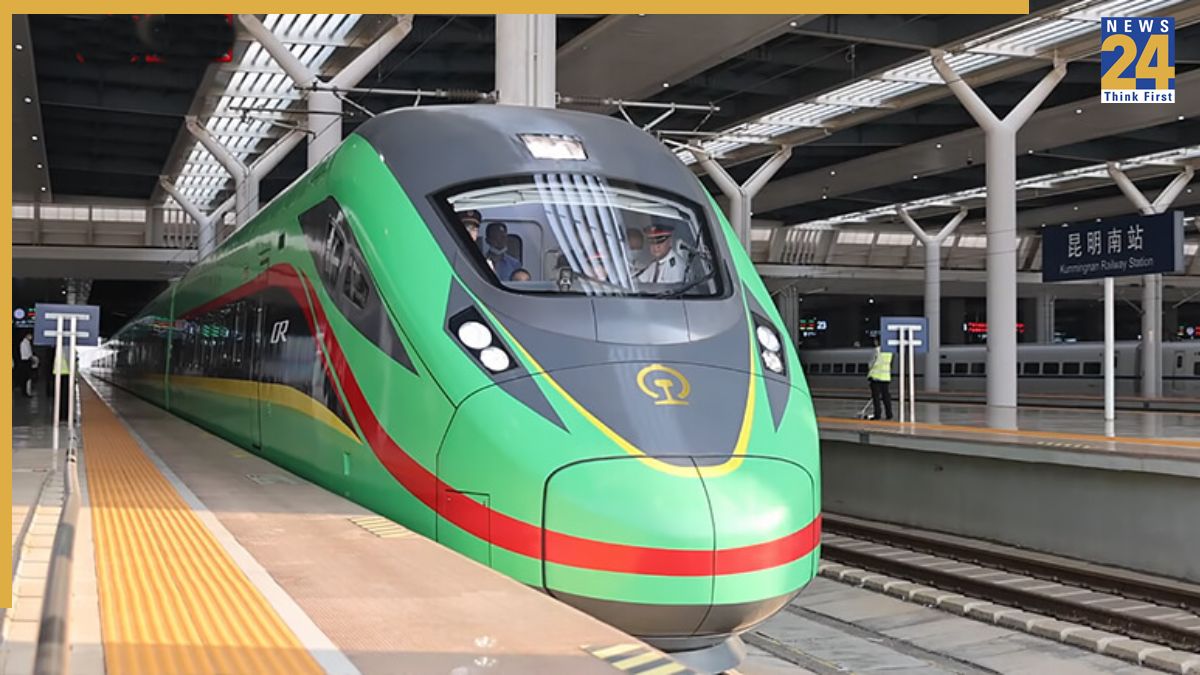


A newly launched train journey from Lagos in Portugal to Singapore has officially become the longest train route in the world. Inaugurated last weekend, the cross-continental journey covers 11,653 miles (nearly 18,800 km), passes through 13 countries and takes 21 days to reach its final stop.
For years, travellers heading from Europe to Southeast Asia had only one option: flying. This historic train route became possible after railway companies from Europe and Southeast Asia agreed to work together. The opening of several international cross-border railway lines also played a key role in linking the two regions. Among the most important additions was the Laos-China cross-border railway, which made the complete journey possible.
From Europe to Southeast Asia in 21 days
The journey begins in Lagos, with passengers first travelling to Lisbon. From there, the train moves through Spain, passing the Basque region, before entering France, Russia, China and several Southeast Asian countries, finally reaching Singapore.
The route includes major global cities such as Paris, Moscow, Beijing and Bangkok, along with other capital cities. In total, there are 11 major stops spread across the 21-day journey, giving passengers the chance to stay overnight and explore different cities along the way.
The longest single stretch of the journey is between Paris and Moscow, which takes about 40 hours. All other international legs are direct, meaning the train runs non-stop between countries, allowing passengers to fully enjoy each part of the ride.
Cost, visas and economic impact
The full journey costs just over USD 1350, roughly the same as a long-haul flight between Europe and Singapore. However, passengers will need to arrange at least seven visas to travel across all countries on the route.
The Laos-China railway is also expected to boost tourism and local economies, as more travellers choose this scenic train journey over flying.