

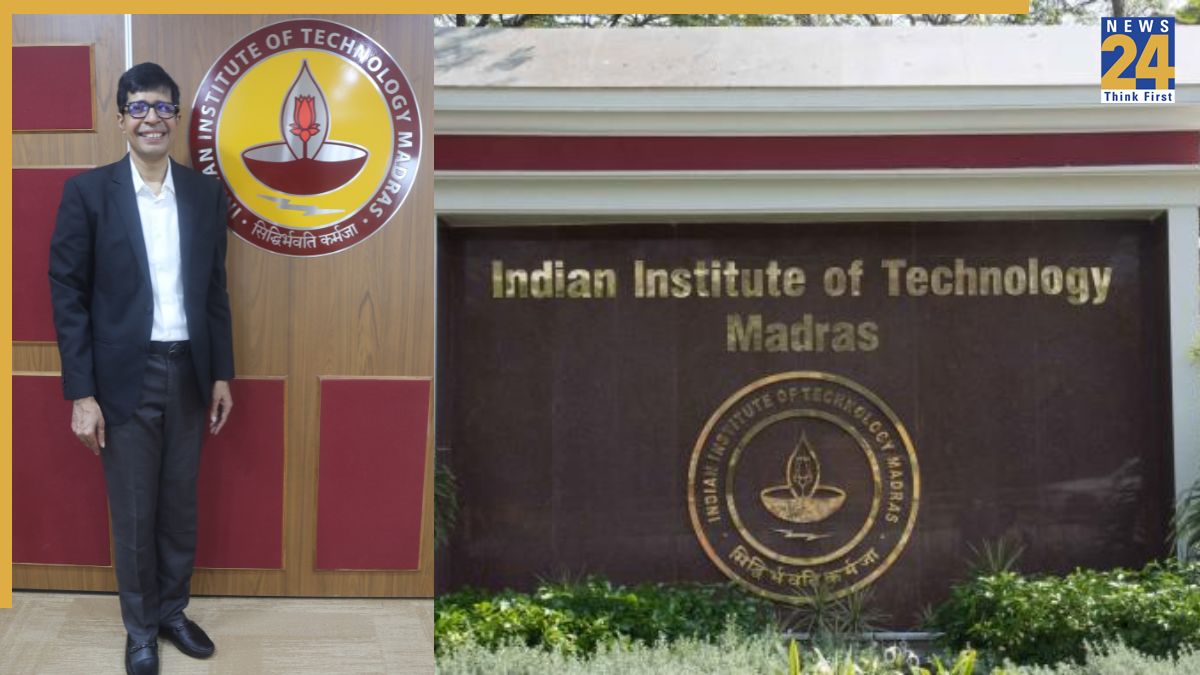


It may sound clichéd, but a significant breakthrough in the high-tech arena would advance India’s quantum innovation system, strengthening the country’s IT security for military and defense, financial transactions, blockchain, and OTP generation, as well as gaming applications.
IIT Madras has developed India’s first Silicon Photoics-based high-speed Quantum Random Number Generator (QRNG) that has its uses across sectors in the high-tech arena, which is now finding a place in the market.
Silicon photonics is an emerging area with a strong interface with Quantum Technologies, and Random number generation is a critical building block for secure computing and communication, said IIT Madras Director V Kamakothi on Monday after entering into an MoU with Indrarka Quantum Technologies Pvt. Ltd. for the commercial deployment of the Silicon Photonic QRNG.
This company will be marketing the product, a result of thorough research into the subject by a team of scientists, students and professors of the IIT Madras, in an example of Academia-Industry cooperation.
The technological advancement was developed at IIT Madras’s Centre for Programmable Photonic Integrated Circuit and Systems (CPPICS), and it highlights the technology’s strategic value and its potential to advance India’s Quantum innovation ecosystem.
A formal licensing agreement, worth Rs 1 crore, was signed between Technology Transfer Office (TTO), IIT Madras and the private company in the presence of the faculty and government officials at the IIT Madras campus.
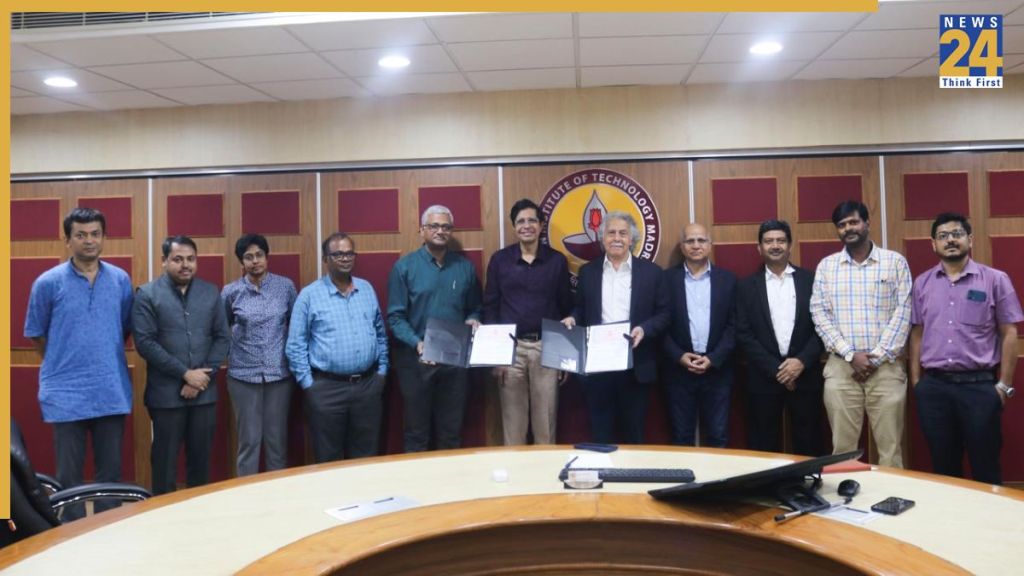
Earlier, a prototype version of the QRNG module was delivered to DYSL-QT DRDO, Government of India. Later, an advanced version of the QRNG module has been developed and deployed successfully at the Society for Electronic Transactions and Security (SETS Chennai) for quantum security applications.
Presiding over the MoU signing ceremony, Prof. V. Kamakoti, Director, IIT Madras, said, “I am extremely excited that the CPPICS has developed this QRNG that could be readily deployed in the market.”
This licensing agreement represents a major step in translating cutting-edge academic research into market-ready products, reinforcing India’s leadership in the global quantum technology landscape, the IIT Madras Director said.
Earlier, during the launch of the product, Mr. S Krishnan, IAS, Secretary, Ministry of Electronics and Information Technology (MeitY), Government of India, congratulated the CoE-CPPICS team and said, “Indigenously developed field deployable silicon photonic-based quantum random number generator (QRNG) module is a pride for India.”
Company representative, Director, Indrarka Quantum Technologies Pvt. Ltd., Dinanath Soni, said, “We are honoured to partner with IIT Madras in bringing India’s first Silicon Photonics-based QRNG to market. This ground-breaking technology represents a significant leap forward in quantum security solutions and exemplifies the success of the Make in India initiative. We are committed to making this indigenous innovation accessible across critical sectors, establishing India as a global leader in quantum security and advancing our nation’s vision of technological self-reliance.”
- The QRNG technology has critical applications in fields such as:
- IT security for the military and defence
- Cryptographic algorithms
- Quantum Key Distribution (QKD)
- Scientific modelling and simulations
- Financial transactions, blockchain, and OTP generation
- Gaming applications
Prof. Manu Santhanam, Dean (IC&SR), IIT Madras, said, “The Centre for Programmable Photonic Integrated Circuits and Systems (CPPICS) embodies IIT Madras’s vision of transforming world-class research into transformative solutions. The successful development and licensing of the Silicon Photonics-based QRNG is a testament to how focused R&D, backed by strong industry partnerships, can deliver technologies of national importance.”
Highlighting the impact of this technology, Prof. Bijoy Krishna Das, Chief Investigator of Silicon Photonics CoE-CPPICS, IIT Madras, said, “I believe the field deployable QRNG module is the first silicon photonics-based product from India — a remarkable milestone in our nation’s research journey. I gratefully acknowledge the MeitY, Govt. of India, for the financial support to establish the silicon photonics CoE-CPPICS at IIT Madras.”
Prof. Bijoy Krishna Das credited the achievement to faculty members, research scholars and engineers associated with CoE-CPPICS, the engineering team at izmo Microsystems for photonic IC packaging support.
ALSO READ: This Chrome Trick Lets You Replace The Google Logo With Anything You Want! Here’s How You Can Do It