

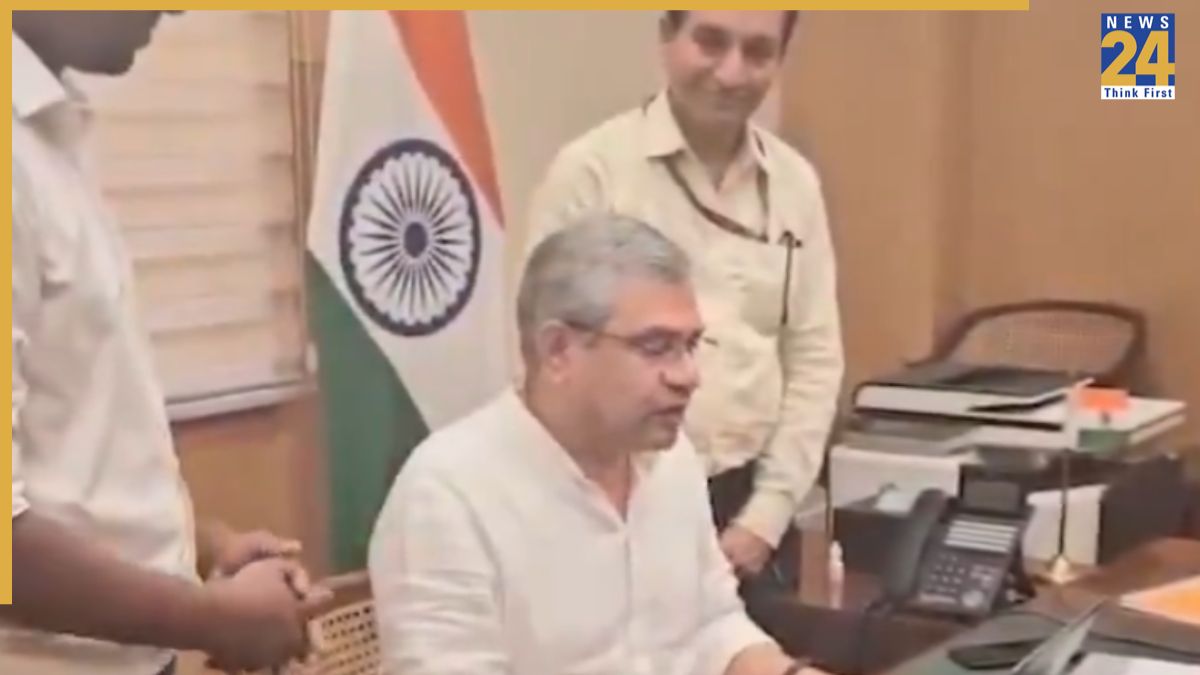


In what can be seen as a sharp reaction to the Trump assault on the Indian IT sector, so to speak, Union IT Minister Ashwini Vaishnaw has decided to switch to domestic technology platform Zoho.
But even before this ‘trouble’ from overseas, India has been trying to push for self sufficiency and reducing dependence on international technology providers (as an import substitution) as also for digital and data security reasons. The minister’s move, declared over his official account of social media platform X. Announcing intent to shift to Swadeshi technological platform, the minister urged people to embrace domestic products and services instead of foreign ones.
“I am moving to Zoho — our own Swadeshi platform for documents, spreadsheets & presentations. I urge all to join PM Narendra Modi’s call for Swadeshi by adopting indigenous products & services,” Vaishnaw said in his post.
I am moving to Zoho — our own Swadeshi platform for documents, spreadsheets & presentations. 🇮🇳
I urge all to join PM Shri @narendramodi Ji’s call for Swadeshi by adopting indigenous products & services. pic.twitter.com/k3nu7bkB1S---Advertisement---— Ashwini Vaishnaw (@AshwiniVaishnaw) September 22, 2025
Zoho founder Sridhar Vembu of Tamil Nadu has over the past two decades built it as an Indian multinational tech company, taking on the behemoths Microsoft and Google, and offers cost effective web-based business applications and office productivity tools. It provides a wide range of applications covering HR, Sales, Finance, Marketing, IT, Analytics and business functions.
Within minutes of the minister’s declaration, Zoho founder Vembu tweeted his thanks and hoped that the organisation would make the country proud. “Thank you Sir, this is a huge morale boost for our engineers who have worked hard for over two decades to build our product suite,” Vembu said.
The IT Minister’s move comes close on the heels of Prime Minister Narendra Modi’s push for Swadeshi in his message to the citizens asking them to support domestically manufactured products during the ongoing festival season.
“On the auspicious occasion of Navratri, I extend my warm greetings to you and your families. May the festival bring health, happiness, and prosperity to all. This year, there is an additional reason to celebrate — from September 22, the next-generation GST reforms have come into effect, ushering in a nationwide ‘GST Bachat Utsav’ or savings festival,” Modi said in his message.
Swadeshi benefits the local communities and adds strength to the country’s economy, the Prime Minister said and said it formed a significant part of the ambitious Vikasit Bharat 2047 vision.
In addition to import substitution, by using domestic platforms, there is the element of data sovereignty and data security issues also in play, according to IT experts.
Changing geopolitical realities can trigger risks of service disruption, foreign influence, and changing rules that could lead to complications. India has only two percent of global data centres even though it generates around one-fifths of world’s data. Though the government would want stringent controls over data collection, processing and storage, Big The companies hold data in their servers across the continents. Ensuring critical data safety and keeping it within the borders becomes essential as it mitigates risks associated with foreign surveillance and cyber threats.