
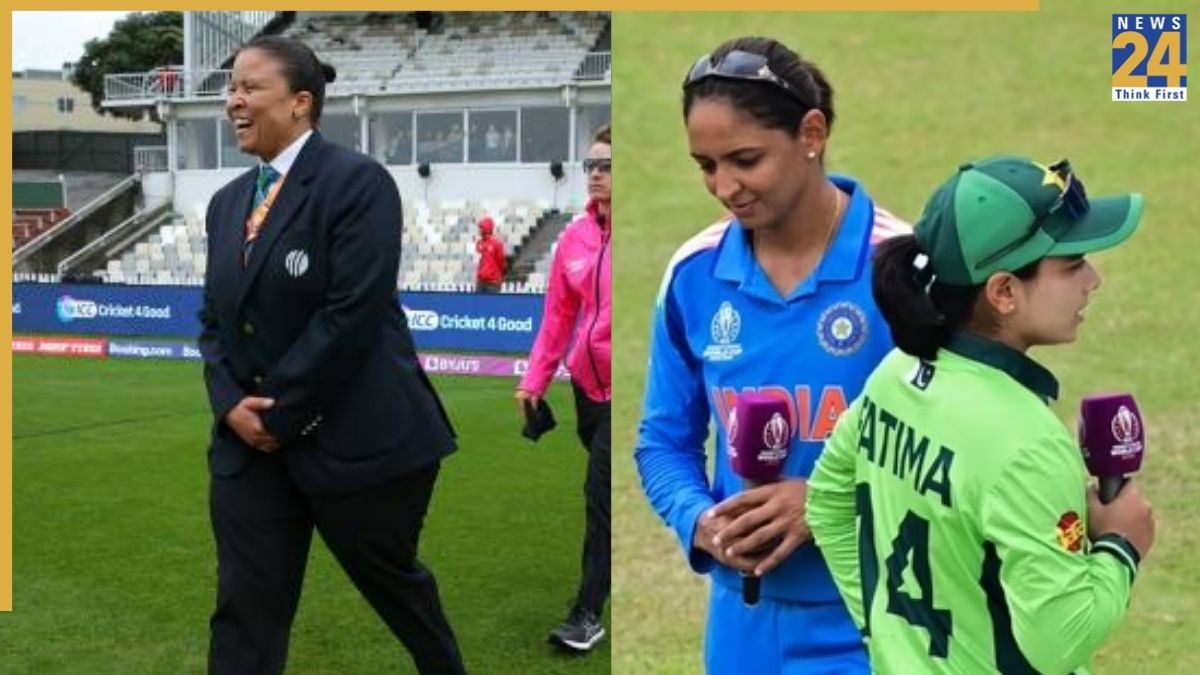


The ongoing Women’s World Cup clash between India and Pakistan at Colombo’s R. Premadasa Stadium became the latest chapter in a growing off-field saga – this time involving the match referee, Shandre Alvida Fritz.
So, who is Shandre Fritz, and why is she suddenly making headlines beyond her usual officiating duties?
Meet Shandre Fritz: The Woman Behind the Whistle
Shandre Fritz is no stranger to international cricket. A former South African cricketer, she represented her country with distinction as a right-handed batter and right-arm medium pacer from 2003 to 2014. Over her career, Fritz played 59 One Day Internationals and 26 T20 Internationals, gaining valuable on-field experience and insights. Since hanging up her boots, she transitioned into officiating and now serves as a respected match referee in women’s international cricket.
The Controversy: Toss Mix-up Sparks Debate
During the high-voltage India-Pakistan encounter on Sunday, tensions were already simmering. The long-standing tradition of handshake at the toss was skipped yet again, continuing the cold war that began during the Asia Cup. As India’s skipper Harmanpreet Kaur spun the coin, Pakistan’s captain Fatima Sana clearly called “tails.” However, Australian presenter Mel Jones heard “heads,” and the match referee Shandre Fritz awarded the toss to Pakistan – despite the apparent miscommunication.
It's time for some batting firepower 💥
— Star Sports (@StarSportsIndia) October 5, 2025
Pakistan win the toss and #TeamIndia will bat first! 🏏
Catch the LIVE action ➡ https://t.co/CdmEhf3jle#CWC25 👉 #INDvPAK | LIVE NOW on Star Sports network & JioHotstar! pic.twitter.com/bqYyKrwFLt
The result? Pakistan won the toss and chose to field first, a decision that could impact the game’s dynamics given the weather and pitch conditions. Fans and experts alike quickly took to social media, accusing the officials and by extension Fritz – of a critical oversight at one of cricket’s most pivotal moments.
The Stakes and Aftermath
Pakistan captain Fatima Sana, upbeat despite the controversy, explained her team’s decision: “Looks like there could be some moisture on the wicket, so we’re going to bowl first. We’re confident and ready to play better today.”
Meanwhile, India’s Harmanpreet Kaur remained positive but pointed out team changes due to illness, emphasizing that the squad was prepared to maintain their unbeaten record against Pakistan in Women’s World Cup matches.
Why This Matters
In a rivalry as intense as India vs Pakistan, even small errors can have outsized consequences – both on and off the field. The toss is more than a formality; it can dictate strategies, impact morale, and sometimes change the course of the game. For Shandre Fritz, this incident is a reminder of the fine line match officials walk, balancing fairness, accuracy, and the game’s spirit under immense pressure.
As the tournament continues, all eyes will be on Fritz to see how she handles future matches and whether this controversy will prompt changes in how toss calls are managed.
In cricket’s global spotlight, every decision counts. Will Shandre Fritz bounce back from this episode and restore confidence among players and fans? Only time will tell.