
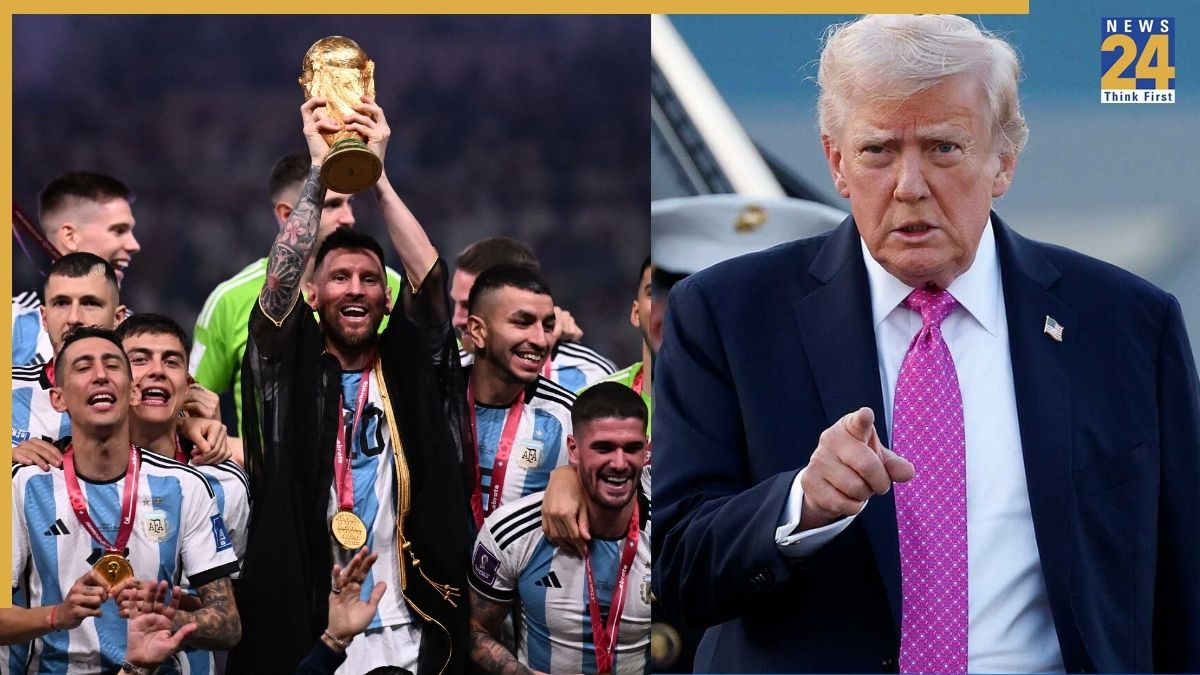


FIFA is gearing up for what it hopes will be the most spectacular World Cup draw ever, but this year’s ceremony in Washington comes with an unusual level of political tension. With Donald Trump set to take center stage at the Kennedy Center on Friday, what’s usually a glitzy, football-focused event is suddenly carrying a much heavier global spotlight.
In just six months, the United States alongside Mexico and Canada will host the biggest World Cup in history. But hosting a tournament with Trump in office has created complications that go far beyond stadium logistics. The U.S. president has frustrated both co-host nations, threatened to shift matches, and tightened visa rules, directly impacting fans and delegations from across the world.
The U.S. is set to host a massive 82 of the tournament’s 104 matches, meaning hundreds of thousands of fans are expected to travel, many of them into a country where immigration policies have become increasingly strict. Since June, 19 nations, including World Cup participants Haiti and Iran, have faced travel restrictions. Iran even briefly threatened to boycott the draw after members of its delegation were denied visas, though the decision was later reversed.
Trump’s stance has hardened in recent weeks. After an incident involving an Afghan national near the White House, he announced plans to “permanently pause migration from all third-world countries.” And while the government has introduced a fast-track visa process for fans with match tickets, U.S. Secretary of State Marco Rubio made one thing clear: “Your ticket is not a visa.”
Security tensions are also heightened. Trump has deployed National Guard troops to numerous U.S. cities this year, despite opposition from local leaders, a move that could overlap with World Cup operations in those same regions.
Despite all this, FIFA is pushing ahead with optimism. A record 64 nations will be featured in the draw of more than 30% of FIFA’s membership as the governing body continues to sell its vision that “bigger is better.” This expanded 104-match format will run from June 11 to July 19 across 16 venues in the U.S., Mexico, and Canada. Eleven of the U.S. venues are NFL stadiums, though summer heat could pose a real challenge, especially in open-air arenas.
Still, the spotlight is set to shine brightly on Washington. With legends like Brazil’s 1994 World Cup-winning captain Dunga already presenting the trophy and a politically charged environment hanging over the event, this may end up being one of the most talked-about World Cup draws ever for reasons both on and off the pitch.