
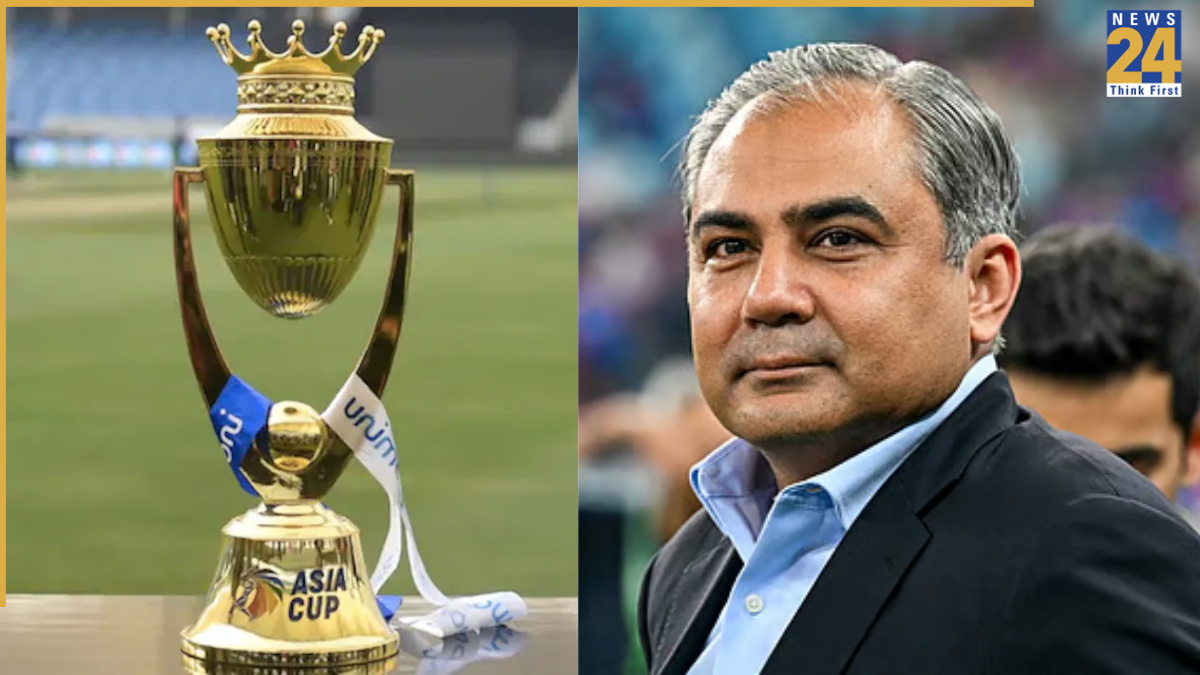


The Asia Cup 2025 trophy presentation controversy has escalated into a full-blown issue within Asian cricket. ACC President and PCB Chairman Mohsin Naqvi has reportedly handed over custody of the Asia Cup trophy to the UAE Cricket Board following a dramatic fallout with the BCCI. This follows after India, as instructed by the board, declined to receive the silverware from Naqvi because he was both Pakistan’s Interior Minister and his inflammatory social media comments that tied in with the current Indo-Pak tensions and “Operation Sindoor.”
In the final, Naqvi demanded that only he will give the trophy and medals. When India refused stiffly, he took the silverware with him and tried to spoil India’s celebrations. The episode caused nationwide outrage memes, photoshopped images of Naqvi taking away the trophy generated using AI, and deafening “Bharat Mata Ki Jai” choruses in the stands. BCCI even denounced his actions as “unsportsmanlike.”
But can BCCI actually remove him from the ACC presidency? Here’s the breakdown.
ACC Structure and Naqvi’s Role
The Asian Cricket Council is a regional entity of the ICC with 30 member boards (full and associate) representing the region. Naqvi was chosen as ACC President in April 2025 for the usual two-year term, succeeding Sri Lanka’s Shammi Silva. Elections are held by member vote at the Annual General Meeting, typically determined by regional groupings and bloc voting.
While BCCI is ACC’s financial powerhouse propelling nearly 70–80% of revenue through broadcasting and sponsorship it retains only one vote like any other member. Counter-blocs by PCB, Bangladesh, and Sri Lanka generally counterbalance India’s hegemony.
ICC’s Role and Governance Constraints
The International Cricket Council acknowledges ACC to be an independent regional body. Its constitution does not grant ICC powers to remove or interfere with the election of an ACC President.
Also Read: Will India shake hands with Pakistan in Women’s World Cup? BCCI breaks silence
The ICC Code of Conduct does address administrative neutrality and conflicts of interest, but punishment for breaches typically consists of warnings, fines, or suspension from certain duties not dismissal from a regional presidency. When PCB officials were sanctioned in 2018 for partisan conduct, for example, ICC sanctions were individual, not structural.
Thus, Naqvi’s ouster would require a no-confidence motion or re-election within the ACC itself, needing a two-thirds majority vote something that appears highly unlikely given Pakistan’s support base.
BCCI’s Leverage and Tactical Options
At the recent ACC AGM in Dubai (September 30, 2025), Indian representatives Rajeev Shukla and Ashish Shelar vigorously protested against India being denied the trophy. Whereas Naqvi remained adamant, BCCI will go ahead to take up the issue at the ICC Board meeting in November.
Potential resolutions include:
ICC mediation so that the trophy is formally awarded to India.
Sanctions or denial of participation to Naqvi in ACC events.
Strengthening of neutrality regulations to keep political leaders away from cricket administrative positions.
What BCCI cannot do, however, is remove him without widespread agreement across Asian boards.