


Lakshmana Venkat Kuchi
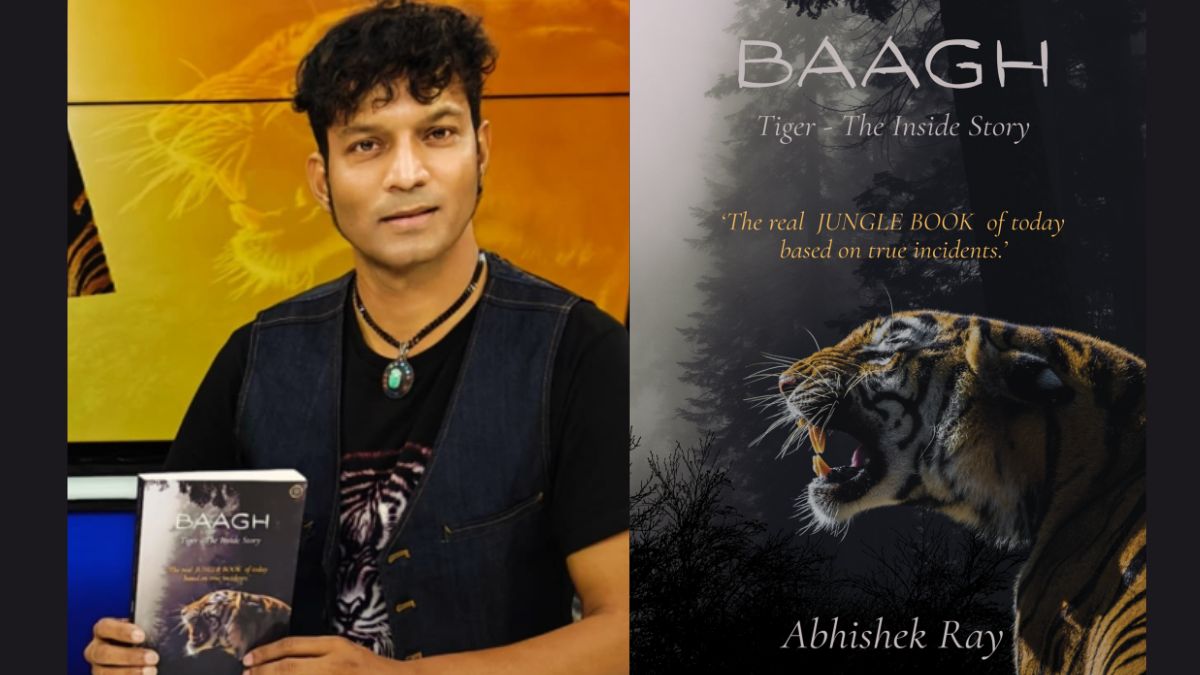
One of the very few in the country to think about ‘rewilding’ – a process to give back the forests to the wild beasts and do hit bit for the mother nature that has suffered successive and excessive plunder for generations — Abhishek Ray has come out with a revealing book on wildlife crime thriller – Baagh Tiger -The Inside Story.
Released on July 1, the insightful book into the world of poachers and wildlife is the outcome of his passion for Tigers bordering on madness is a fictional account of how the tiger poaching is carried out and how a person belonging to the poaching family eventually comes to the rescue of the Tiger.
Abhishek Ray, a celebrated film music composer having worked with the who’s who of Bollywood, put most of his earnings from his profession into his passion – rewilding and Tigers, and the book is the result of 8 years of handwork, and his passion appears on page after page of this huge tome done of 4`16 pages in a language that is engaging and gripping.
A consummate story-teller that Abhishek is much in evidence from the opening page of the “Indian Jungle Book” that has come 100 years after the Rudyard Kipling’s Jungle Book, out of which the Hollywood has minted money all these years.
In the year 2010, when not many in India were knowing about rewilding, Abhishek bought up a hill in the Corbet landscape, which is today famous as Sitabani Wildlife Reserve. It is surrounded by forests and is contagious Tiger-Leopard corridor.
“It used to be a barren agricultural hill, with not a single tree on it. In 2010 I acquired the land, it was completely barren at that time. It was a fallow agricultural land and today it is forest, and home to Tiger,” he said in an Exclusive interview to News24online. A tiger and leopard tracker since childhood, he said when he stumbled upon the hill, there was a big man-animal conflict taking place. Because when you do agriculture, you can encroach into the forest.
“You cannot explain to the deer, no, that you will only eat grass and you will not eat here. Similarly, you cannot explain to the tiger that you will only hunt deer and you will not hunt cows and buffalos, right? It will do what is naturally meant to which brings it in direct conflict with human beings. This was a heavy duty man animal conflict zone, at that time in the region where the hill was.
“And since it was ringed by forest, the land was screaming out to be returned back to the wild. From my perspective, I always had this dream of rewilding. And the term rewilding in 2010 in India, nobody knew it. People used to buy land to make farm houses or factories or for any such commercial purpose,” he said in response to a question as to how became passionate about forests and tigers.
A Physics (Hons) graduate and Masters in Computer Applications, Abhishek had a full fledged career in top end computer jobs waiting for him but he veered around to music and Bollywood and became successful.
“But there’s something, this madness in me for forests and tigers,” he said as to why he chose to devote a major part of his life to the betterment of the two.
“I went through a lot of hardships to acquire this land, and then started the painstaking process of rewilding. The land was lying barren. A lot of weeds had come up on it. A very dangerous weed called lantana, which prevents other trees and grasses from growing. It does not allow palatable grasses to grow. The entire food chain gets affected. Without palatable grasses, you won’t have ungulates coming and grazing. Yeah, so it upsets a whole chain,” Abhishek Ray said recalling the early days.. The first daunting task was to pull out all the Lantana. And I used a very indigenous method to replace lantana by bamboo. It starts growing faster and faster than it takes over the land,” he said.
Taking out lantana, then making water bodies, planting palatable grass, planting fruiting trees for birds, all endemic trees, no exotic trees.
So that started happening, and then the miracle happened in 2015.
A completely wild Tigress chose my area, reposed her trust in me to give birth to cubs and made Sitabani reserve world famous.
Those cubs grew up there and they dispersed into the Corbet National Park and Sitabani Wildlife Reserve became known as a tiger leopard corridor. After that Discovery Channel did an entire feature on me. Much awarded Abhishek Ray, also helps the government of India with the Tiger Census.
In the year 2025, Abhishek got the Forbes Award For Wildlife Conservation, a global recognition for a person who is known across the wildlife conservation world.
And he hold the Tigress responsible for all these awards. “I am just the recipient because of her. I was the gardener of the land, but she chose to make it famous. She chose to bring global attention by reposing her trust in me. So I always say that you do one percent for nature. Nature does 99% on her own,” he said.
I made the water bodies, the fish, the frogs, the fireflies, they came on their own. The aquatic vegetation came on their own, from the bee to the spider to the scorpion to the deer, all of them come and drink from that water body, “ he said recalling the days when he was building a forest on a fallow agricultural land.
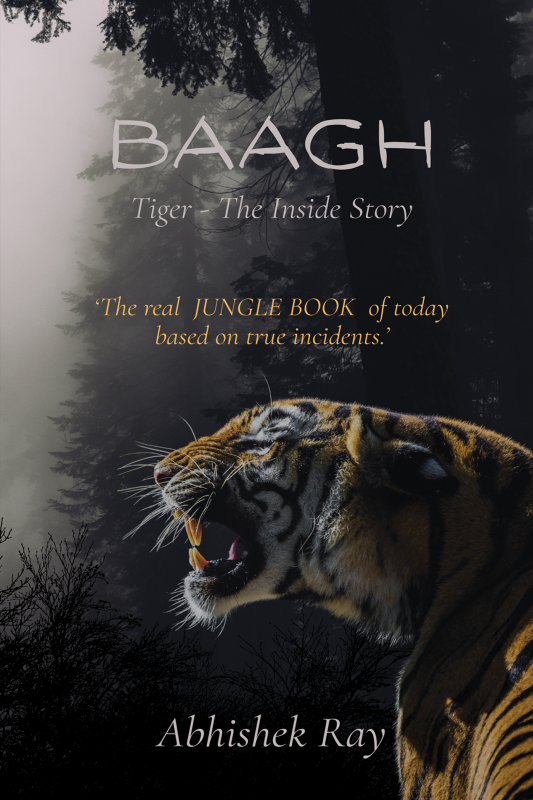
In a way it is his homage to the Tiger that comes across his latest book, Baagh Tiger – The Inside Story, published by Bluenose Publications in which he focuses on the criminal world of poaching using fictionalised account to tell the real story. It is a novel that is as engaging as a gripping Bollywood crime thriller that deals with wildlife, crime, action, and adventure. Jaggu Bavaria is the principal protagonist in the novel, a member of a poaching family, he turns a tiger protector.
The book brings out the tale of tiger’s fight for survival against all odds and takes the readers on a journey of the trial hinterland.
“In today’s India, how does a tiger tigress raise her cubs, which I’ve seen in my own land, avoiding highways, railway tracks, factories, human dominated, landscapes everywhere, and also avoiding lethal threats, like hunters and hunters. That is the real Jungle Book of today,” Abhishek said
Books, the real Jungle Book of today, based on true incidents. “Although the book is fictional it is laced with reality,” Abhishek said.