


When a court issues an injunction, compliance is not optional. That is the principle at stake in the Adani defamation case—and it goes well beyond any single corporation or critic. In a digital era where communication is decentralised, the judiciary must bind every participant in the information chain—from global tech giants to activist bloggers—under the same directives. Laws for publishing and broadcasting need urgent revisiting, not just in India but across digital platforms worldwide.
Why the Delhi Court Order Matters
The Delhi court’s directive was conservative in form but decisive in impact. It did not gag debate about Adani’s businesses or pronounce guilt. Instead, it acted to prevent irreparable harm. Once unverified allegations spread online, they cannot easily be undone. The order therefore required takedowns until trial establishes fact or falsity. Think of it as securing a crime scene before evidence is examined.
Press Freedom or Press Responsibility?
Some critics have framed the order as an assault on press freedom. But in India, free speech has always carried “reasonable restrictions,” including defamation. Courts have consistently held that claims presented as fact must be verified. Calling this censorship trivialises genuine struggles for press liberty. Press freedom is not weakened when journalists are asked to substantiate; it is weakened when unverified claims masquerade as fact, eroding credibility in the digital marketplace.
Platforms Cannot Be Selective
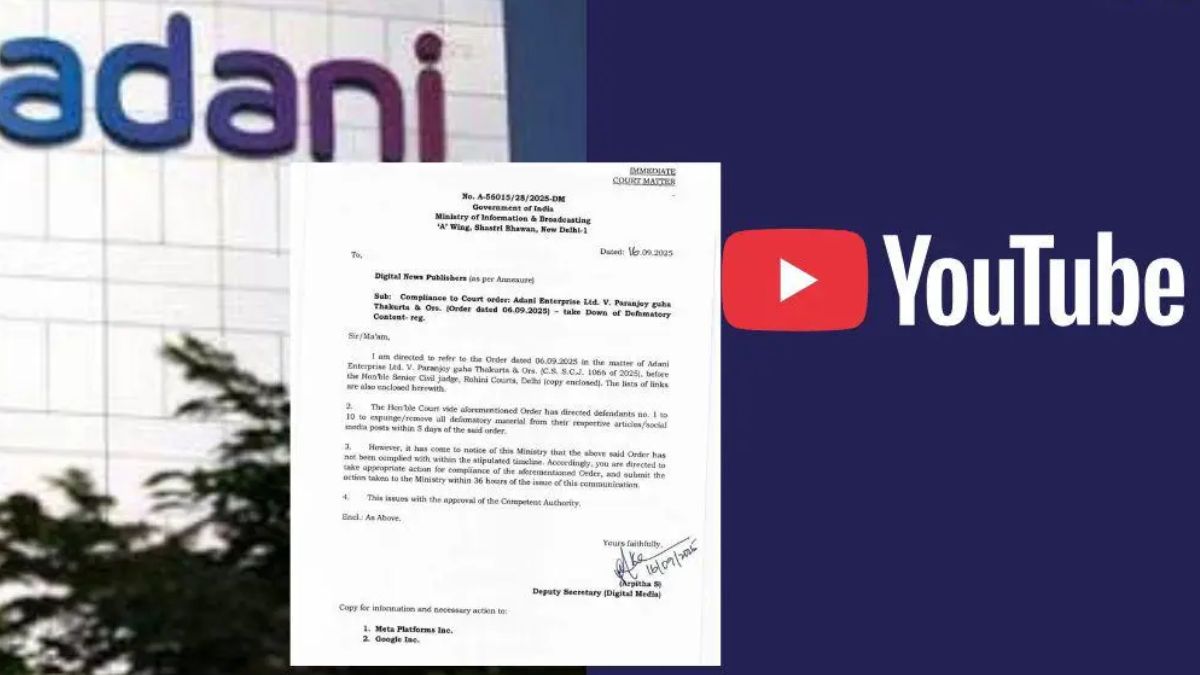
The government’s subsequent direction to YouTube and Instagram to remove 221 flagged pieces of content was squarely within bounds—it merely transmitted judicial authority. Platforms cannot decide whether to comply based on politics or profit. Allowing such discretion would create a dangerous two-tier system: Indian publishers bound by law, foreign platforms free to ignore it. That would be the real affront to sovereignty.
Why Reputation Matters
Conglomerates like Adani are not isolated private firms; they build the infrastructure, energy and logistics backbone of India’s economy. Just as businesses must answer for their conduct, journalism must answer for its credibility. Adani’s reputation, like any major group, impacts investor confidence, credit ratings, and the pace of national growth. False or distorted claims don’t just hit share prices; they ripple through financial markets and affect citizens whose pensions, jobs and services depend on robust corporates. The right to reputation is therefore not a privilege but a public good.
(Piece written by an external contributor)
Disclaimer: The publisher does not accept any responsibility or liability for the accuracy, content, or opinions expressed by the author.