
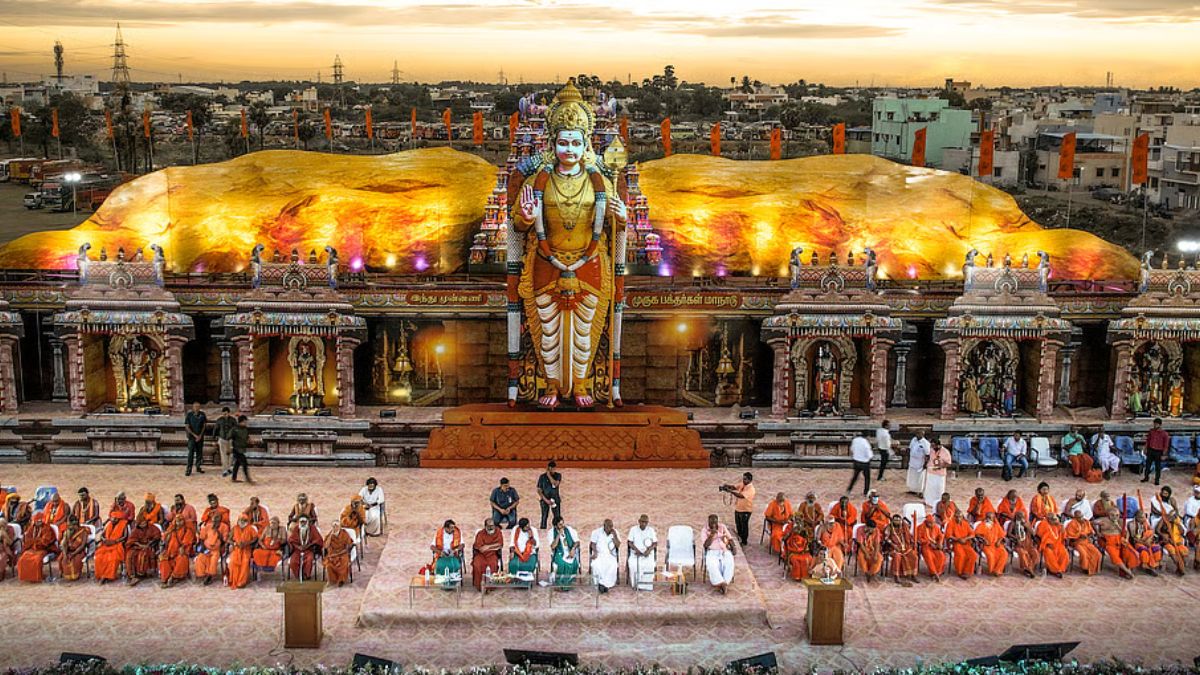


Madurai witnessed its biggest-ever show of strength on Sunday, June 22- the culmination of months of agitations led by the Hindu Munnani and the Bharatiya Janata Party (BJP). The event was to demand complete control over Thirupparankundram hill in Madurai, which they describe as the ‘Ayodhya struggle of the South’. Andhra Pradesh Deputy Chief Minister Pawan Kalyan and K Annamalai, the former Tamil Nadu BJP chief, participated in the event. Here is what you should know about the Murugan Hill dispute.
Murugan Hill
Thiruparankundram hill, located on the southwest of Madurai district in Tamil Nadu, houses Sikkander Badusha dargah, Subramaniya Swamy temple- the first of the six abodes of lord Murugan- and Kasi Viswanathan temple.
The Subramaniya Swamy Temple was built in the 8th century by the Pandya rulers at the foothills of the monolithic hill. In the 17th century, the Sultan Sikkandar Avulia Dargah was constructed at the top of the hill in memory of Sikkander Shah, the last Sultan of Madurai. On the other side of the hilltop stands the Kasi Viswanathan Temple. For many years, people from both Hindu and Muslim communities have worshipped here side by side in harmony. However, in recent times, this hill has unexpectedly become a communal flashpoint.
The Sikkander Badusha Dargah was built towards the end of the 17th century. The Subramaniya Swamy Temple, which is much older, had no conflict with the dargah for a long time. The temple authorities did not raise any objections to the religious practices carried out at the dargah, including animal sacrifice. Both places of worship coexisted peacefully during that period.
Murugan Hill Dispute
Around 110 years ago, a dispute broke out between the Madura Meenakshi Devasthanam (the temple authority) and the Sultan Sikkandar Avulia Dargah. As tensions grew, the matter drew the attention of the government, prompting its intervention. At the heart of the issue was the Thiruparankundram Subramanya Swamy Temple, revered as the first of Lord Muruga’s six sacred abodes. Eventually, the matter was resolved through discussions between the administrators of both places of worship.
In 1915, the Hukdars of the Dargah attempted to construct a mantapam on the land at Nellitope for pilgrims to rest. Stones were brought down from the hill, and construction work had already begun. This move triggered strong opposition from the Devasthanam, with the temple manager formally protesting the construction.
The Devasthanam claimed that the entire hill belonged to the temple and objected to the dargah administration’s plan to build a mandapam. They argued that the proposed site was a resting place for Hindu pilgrims. Since the government could not come to a decision, the dispute was taken to the Madurai subordinate court.
What The Court Ruled
The Madurai sub-court ruled that the entire hill, except for the dargah and the steps leading to it, belonged to the temple. However, in 1923, the Madras High Court gave a different verdict. Later, the Privy Council overturned the High Court’s ruling and upheld the decision of the sub-court. It stated that the dargah, its flagstaff, and the flight of steps belonged to the Muslim side, while the rest of the hill was owned by the temple. Since this judgment, the legal position has remained unchanged to this day.
What Happened Now?
On December 25, 2024, a group of Muslim men were on their way to the dargah with chicken and goat. The police stopped them and restricted them from carrying out animal sacrifice. This created tensions between both communities, which led to protests and rallies. Some even claimed that the mosque administration is trying to rename the hill as ‘Sikandar Hill’.
Later, residents of Thiruparankundram, along with representatives of several political parties, including Dravida Munnetra Kazhagam (DMK), Marumalarchi Dravida Munnetra Kazhagam (MDMK), Desiya Murpokku Dravida Kazhagam (DMDK) and Congress, submitted a petition to the district collector on January 27.