


By Dr. Rachna Gupta, Sr Journalist and Author, and FM HPPSC
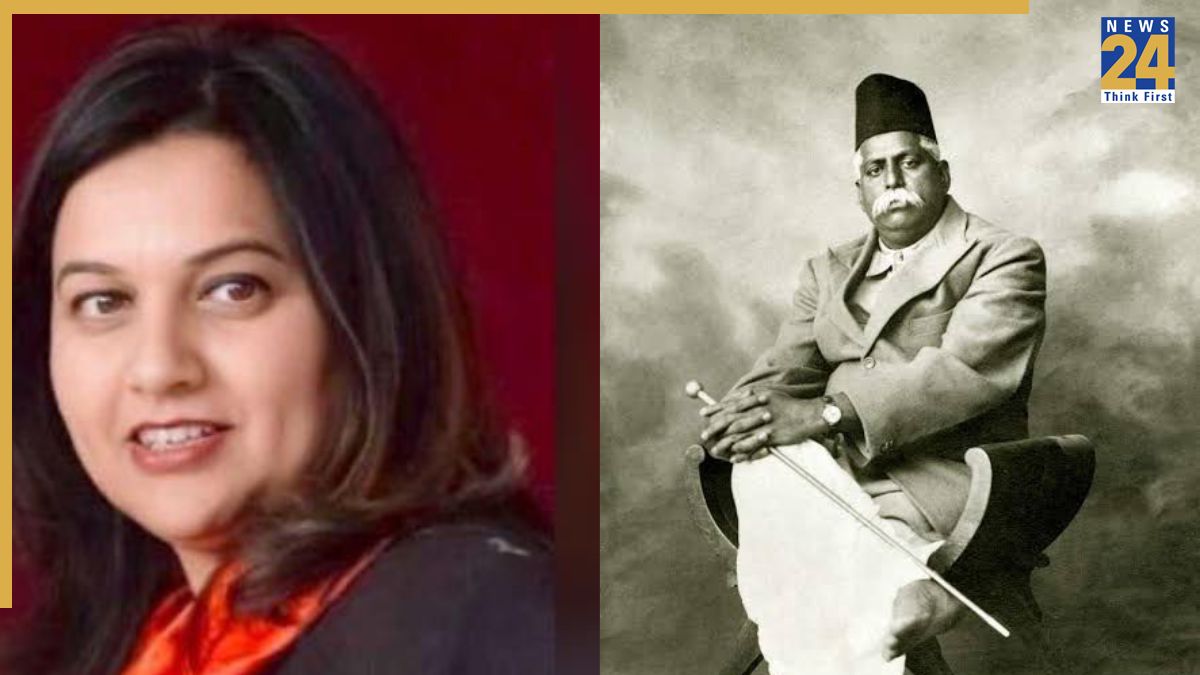
Can one imagine that the pain of slavery could leave such a deep impression on an eight-year-old child that he would take a vow to sacrifice his very life to let India breathe the air of freedom? The small resolve taken by Dr. Keshav Baliram Hedgewar in his childhood became a flame of discipline, diligence, and passion whose light guided millions of Indians on the path to independence. On the path he laid down, countless people contributed to liberating India without caring for their own lives.
The eminent patriot Dr. Hedgewar, who founded the Rashtriya Swayamsevak Sangh (RSS) to awaken the spirit of organization and nationalism in the country, must be remembered on India’s 79th Independence Day because, even though British rule has ended, his efforts to strengthen India from within remain equally relevant today.
On August 15, 2025, India celebrates its 79th Independence Day. In the history of the freedom struggle, many organizations and personalities made significant contributions. From 1901 to 1942, the role of the RSS remained connected to the freedom struggle both directly and indirectly. Dr. Hedgewar believed that along with political independence, cultural and social unity were equally essential. This period proves that the freedom movement was not merely a story of political fronts but also a continuous journey of thought, organization, and discipline. Particularly under Dr. Keshav Baliram Hedgewar’s leadership, 13 major episodes between 1901 and 1942 take center stage in this discussion. These episodes not only depict the diverse circumstances of the freedom struggle but also clarify the nature of the RSS and the political-social environment of that time.
1. Early Struggle (1901)
Dr. Hedgewar’s first encounter with the spirit of freedom came in 1901. At the age of eight, he publicly spoke out against the British. Earlier, in 1897, the arrest of Bal Gangadhar Tilak during the plague epidemic had already ignited in him the spark of Swaraj.
2. Public Awakening And Journalism (1907–1908)
In 1907, through journals such as Rashtrasevak, he began writing against social and political injustices. Criticism of the oppressive orders of the foreign rule, support for Satyagraha, and public awareness campaigns were his initial areas of work.
3. Proposal For Complete Independence (1920)
At the 1920 Congress session, Dr. Hedgewar first proposed complete independence, which was not passed at the time. Yet, this idea contributed to shaping the direction of the movement in the years to come.
4. Participation In The Non-Cooperation Movement (1921)
In 1921, due to his active participation in the Non-Cooperation Movement, Dr. Hedgewar was imprisoned. He believed that for freedom, not only movements but also disciplined organization were essential.
5. Founding Of The Rashtriya Swayamsevak Sangh (1925)
In 1925, Dr. Hedgewar established the RSS in Nagpur. His aim was to create an organization that could contribute to the freedom struggle through patriotism, discipline, and organizational strength.
6. Social Awakening And Organizational Expansion (1925–1930)
During this period, while keeping a distance from direct political movements, the Sangh focused on moral and cultural awakening in society. Volunteer training and the expansion of shakhas (branches) took place in these years.
7. The Civil Disobedience Movement Of 1930
Although the RSS did not directly participate in this movement, many volunteers joined individually. Dr. Hedgewar encouraged them to contribute to works of national interest.
8. Imprisonment In 1931
In 1931, Dr. Hedgewar was again sent to jail. Even there, he continued correspondence with volunteers and worked for organizational expansion.
9. Activities Before The Quit India Movement (1935–1940)
In these years, the RSS focused on training camps, education, and discipline. By 1940, the organization had been established in various provinces of the country.
10. Support For Individual Satyagraha (1940)
In August 1940, Dr. Hedgewar gave volunteers the freedom to participate in Individual Satyagraha so that they could remain connected to the different forms of the freedom struggle.
11. Health And The Final Years (1940–1942)
After 1940, his activities were limited due to health reasons, but before his death in 1942, he clearly defined the future leadership and direction of the Sangh. During the Quit India Movement, although the organization as such did not participate, many volunteers were personally arrested.
12. The Quit India Movement Of 1942
The RSS did not participate directly as an organization, but many volunteers joined individually and were arrested.
13. Legacy
The period from 1901 to 1942 was the time of laying the ideological foundation of Dr. Hedgewar and the RSS. He considered freedom the ultimate goal, with a focus on organization-building, discipline, and patriotism.From 1901 to 1942, the RSS’s contribution remained connected to the freedom struggle in both direct and indirect forms. Dr. Hedgewar’s vision was that along with political independence, cultural and social unity were equally necessary.
Also Read: Army Jawan Assaulted, Tied To Pole By Toll Booth Staff While En Route To Srinagar