



Artificial intelligence is becoming so deeply embedded in everyday systems that most people no longer pause to consider how much now depends on it. Banks use machine-learning models to evaluate transactions in real time. Hospitals rely on automated systems to prioritize patient care. Government agencies deploy intelligent tools to scan for threats around the clock. AI increasingly influences decisions that affect finances, health, security, and public safety.
Yet beneath this rapid adoption lies a serious and growing problem: we still don’t fully understand how these systems fail, how their behavior shifts over time, or how easily they can be manipulated by malicious actors.
Over the past few years, researchers have demonstrated that many AI models can be misled in surprisingly simple ways. Some have approved financial actions that should have raised red flags. Others have revealed fragments of sensitive training data in response to carefully crafted prompts. Incidents are early warnings of a larger issue. As industries rush to automate, the gap between AI deployment and AI security continues to widen.
One reason for this gap is that most organizations still rely on cybersecurity frameworks designed for traditional, predictable software. AI systems behave differently. They learn from data, adapt to new inputs, and produce variable outcomes based on subtle contextual signals. This creates entirely new attack paths, ones that legacy security models were never designed to detect or defend against.
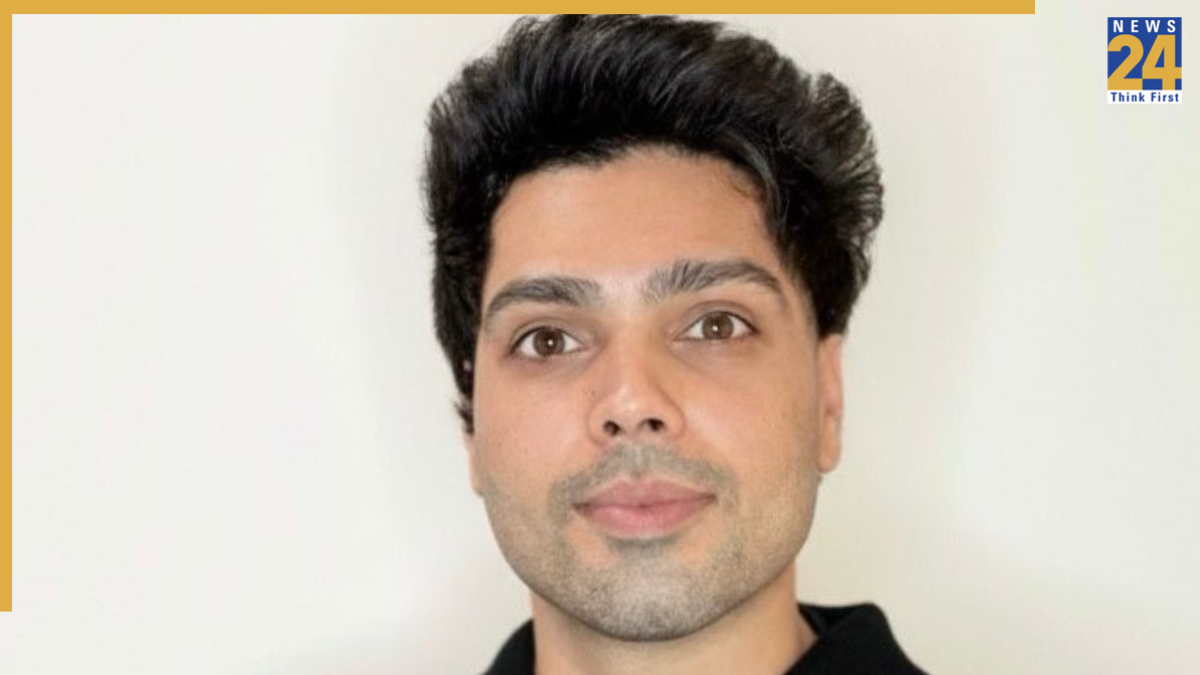
In response to this challenge, a small but focused group of researchers has begun laying the groundwork for a new approach to AI security, one that anticipates how intelligent systems behave under pressure rather than assuming static behavior. Among the most prominent voices in this emerging field is Nayan Goel, a Silicon Valley–based AI security researcher whose work is helping redefine how experts think about AI threats.
Studying Behavior, Not Just Code
Nayan approaches AI security from a perspective that differs from traditional research. Rather than starting with source code, he starts with behavior. How models change over time, how they react to adversarial inputs, and how attackers can subtly influence outcomes.
“AI does not break the same way software breaks,” Nayan explains. “It behaves. And that behavior can be exploited unless we understand how it shifts under pressure.”
This philosophy underpins his research. In publications such as Zero-Trust Architecture for Shared AI Infrastructure and Dynamic Threat Modeling for Continually Learning AI Systems, Goel outlines structured methods for identifying risks in systems powered by LLM agents, RAG pipelines, vector databases, and adaptive models.
By blending cybersecurity principles with adversarial analysis, data-risk modeling, and behavioral study, Nayan’s frameworks offer security teams a clearer way to identify emerging threats early, before attackers exploit them in production environments.
From Research to Real-World Tools
A defining aspect of Goel’s work is his ability to translate research into tools that engineers can actually use. His AI Prompt Injection Tester simulates real-world manipulation techniques that have already proven effective against modern language models, helping teams understand how easily intent can be hijacked.
His LLM RAG Security Generator focuses on retrieval-augmented generation systems, exposing weaknesses in the data pipelines that feed enterprise AI models, an area often overlooked despite its growing importance. His GraphQL Security Tester, which uses LLM-assisted query-mutation generation, enables teams to uncover logic flaws and injection risks in modern API architectures.
Each of these tools addresses a previously underexplored security gap, providing practical ways to test AI systems that were once difficult to evaluate. Together, they bridge the divide between theory and application, allowing organizations to validate AI safety rather than assume it.
Influencing Global AI Security Standards
Nayan’s influence extends beyond individual tools and papers. He has contributed to several foundational industry initiatives, including the OWASP Agentic Security Guidelines, OWASP AIVSS, and the OWASP LLM Top 10. Early efforts that are now shaping how organizations worldwide approach AI security. These frameworks are among the first to formally address the risks posed by autonomous and agentic AI systems.
Why This Work Matters Now
As the world increases its reliance on AI across finance, healthcare, defense, and public services, the consequences of failure grow more severe. Federal agencies have already warned that unsecured AI systems could become a significant national vulnerability. A single compromised model can trigger cascading effects well beyond the digital realm.
Nayan’s work provides much-needed structure at a critical moment. His research, tools, and standards contributions help ensure that society is not building its future on systems it does not fully understand.
Through sustained research, practical engineering, and leadership in global standards, Nayan Goel is helping ensure that the next era of AI is not only powerful but secure and dependable.