

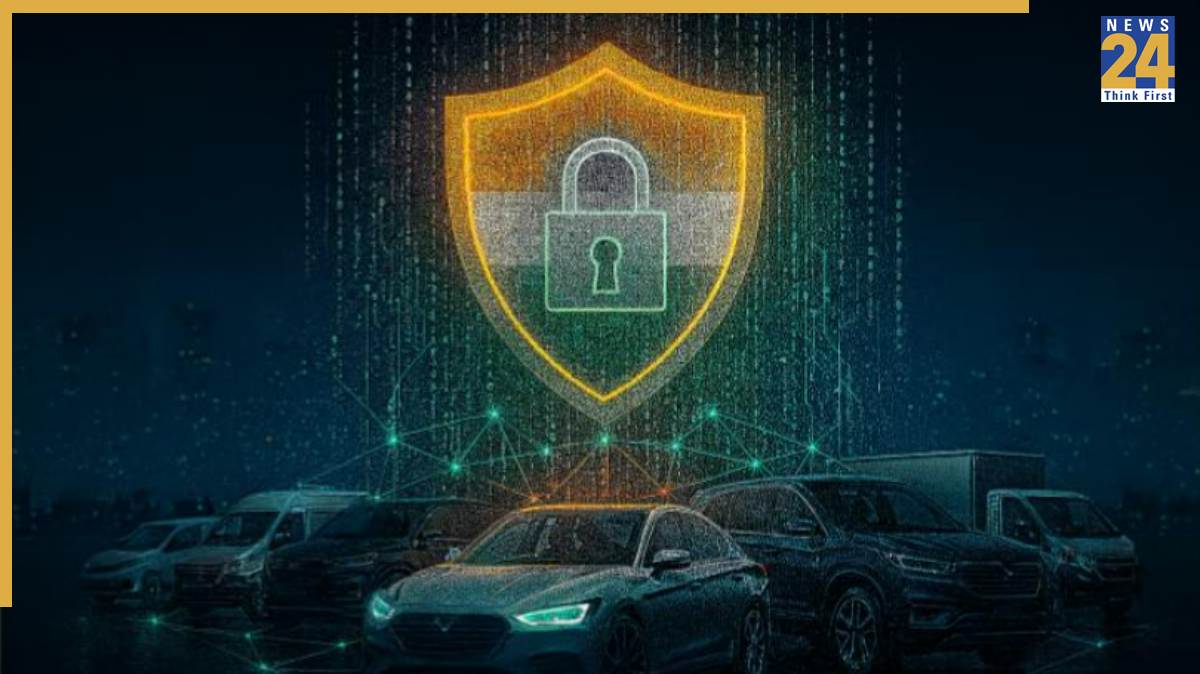


As the world races toward software-defined vehicles, India is positioning itself not just as a manufacturing hub, but as the cybersecurity backbone of global mobility. For decades, India built the world’s cars. Now, it’s securing them. As vehicles transform from mechanical machines into rolling computers—with over 100 electronic control units and tens of millions of lines of code—the automotive industry faces a new imperative: cybersecurity. And India, with its massive software talent pool and thriving domestic auto sector, is uniquely positioned to lead this $13 billion global opportunity.
From IT Services To Automotive Security
India’s journey from IT outsourcing powerhouse to potential automotive cybersecurity hub mirrors its earlier tech revolution. The same engineering talent that made India synonymous with software services is now solving one of mobility’s most critical challenges: protecting connected vehicles from cyberattacks.
The threat is real and growing. The 2015 Jeep Cherokee hack demonstrated remote vehicle control vulnerabilities. Recent keyless entry exploits have enabled sophisticated car thefts. Ransomware attacks on automotive suppliers—like the recent incident costing Jaguar Land Rover £2.5 billion—prove that cybersecurity is no longer optional.
Regulators worldwide have responded decisively. Europe’s UN R155/R156, ISO/SAE 21434 standards, and India’s AIS 189/190 now mandate cybersecurity management systems for all new vehicles. By 2027, no vehicle lacking cybersecurity certification can be sold in India—creating immediate demand for local expertise.
India’s Competitive Edge
The global automotive cybersecurity market, projected to reach $13 billion by 2030, presents India with three distinct advantages:
1. Engineering Talent at Scale: India produces over 1.5 million engineering graduates annually, with deep expertise in software, embedded systems, and cybersecurity—precisely the skills automotive security demands.
2. Large Domestic Market: India’s automotive industry—world’s fourth-largest with brands like Tata Motors, Maruti Suzuki, and Mahindra—needs immediate compliance support, creating a testbed for indigenous solutions.
3. Cost Competitiveness: Indian solutions can deliver 50-70% cost advantages versus European or American alternatives while meeting identical global standards—a compelling proposition for price-sensitive markets worldwide.
Indigenous Innovation: Case Study
Pune-based HackersEra exemplifies this emerging capability. Founded in 2015, the company has developed a portfolio of “Made in India” automotive cybersecurity products competing with global giants like Bosch and Argus Cyber Security.
Their intellectual property includes:
· CAN IDPS: Intrusion detection for in-vehicle networks, preventing spoofing and replay attacks
· VSOC: Vehicle Security Operations Center for fleet-level monitoring, meeting UN R155 post-production requirements
· ATC Manager: Automated threat analysis and ISO/SAE 21434 compliance documentation
· SBOM Analysis: Software supply chain vulnerability identification
These aren’t peripheral products—they’re core technologies directly comparable to international offerings, deployed across Indian OEMs and increasingly, global automakers.
“What IT services did for India in the 1990s, automotive cybersecurity can do in the 2020s,” explains an industry analyst. “The fundamentals are identical: complex problem, skilled workforce, cost advantage, and growing global demand.”
Beyond Cost: Strategic Advantages
While price competitiveness attracts initial attention, India’s deeper value proposition lies elsewhere:
Speed to Market: Local solutions enable faster compliance with AIS 189/190, critical as 2027 deadlines approach. Indian companies understand ARAI and ICAT processes intimately, reducing certification timelines by months.
Regulatory Alignment: As India exports vehicles—particularly EVs to Southeast Asia, Africa, and Europe—indigenous cybersecurity solutions smooth international approvals. Buyers increasingly demand proof of security; “Secured in India” becomes a export enabler.
Ecosystem Development: Companies are training engineers, establishing testing labs, and contributing to standards bodies—building capabilities that strengthen India’s entire automotive sector.
The $13 Billion Opportunity
India’s automotive cybersecurity ambitions extend beyond domestic needs. Consider the addressable market:
· 15 million connected vehicles expected in India by 2027 requiring cybersecurity solutions
· Global OEMs seeking cost-effective compliance for emerging markets
· Export markets in Southeast Asia, Middle East, Africa where Indian automotive presence is growing
· Technology licensing opportunities as Indian IP matures
If India captures even 10% of the global automotive cybersecurity market by 2030, that represents $1.3 billion in annual exports—before considering services, training, and consulting.
Policy Support Required
Realizing this potential requires government action:
1. R&D Incentives: Tax benefits for automotive cybersecurity product development
2. Procurement Preferences: Priority for indigenous solutions in government vehicle fleets
3. Standards Participation: Active Indian voice in UN, ISO, and SAE working groups 4. Export Promotion: Trade mission support positioning India as security hub
5. Talent Development: Specialized automotive cybersecurity courses in engineering colleges
The Road Ahead
The next two years are decisive. As Indian OEMs race toward 2027 AIS 189/190 compliance and global automakers secure software-defined vehicles, India faces a strategic choice: be merely compliant, or become the world’s automotive cybersecurity nerve center.
The precedent exists. India transformed from manufacturing hub to IT powerhouse. From generic drugs producer to pharmaceutical innovation leader. Automotive cybersecurity could be the next chapter in this story—one where Indian expertise doesn’t just support global mobility, but defines its security standards.
As Prime Minister Modi champions “Make in India” for global markets, automotive cybersecurity offers a sector where India can genuinely lead. Companies like HackersEra demonstrate the capability exists. The question is whether India will seize the moment.
The future of mobility will be electric, connected, and autonomous. It must also be secure. And that security could very well be Made in India, Secured in India.