

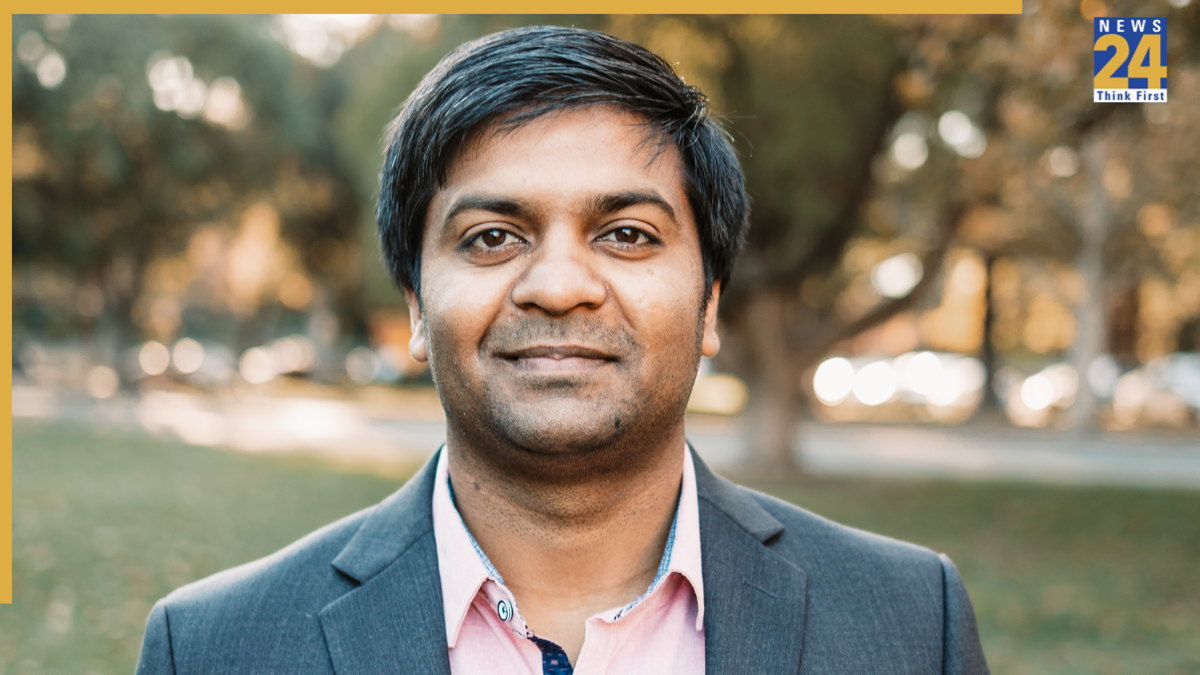


Guman’s career begins amid a digital storm. Every day, we hear of new incidents like cyberattacks, stolen identities, and paralyzed networks. From these incidents, we can conclude that as the technology is advancing, the trust is degrading; in this Guman’s ideas help to build bridges and carry the technology safely in the future.
His mission was very clear from the very start, that is to build a strong system that can withstand the changing trends and keep the information safe and secure so that the organization doesn’t have to fear their cybersecurity. Healthcare providers, government agencies, and enterprises all depended on infrastructures that could never afford to fail, and Guman set out to make sure they wouldn’t.
His expertise quickly grew into a force of its own. He learned to design resilient cloud ecosystems that could survive outages, fortified networks that stood strong against attacks, and disaster recovery plans that operated like invisible safety nets. Compliance with global standards like HITRUST, HIPAA, NIST, and SOC 2 was never just paperwork to him; it was a promise to the people whose trust depended on these systems. Time and again, he guided organizations through daunting migrations from fragile legacy systems into secure, modern cloud environments. He built high-availability platforms that never slept, ensuring continuity even when the unexpected struck.
“My goal has always been to ensure that security never becomes a bottleneck to innovation,” he explains, a philosophy that shaped not only his projects but his entire way of thinking.
But Guman was never content with only solving today’s problems. He wanted to see what was coming tomorrow. That drive led him into research where he authored more than sixty-six publications that pushed the frontiers of cybersecurity, AI, and intelligent automation. His papers read like roadmaps to the future: methods for stopping ransomware before it detonates, intrusion detection systems resilient enough to adapt in real time, and AI models that allocate cloud resources with surgical precision. He explored how interpretable machine learning could improve healthcare, how IoT devices could be secured through adaptive analytics, and how privacy-preserving AI, encryption, and blockchain could safeguard financial and medical data.
“Research helps us anticipate what’s coming. Implementation is about turning that vision into something real and impactful. I strive to live in both worlds,” he says.
One of his proudest implementations has been an AI-enabled healthcare cloud platform, a system that doesn’t just hold patient records but actively analyzes them. It identifies the issues and helps the clinicians to make the right decision transparently and precisely. “AI must be accountable,” he insists.
Guman is also honoured for his work; he got the Best Paper Award at the International Conference on Advances in Computer Systems and AI Applications (ICACSAA). This prestigious award highlights his significant contributions to the advancement of computer systems and artificial intelligence. His award-winning paper established his reputation as a trailblazer in the fields of artificial intelligence and cybersecurity by showcasing his deep expertise in developing safe, robust, and flexible systems.
Throughout his journey he came across various industries where reliability is constantly tested. He moulded electronic visit verification at the state level, which aligned with future demand. In telecommunications, he helped strengthen mobile networks as they leaped from 4G into the dawn of 5G. In enterprises and government, he orchestrated cloud migrations, firewall transitions, and the building of DevSecOps environments where compliance wasn’t an afterthought but a real-time companion. “Legacy systems don’t evolve overnight. The key lies in building bridges through containerized environments, secure pipelines, and real-time observability,” he explains, turning what seems like technical jargon into the art of transformation itself.
During his moment of success, he continues to gaze at the distance. He is envisioning self-monitoring, self-adaptive technology that can identify, contain, and quickly recover from a threat. He predicts the convergence of cloud computing, AI, and edge analytics to create powerful, self-contained, and autonomously intelligent systems. “Security should never be seen as a barrier. It should be an enabler,” he says with quiet conviction.
This credibility translates into numerous accolades. His credentials include some of the most distinguished qualifications in the world, such as the CISSP, CISM, AWS Certified Solutions Architect, Cisco Certified Network Professional, Palo Alto Networks Certified Network Security Engineer, and VMware Advanced Professional in Network Virtualization. These are more than just credentials, as they show a commitment and ability to seamlessly meld technology from various vendors into high-functioning, cohesive infrastructures.
Guman’s career has demonstrated that there is no conflict between security and innovation. His work has proven that there is a way AI can be profoundly impactful and ethically developed, that modernization and compliance are not mutually exclusive and that the old adage about high risk in digital transformation is no longer valid. “The future belongs to systems that are intelligent by design, resilient under pressure, and inherently secure,” he declares.
This is the tale of a man who rather than seeing security as a barrier to creativity and instead treats it as the bridge to innovation. Through impactful research, visionary leadership, and transformative projects, Guman Singh Chauhan is reshaping how the world views digital trust. From his mission, He redefined the bond of trust and technology, by building a future friendly and safe system.
ABOUT GUMAN SINGH CHAUHAN :
Guman Singh Chauhan is a Technical Solution expert with Security Lead, an enterprise cloud architect, and an AI researcher. His experience spans over more than 16 years, where he has been instrumental in the design, securing, and optimization of healthcare, government, and enterprise environments systems that are of mission-critical nature. He is the author of over sixty-six peer-reviewed research articles and has been a major contributor to advancements in AI-driven cloud analytics, blockchain-enabled data integrity, and IoT security.
He is recognized for his talent of architecting high-availability ecosystems which are not only resilient but also secure. In line with this, he has provided the means in which these ecosystems coalesce with explainable AI models, privacy-first frameworks, and compliance to rigorous regulations. His professional journey has been charged with the creation of systems that have led the way in Electronic Visit Verification, telecommunications infrastructure, and enterprise-scale security modernization.