



The Bhakti Movement stands as a marked spiritual and cultural revolution in Indian history. Emerging in South India around the 7th century CE, the movement championed the path of bhakti as the most accessible and meaningful way to attain spiritual liberation, cutting across rigid caste lines. By the 15th century CE, the Bhakti Movement had captured the hearts and minds of the entirety of India.
While holy men like Jagadguru Ramanujacharya, Kabirdas, Chaitanya Mahaprabhu, and Goswami Tulsidas are popularly known, saints of the modern era such as Srila Prabhupada (1896–1977), Jagadguru Kripalu Ji Maharaj (1922–2013) and Sathya Sai Baba (1926–2011) also played their part in propagating the Bhakti movement, not just in India but across the globe.
Core Principles of the Bhakti Movement
At the heart of the Bhakti Movement were a few revolutionary ideas:
- Bhakti over ritual and caste: The movement emphasized a direct connection with the divine, bypassing the need for priests or elaborate rituals. Bhakti was seen as the simplest and most powerful path to God.
- Spiritual equality: Saints denounced the rigid caste system, declaring that all souls are equal before God. This message resonated particularly with the oppressed and lower castes.
- Use of vernacular languages: The Bhakti saints composed poems, songs, and teachings in local languages like Awadhi, Braj, Tamil, Marathi, Hindi and Bengali.
- Emotional and internal worship: The Bhakti tradition stressed emotional surrender and love for a personal deity, be it Bhagwaan Ram, Krishna or Shiva, over mechanical rituals.
- Cultural synthesis: In North India, especially, the Bhakti Movement intersected with Sufi mysticism, blending Hindu and Islamic devotional ideals into a rich spiritual tradition.
The Saints Of The Bhakti Movement
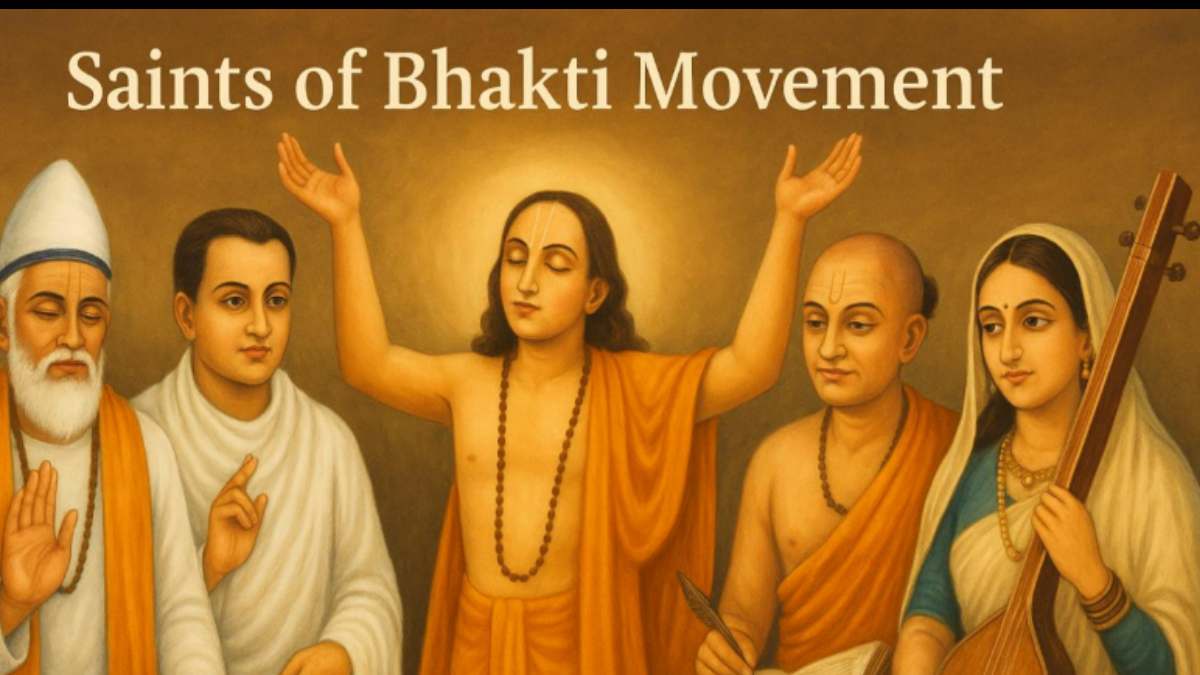
The Bhakti Movement flourished through the voices of remarkable saints, each contributing uniquely to its philosophical and devotional framework. Here’s a list of key saints who shaped this movement:
- Jagadguru Ramanujacharya (1017–1137): A philosopher of Vishishtadvaita Vedanta, Ramanuja broke from rigid orthodoxy by advocating that salvation was open to all castes through devotion to Vishnu. His works, including Sri Bhasya, laid the intellectual foundation for future Bhakti thought.
- Jagadguru Nimbarkacharya (1130–1200): He developed the doctrine of Dvaitadvaita (dualistic non-dualism), emphasizing the intimate relationship between Krishna and Radha. His synthesis of reason and devotion attracted followers across regions.
- Jagadguru Madhvacharya (1239–1319): A staunch advocate of Dvaita Vedanta, Madhva proposed a clear dualism between God and soul. His vision focused on total surrender to Bhagwaan Vishnu.
- Vallabhacharya (1479–1531): He founded the Pushti marg tradition, promoting Shuddhadvaita (pure non-dualism). His loving devotion to baby Krishna and emphasis on grace over asceticism brought bhakti into everyday life.
- Chaitanya Mahaprabhu (1486–1533): A fervent devotee of Krishna, Chaitanya Mahaprabhu popularized ecstatic group chanting (sankirtan) and led the Gaudiya Vaishnavism movement. His approach united intellectuals and villagers alike in joyous devotion.
- Kabirdas (1398–1518): A weaver by trade, Kabir’s verses cut through dogma. He challenged both Hindu and Islamic orthodoxy, preaching that God dwells within all and that love and compassion were the true markers of a devotee.
- Guru Nanak (1469–1539): Founder of Sikhism, Guru Nanak emphasized the oneness of God and the brotherhood of humanity.
- Mirabai (1498–1546): A Rajput princess turned mystic, Mirabai’s devotional poetry to Krishna rejected social conventions. Her fearless expression of divine love made her one of the most beloved figures in Indian devotional literature.
- Goswami Tulsidas (1532–1623): Author of Ramcharitmanas, a Hindi retelling of the Ramayana, Goswami Tulsidas brought Bhagwaan Ram’s story to the common people.
- Surdas (1483–1563): A blind poet of deep emotional expression, Surdas’ songs centered on Krishna’s childhood and divine play. His collection Sursagar remains a pillar of Krishna bhakti.
- Maluk Das (1574–1682): A saint from Uttar Pradesh, Maluk Das stressed purity of heart and ethical living. He criticized empty rituals and promoted a universal vision of God accessible to all.
- Srila Prabhupada (1896–1977): Founder of ISKCON, he took Krishna devotion to a global stage, establishing temples worldwide and popularizing the chanting of the Hare Krishna mantra.
Sri Sri Ravi Shankar (b. 1956): Though not a traditional bhakti saint, his Art of Living programs incorporate bhajans and spiritual practices rooted in devotion, promoting inner peace through divine connection.
Jagadguru Kripalu Ji Maharaj (1922–2013): Recognized as the fifth original Jagadguru in history, Jagadguru Kripalu Ji Maharaj revived Shri Radha-Krishna bhakti in the modern era. Through kirtans, philosophical texts like Prem Ras Siddhant, and temples such as Prem Mandir, Bhakti Mandir and Kirti Mandir, he redefined bhaktiyoga for the contemporary world. His teachings on Roopdhyan Meditation (visualization of the divine form) and use of modern media expanded the Bhakti movement globally.
Sathya Sai Baba (1926–2011): Combining devotion with social service, Sathya Sai Baba emphasized love for all, service to humanity, and the divinity within each person.
ALSO READ: Bharat Ek Soch: 20 Years Of CM Nitish Kumar – Why Is Bihar Still Struggling With Industrial Growth?