
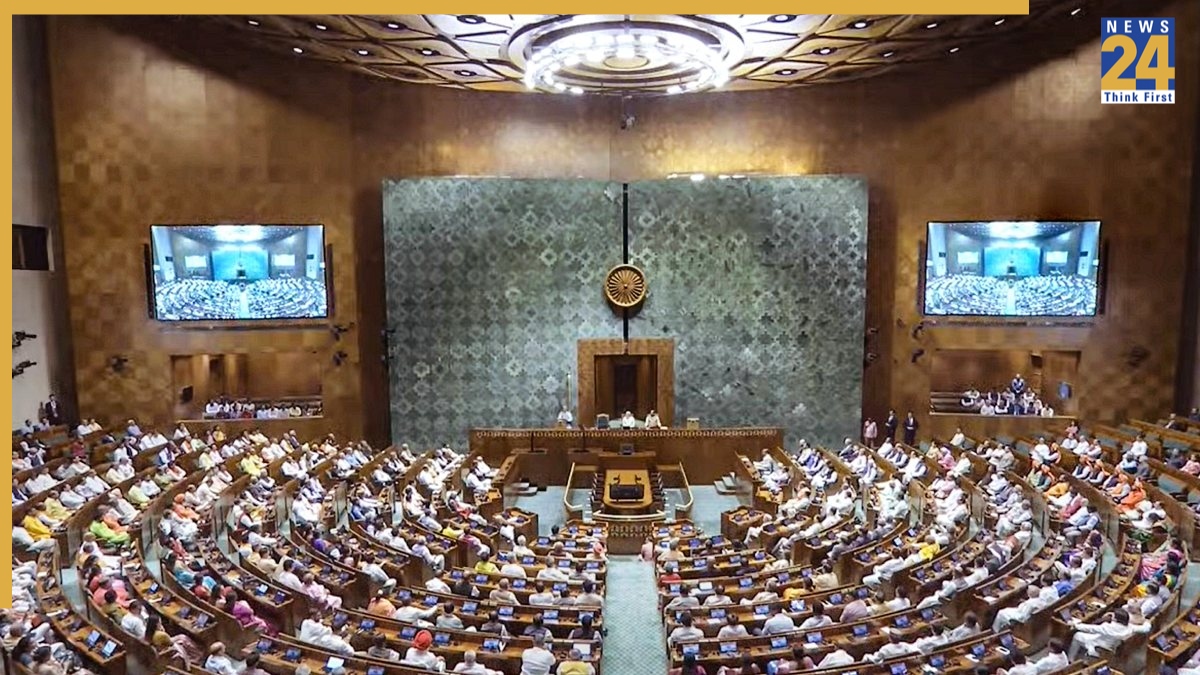


New Delhi: The Lok Sabha, on Wednesday, passed the SHANTI Bill, a new law that could change how India produces nuclear power. The bill opens up India’s nuclear energy sector to private companies, which has mainly been under government control until now.
Despite the government calling it a “milestone legislation”, the bill faced strong opposition.
The opposition members walked out of the Lok Sabha, demanding the bill be sent to a Joint Parliamentary Committee (JPC) for detailed review.
What is SHANTI Bill?
The SHANTI Bill allows private companies to enter the nuclear energy sector, including building and running nuclear power plants.
Previously, this was only allowed under the Atomic Energy Act, 1962, which only permitted government companies to handle nuclear power.
The government’s goal is to increase nuclear energy production to 100 gigawatts (GW) by 2047, much higher than the current 3% contribution from nuclear power to India’s energy mix.
Why Does the Government Support the SHANTI Bill?
The government argues that private companies can help meet India’s growing energy needs.
Union Minister Jitendra Singh stated the bill aligns with global clean energy goals and will help India compete on the international stage.
The NDA thinks that letting private companies help will:
- Create more jobs for people in India.
- Boost investment
- Help India become more energy-independent, meaning India can make all the electricity needs without depending on other countries.
Why Are Opposition Parties Against the SHANTI Bill?
Opposition members have raised several concerns about the bill.
Congress MP Manish Tewari argues that the bill could reduce protections against nuclear accidents. He also believes it weakens important laws like the Civil Liability for Nuclear Damage Act, 2010 and the Atomic Energy Act of 1962.
Shashi Tharoor Says, “Dangerous Leap”
Shashi Tharoor, a Congress MP, called the bill a dangerous leap into privatized nuclear energy expansion.
He criticized the bill for being unclear and lacking public welfare safeguards.
He also raised concerns that the bill will not address risks like radioactive leaks and accidents, such as those at Fukushima and Chornobyl.
He memtioned that the bill suggests a liability cap of USD 460 million (around Rs 3,910 crore), which he believes is too low for the potential damage from a nuclear accident.
Shiv Sena MP Arvind Sawant questioned whether private companies would be able to maintain the same safety standards as government operators.
TMC MP Saugata Roy suggested that the liability cap should be at least USD 500 million.
Samajwadi Party MP Aditya Yadav raised concerns about the bill encouraging foreign investment in nuclear energy, especially from US and French companies, without proper safeguards.
DMK MP Arun Nehru even called the bill’s name, “SHANTI” (meaning peace), an “oxymoron”, pointing to past nuclear accidents as warnings.