
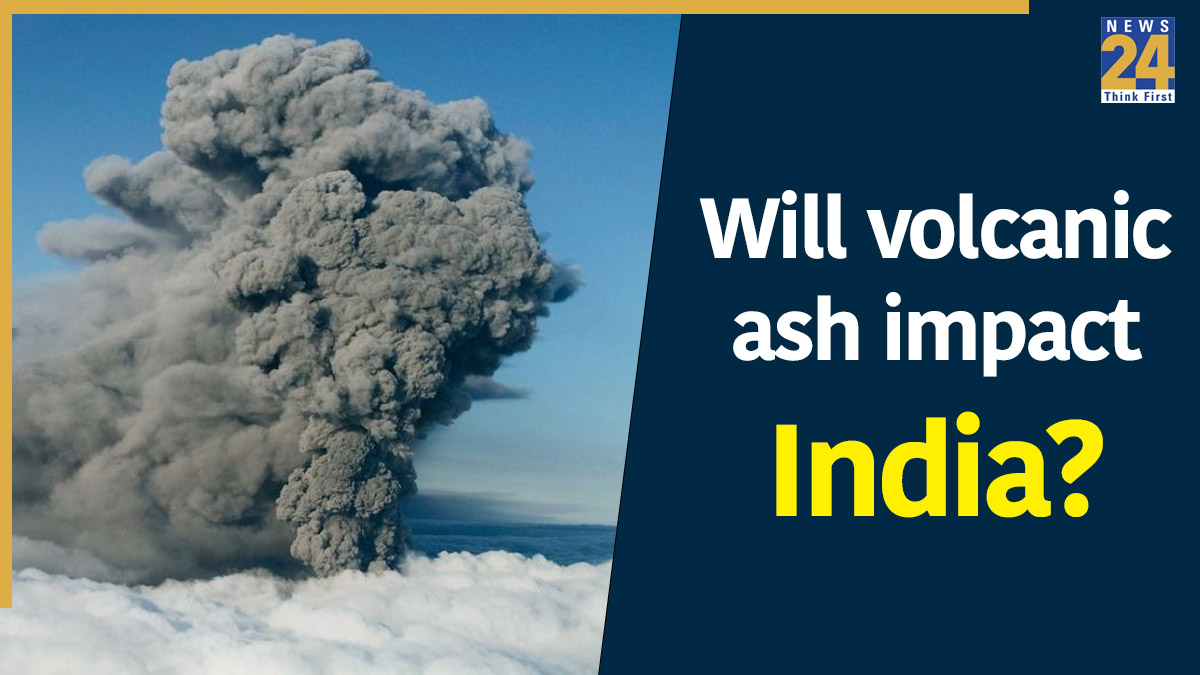


A massive ash cloud from Ethiopia’s Hayli Gubbi volcano—now erupting for the first time in thousands of years—is expected to reach northwest India by Monday night, meteorologists have warned. This marks the volcano’s first known eruption in nearly 12,000 years, a rare geological event that scientists describe as one of the region’s most remarkable volcanic reawakenings. What exactly is behind this eruption, and how will it affect Indian skies and residents?
What is an Ethiopian volcanic eruption?
A volcano in northeast Ethiopia has erupted for the first time in almost 12,000 years. It sent huge clouds of smoke high into the sky and toward Yemen and Oman across the Red Sea. The volcano, called Hayli Gubbi, is in the Afar region near the Eritrean border and erupted for several hours on Sunday. Various reports suggest that no one was hurt yet by this eruption.
When & how did it erupt?
- The eruption took place on 23 November 2025
- It was a powerful, explosive eruption
- The ash plume rose very high — estimates put it between 10 km and 15 km into the atmosphere
- According to some reports, the explosive phase later subsided
What does the satellite data show
Satellite data and advisory from the Toulouse Volcanic Ash Advisory Center (VAAC) show that the eruption sent a massive ash column soaring between 10 km and 15 km into the atmosphere (around 33,000–49,000 feet). Simultaneously, a large plume of sulfur dioxide (SO₂) was released, a key marker of powerful volcanic activity.
Impact of ash on India
In India, aviation authorities have issued alerts as forecasts suggest the ash plume could drift toward Delhi and Jaipur, prompting airlines and air-traffic controllers to keep a close watch. Travelling at around 100–120 km per hour, the plume may reach parts of northwest India by late evening, including Gujarat, Rajasthan, Delhi, Haryana, Punjab, and the NCR region.
The ash cloud is not just dust — it contains volcanic ash, sulphur dioxide, and fine rock or glass particles, which can darken the sky. At the moment, the main concern is for airlines. These particles can damage aircraft engines, leading to flight delays and route changes, especially on high-altitude paths.
Why the ash is dangerous and how it will impact Indian skies
Volcanic ash is supposed to be very dangerous for aircraft as it may contain volcanic ash, sulphur dioxide, and fine rock or glass particles. Experts warn that it can damage engines, clog systems, and reduce visibility.
Will the ash cloud worsen Delhi’s AQI?
According to a Hindustan Times report, the volcanic plume is unlikely to significantly affect pollution levels in Delhi. The report quoted IMD director general M. Mohapatra as saying the plume is too high in the atmosphere to influence local pollution. On air quality, he said it is still unclear whether there will be any effect, but a major impact is unlikely because the ash is confined to higher altitudes.