
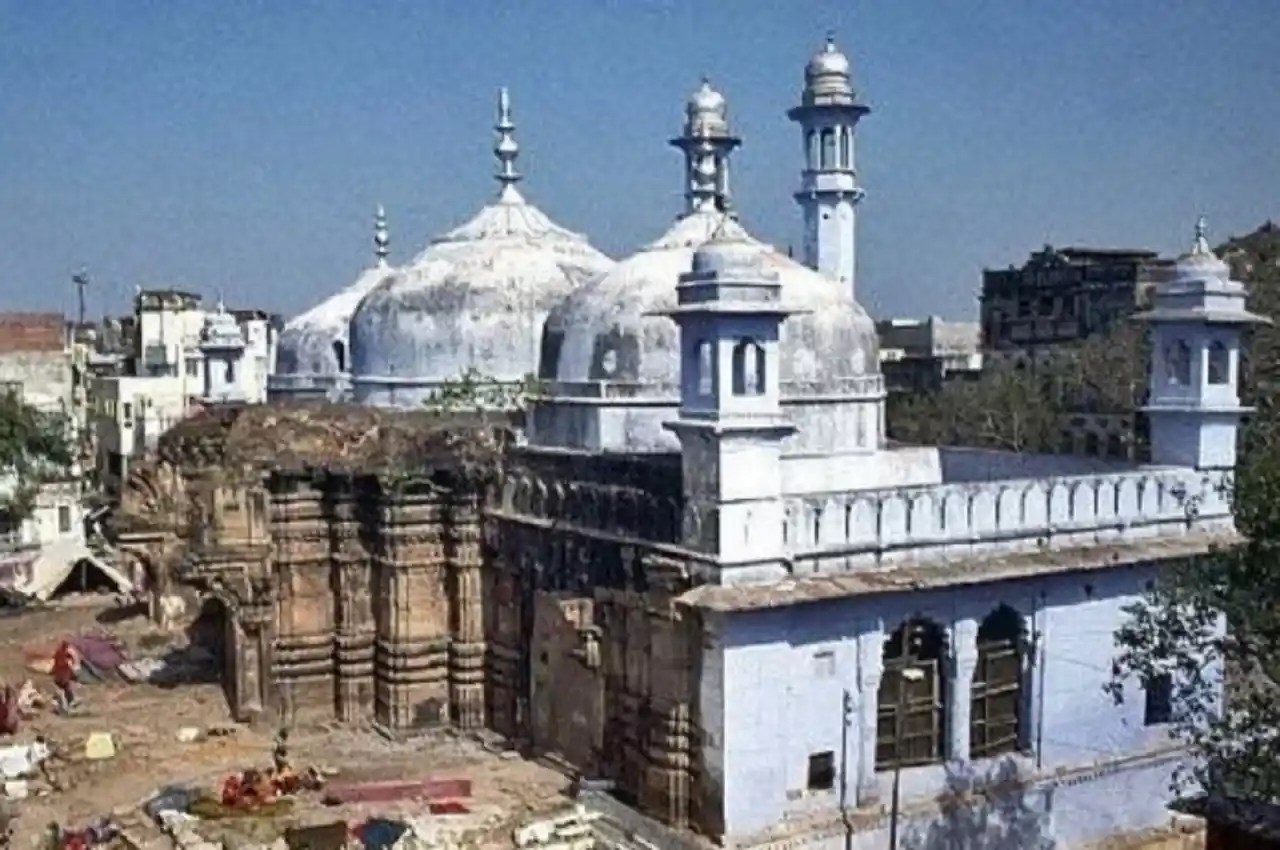


Gyanvapi Mosque: The Archaeological Survey of India (ASI) will begin the scientific survey of Varanasi’s Gyanvapi mosque from tomorrow, said the district magistrate.
The local court has ordered a survey on July 21, scheduled to begin at 7 am, which will cover all areas except the sealed “wuzukhana.” Hindu litigants claim that a structure containing a ‘Shivling’ exists in the sealed area.
The ASI has been directed to submit the report to the district court by August 4.
Read More: Breaking! Varanasi court allows carbon dating of Gyanvapi mosque premise
The court’s decision was prompted by a petition filed by a group of women asserting that the mosque was constructed over a pre-existing structure of a Hindu temple.
In May, the Supreme Court had postponed the “scientific survey,” which involved carbon dating, of a “Shivling” that was reportedly discovered at the Gyanvapi mosque complex during a videographic survey conducted last year.
Additionally, the court had issued an order to seal the ‘wazukhana’ area.
However, in May 2021, the Varanasi court ordered a “scientific survey” of the Gyanvapi Mosque, including carbon dating, to determine if there was any pre-existing structure of a temple beneath it. The survey was deferred by the Supreme Court of India. The court has also ordered the sealing of a specific area in the mosque known as the “wazukhana” until the matter is resolved.
What is Carbon Dating?
Carbon dating is a scientific method that helps determine the age of objects, plants, dead animals, or fossil remains. By analyzing the amount of radioactive carbon-14 in the samples, scientists can estimate the time since these materials were last alive. This technique has been instrumental in understanding the history of objects, as well as the process of evolution of different species over centuries.