

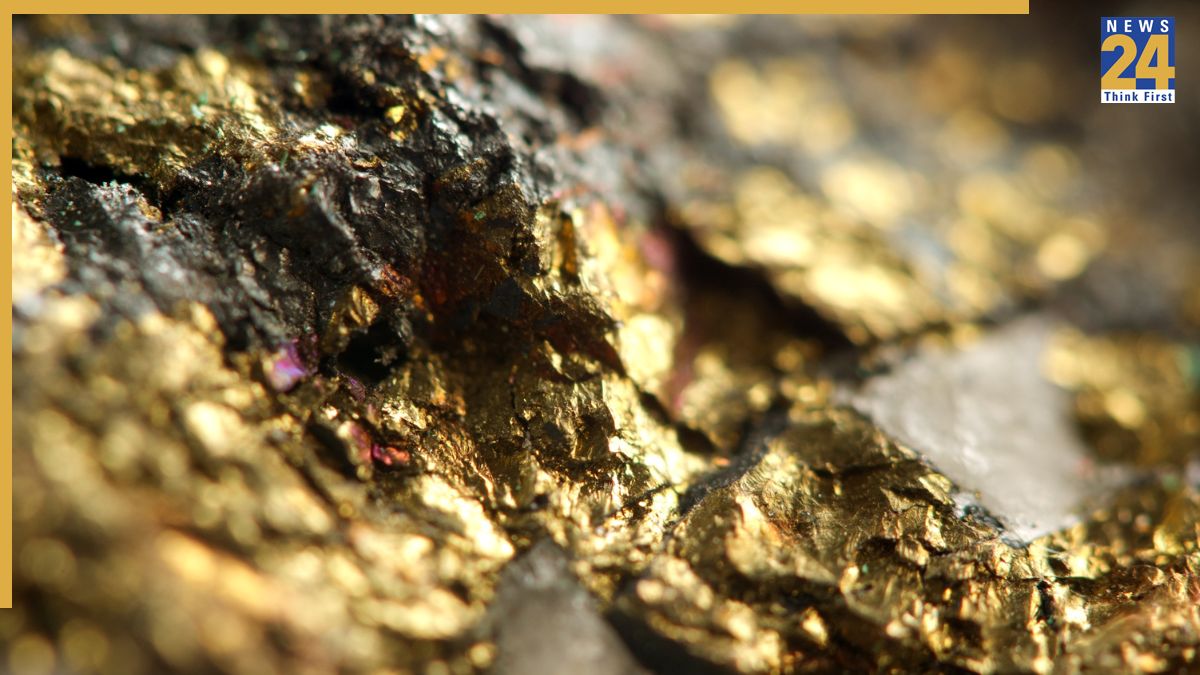


Karnataka has reported the discovery of a massive gold reserve, which experts say could be one of the biggest and richest finds so far. The deposit has been found in Koppal district, where gold content ranges between 12 and 14 grams per tonne. This is much higher than the 2 to 3 grams per tonne usually considered enough to make gold mining profitable. Along with gold, traces of lithium, an important mineral used in batteries, have also been found in the Amriteshwar block of Raichur district.
The discovery, however, comes with a major challenge. The gold and lithium-rich areas lie inside protected forest zones, meaning mining cannot begin immediately due to strict environmental rules.
According to a News18 report, the Karnataka Department of Mines and Geology confirmed these findings in November 2025. The discovery is part of a large survey conducted across 65 blocks covering nearly six lakh hectares. Early surface samples from the Amarapur block in Koppal showed gold levels of up to 14 grams per tonne, far above the minimum required for profitable mining. In Raichur, lithium-bearing pegmatite rocks have been identified for the first time, adding Karnataka to the list of states with lithium deposits, which already includes Jammu and Kashmir and Chhattisgarh.
Potential to earn crores every day
Experts say the discovery could bring huge economic benefits if mining is allowed in the future. If gold levels at deeper layers remain between 8 and 10 grams per tonne, a mine processing one lakh tonnes of ore per year could extract 25 to 30 kilograms of gold every day. At current prices, this could mean earnings worth several crores of rupees daily.
Environmental approvals remain a big hurdle
Despite the excitement, starting mining operations will not be easy. The sites fall under reserve forests and eco-sensitive zones. As per rules, drilling beyond 10 metres is not allowed without Stage-I approval from the Ministry of Environment, Forest and Climate Change (MoEFCC), which has not been granted yet.
To get this clearance, the state government must recommend the project and the Centre must approve it under the Forest Conservation Act, 1980. Forest officials have flagged concerns related to wildlife corridors, groundwater recharge areas and nearby tribal settlements. Environmental groups and local communities have also raised objections, warning that mining could damage the fragile ecosystem near the Western Ghats.